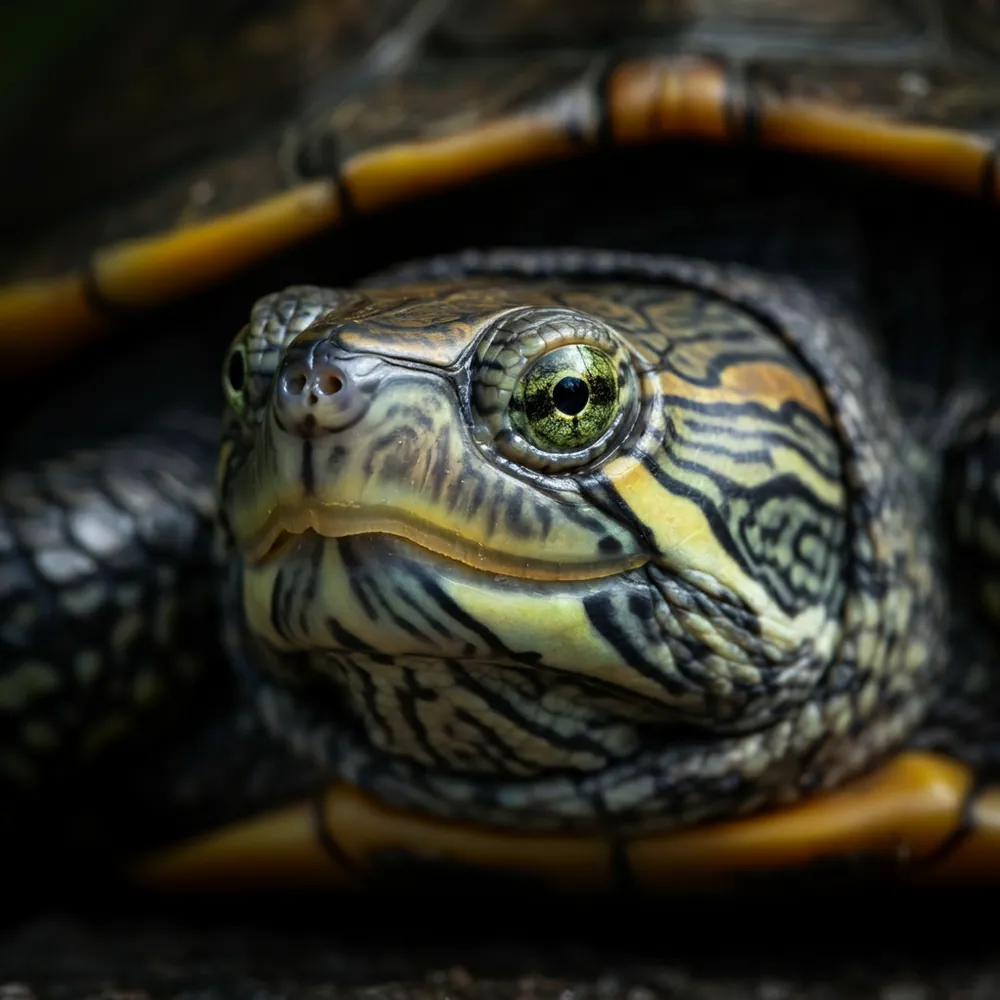
Get ready to dive into the amazing world of the Northern River Terrapin! Imagine a gentle giant, like a living treasure from ancient times, gliding through the rivers of faraway lands. This incredible turtle has a super smooth, dome-shaped shell that can be olive-green, grey, or brown, and it can grow to be surprisingly big – sometimes even bigger than a car tire! But wait, there's more! When it's time to find a mate, the boy terrapins put on a spectacular show. Their heads turn a shiny black, and a bright red flush appears, making them look like they're wearing a fancy mask for a special party!
These magnificent creatures love to hang out in slow-moving rivers and special watery forests called mangroves. They spend most of their time swimming gracefully underwater, but sometimes they sneak onto sunny sandbanks to warm up or for the girl terrapins to lay their precious eggs. What do they eat? Mostly yummy water plants, fallen fruits, and seeds! They're like nature's gardeners, munching on plants and then spreading seeds with their droppings, helping new trees and bushes grow along the riverbanks. How cool is that? This makes them super important for keeping their river home healthy and happy!
The Northern River Terrapin is like a secret superhero for its river home. When you see one of these amazing turtles, it's a sign that the river is clean and healthy! They are very sensitive, so if they're thriving, it means their watery world is doing well. Sadly, these ancient mariners are in big trouble and need our help to survive. Protecting them means protecting the entire river and all the other awesome creatures that live there. Isn't it incredible how one special turtle can tell us so much about the health of our planet? Let's learn more about them and help keep their watery world safe for generations to come!
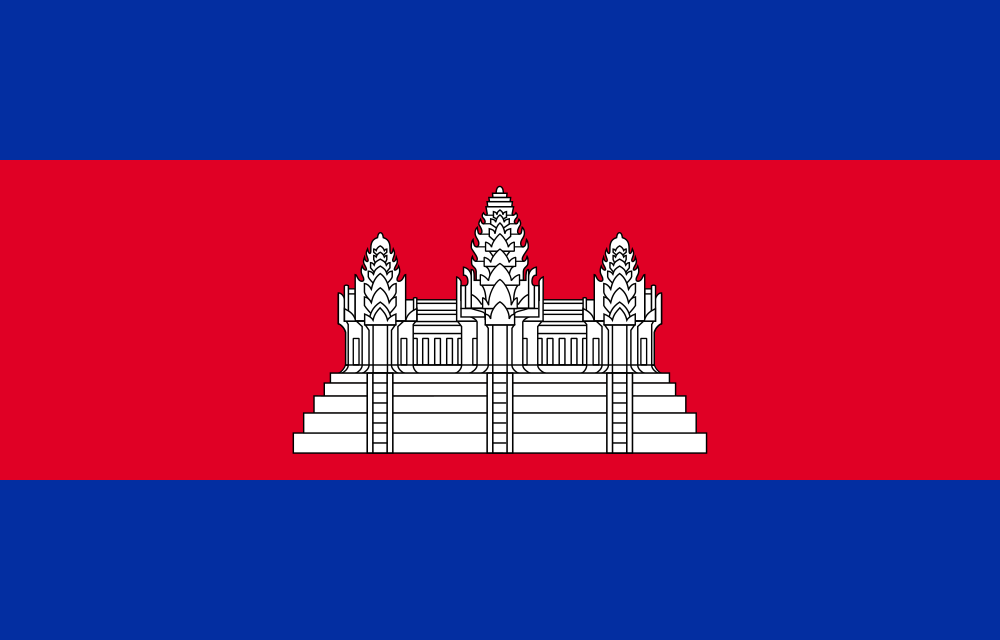
Where the northern river terrapin still lives — Bangladesh, Cambodia, Indonesia, Malaysia
Imagine your house disappearing! Northern River Terrapins are losing their homes because rivers are getting polluted, and new buildings or farms are taking over their special nesting beaches and feeding spots.
Being done about itScientists and conservationists are working hard to clean up rivers, protect important nesting beaches, and even create special safe zones where these terrapins can live and lay their eggs without disturbance.
Poaching / Illegal hunting
Sadly, some people illegally catch Northern River Terrapins for their meat or eggs, or to sell them as exotic pets, which means fewer terrapins are left in the wild.
Being done about itBrave rangers patrol the rivers to catch poachers, and special breeding programs are helping to hatch baby terrapins in safe places before releasing them back into protected wild areas.
Brave scientists and conservationists are working like real-life superheroes, running special breeding programs in places like Bangladesh and India to hatch baby terrapins safely. They also guard their nests to make sure these precious turtles have the best chance to grow up and swim free!
Also known asBatagur baska
GroupAnimal
DietOmnivore, primarily herbivorous, feeding on aquatic plants, fruits, and occasionally small invertebrates.
SizeAdults typically range from 12 kg to over 50 kg, with females being considerably larger than males.