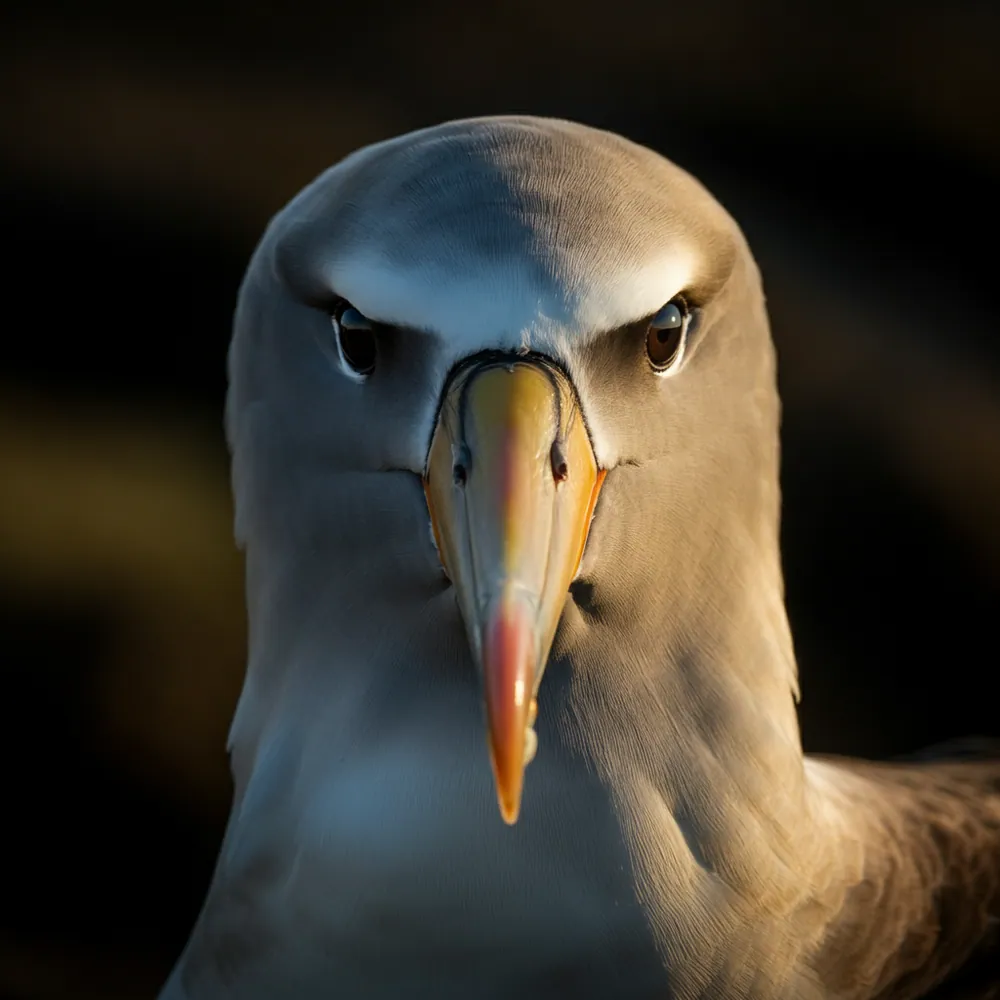
Hey there, future wildlife explorers! Get ready to meet a true superstar of the sky, a bird so magnificent it'll make your jaw drop: the Northern Royal Albatross! Imagine a bird with wings wider than your family car – that's right, its incredible wingspan can stretch over 11 feet! With its pristine white feathers and sleek black wingtips, this giant looks just like a magnificent feathered airplane gliding high above the waves. Its powerful pink beak is perfect for snatching yummy squid and fish from the ocean, making it a master hunter of the seas.
These incredible birds spend almost their *entire lives* soaring over the vast, wild oceans, traveling thousands of miles without barely a single flap! They are the ultimate wind-riders, using a clever trick called "dynamic soaring" to glide effortlessly for hundreds of miles, saving all their energy. Only when it's time to build a nest and raise their single fluffy chick do they touch down on remote, windswept islands, like those off New Zealand, before heading back out to sea on their epic adventures.
But the Northern Royal Albatross is more than just an amazing flyer; it's a super important hero of the ocean! These birds help keep the marine world healthy, acting like a living report card for our planet's biggest ecosystem. By protecting these magnificent giants, we're helping to ensure our oceans stay healthy and full of life for everyone. How cool is that?
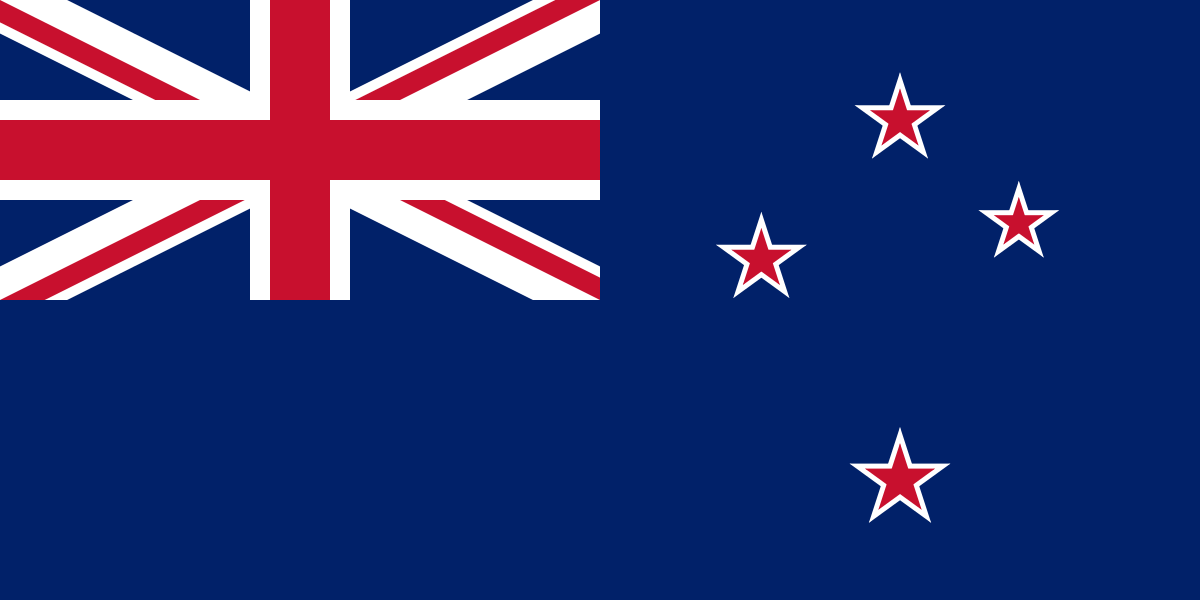
Where the northern royal albatross still lives — New Zealand
Climate change brings stronger storms that can wash away albatross nests and harm their chicks on their island homes. It also changes ocean temperatures and currents, making it tougher for them to find the fish and squid they need to eat.
Being done about itScientists are carefully watching these birds to understand how climate change affects them, and many people are working to use less energy and find cleaner power sources. This helps slow down global warming and protect the albatrosses' ocean homes.
Bycatch / Overfishing
When these albatrosses fly far out to sea to hunt for fish and squid, they can accidentally get caught on long fishing lines or in large nets meant for other sea creatures. This is called 'bycatch,' and it can seriously injure or even drown these magnificent birds.
Being done about itFishermen are learning clever ways to fish that keep albatrosses safe, like using special lines that sink quickly or adding colorful streamers to scare birds away from hooks. Scientists and conservationists are also working with fishing fleets to develop even better methods and rules to prevent these accidental catches.
People are working hard to save these special birds, like at Taiaroa Head in New Zealand, where rangers carefully watch over their nests and fluffy chicks to keep them safe. There are also big missions to teach fishermen how to fish in ways that don't accidentally harm these amazing ocean wanderers.