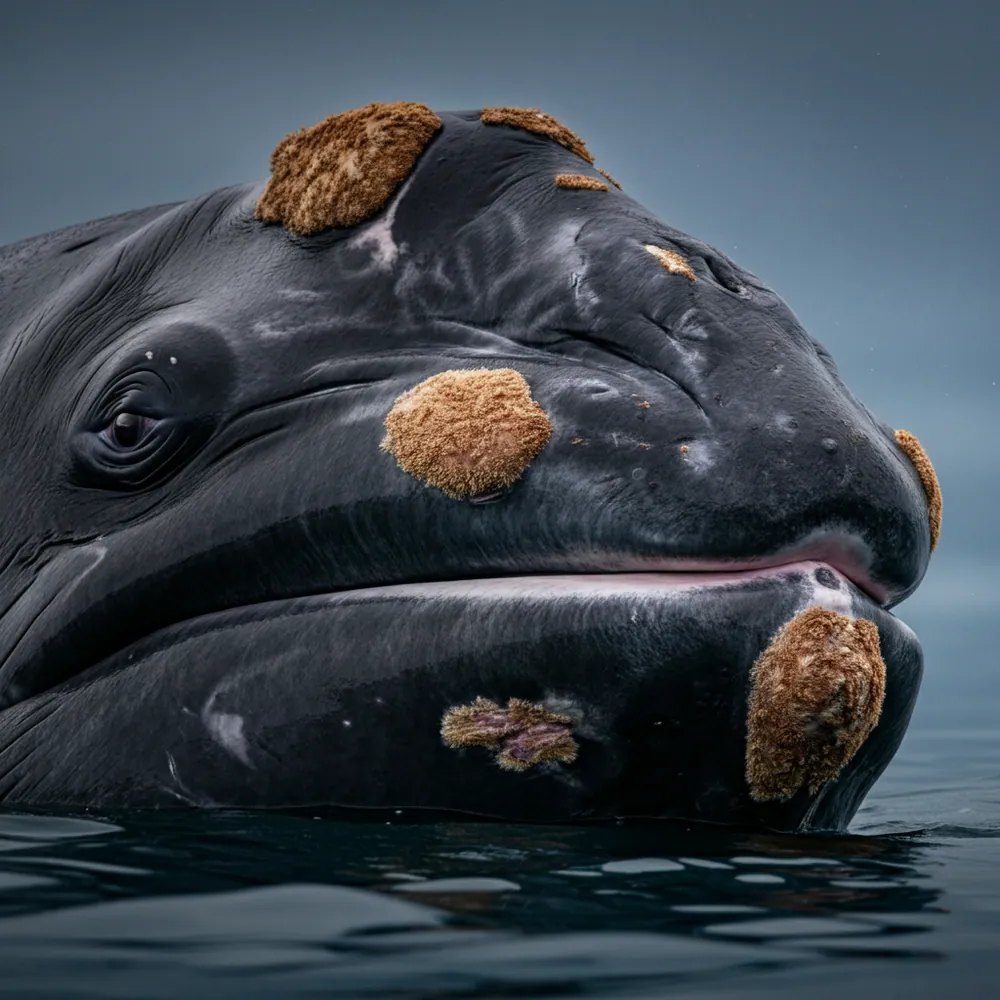
Imagine a living submarine, longer than a school bus and weighing as much as ten elephants – that's the incredible Northern Right Whale! These amazing ocean giants have smooth, dark bodies with no fin on their back, making them super streamlined. But look closely at their huge heads, and you'll see bumpy patches called callosities. These aren't boo-boos; they're like nature's unique fingerprints, often covered in tiny whale lice, helping scientists tell each special whale apart!
These gentle giants are like the ocean's vacuum cleaners. Instead of hunting big fish, they open their enormous, arched mouths, which are lined with hundreds of comb-like plates called baleen. They swim along, straining countless tiny, yummy plankton from the water – their favorite snack! And even though they're so big, they can be quite playful! You might even see one "breaching," which means leaping high out of the water like an ocean acrobat, or "spyhopping" to peek its head out and see what's happening above the waves.
Northern Right Whales aren't just cool to look at; they're also super important "ocean gardeners"! By eating plankton and then, well, fertilizing the water, they help other tiny plants grow, which is food for almost everything else in the ocean. Sadly, there aren't many of these magnificent whales left, which makes every single one extra special and vital for a healthy, thriving ocean.
Where the northern right whale still lives — North Atlantic Ocean
Climate change is warming the ocean, which makes the tiny food Northern Right Whales eat move to new spots, forcing the whales to travel farther to find dinner or sometimes go hungry.
Being done about itScientists are using special tags to follow the whales and their food, while many people are working hard to reduce pollution that causes climate change to protect their ocean home.
Bycatch / Overfishing
Northern Right Whales often get tangled in thick ropes and fishing nets left in the ocean, which can seriously hurt them or make it impossible for them to swim, eat, or breathe.
Being done about itScientists use special tools to track whales and warn ships about their locations, and fishermen are creating new, whale-safe gear like ropes that break easily or traps that can be retrieved without long lines.
Brave scientists and ocean heroes are working hard to protect these whales by asking ships to slow down in their areas and developing special, safer fishing gear to prevent them from getting tangled. It's a super important mission to keep these gentle giants safe!