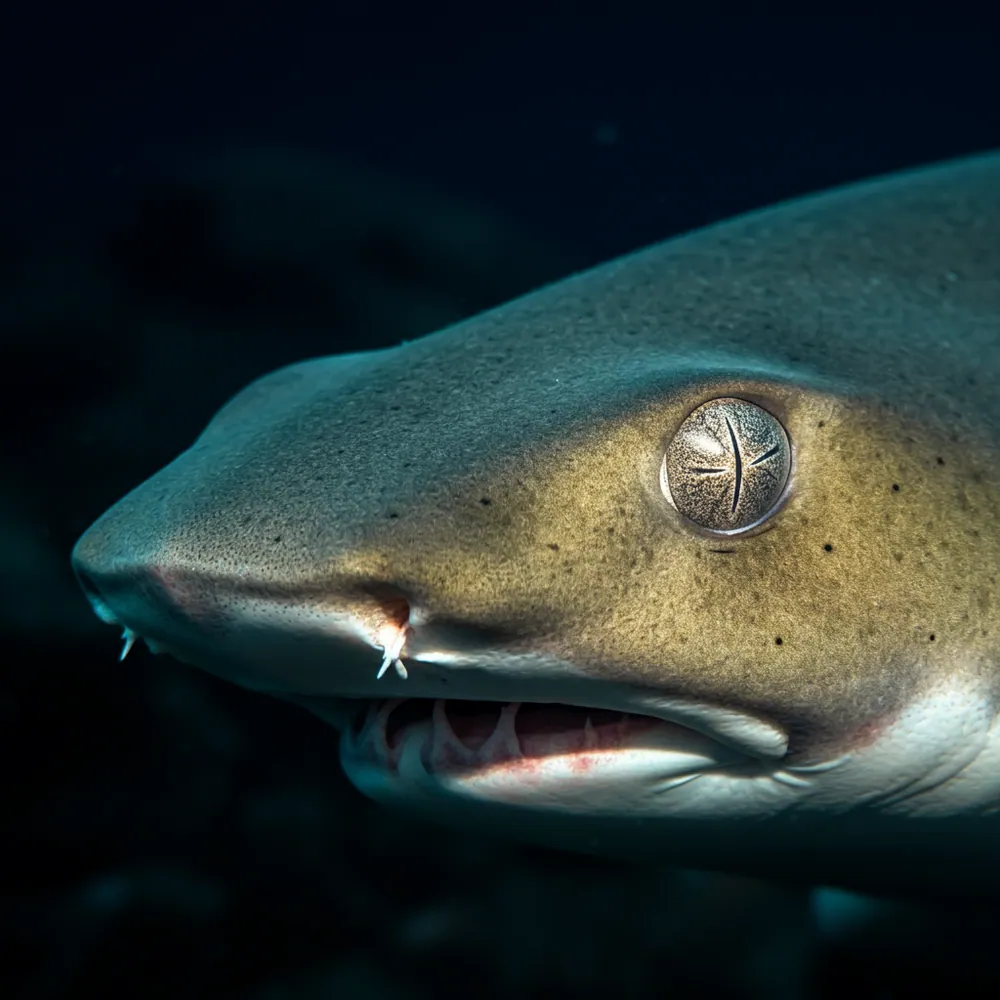
Get ready to meet one of the most incredible creatures on Earth – the Greenland Shark! Imagine an animal that's been swimming in the ocean for over 400 years. That's right, some of these amazing sharks were alive when pirates sailed the seas and kings and queens ruled faraway lands! They're the longest-living animals with a backbone on our whole planet. These giants can grow as long as a school bus and weigh more than a small car, all while living in the super-duper cold, dark waters of the Arctic. Sometimes, they even have tiny glow-worm friends on their eyes, making them look like a ghostly deep-sea explorer!
Now, don't let their super chill, slow-motion swimming fool you. The Greenland Shark is the slowest shark in the world, but there's a reason for that – it's saving all its energy to survive in the freezing cold! But when it's time to eat, this "sleeper shark" is a master of surprise. It can sneak up on unsuspecting seals or fish, gobbling them up. It's also the ocean's ultimate clean-up crew, munching on anything that sinks to the bottom, like fish, squid, and even leftovers from polar bears or reindeer that fell through the ice!
This magnificent shark is a true survivor, playing a super important role in its icy home. It's like a living fossil, teaching scientists how to live for an incredibly long time in one of the toughest places on Earth. How cool is that?
Where the greenland shark still lives — North Atlantic Ocean
Greenland Sharks need super cold, deep water to live, but as our planet gets warmer, their special icy home can shrink. This warming makes it harder for them to find food and stay safe in the places they need.
Being done about itScientists are studying the deep ocean to understand exactly where these sharks live and what they need to survive. Also, many people are working to slow down climate change by using less energy, which helps protect the sharks' cold, deep-sea homes.
Bycatch / Overfishing
Greenland Sharks often get accidentally caught in fishing nets or on long lines that are meant for other fish, even though no one is trying to catch them. Because they swim so slowly and live deep, it's hard for them to escape this "bycatch."
Being done about itScientists are working with fishermen to design special fishing gear that helps sharks escape if they get caught by mistake. They also help create rules about where and how to fish to protect these slow-moving sharks.
Scientists are on an important mission to learn more about these mysterious sharks, using special cameras and tags to understand their deep-sea homes and how to prevent them from accidentally getting caught in fishing nets, helping them swim safely for hundreds of years more.
Also known asSomniosus microcephalus
GroupAnimal
DietCarnivore
SizeTypically 200-400 kg (440-880 lbs), but large individuals can exceed 1, 200 kg (2, 600 lbs)