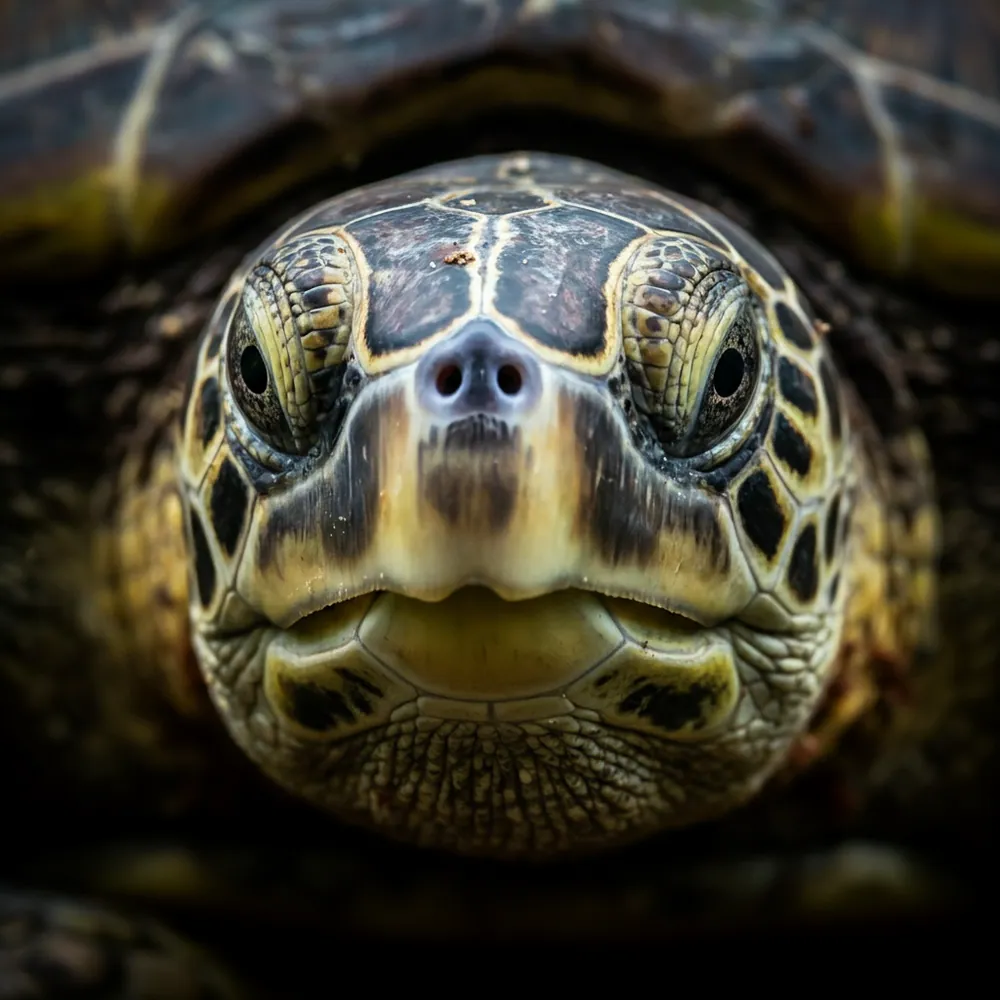
Get ready to dive into the amazing world of one of the ocean's most magnificent creatures – the Green Turtle! Imagine a super swimmer, gliding gracefully through warm, tropical waters all around the globe, from the Atlantic to the Pacific and even the Indian Ocean. These gentle giants are like the ancient mariners of the sea, with shells that can be olive, brown, or even black. But here's a fun secret: even though their shells aren't always green, they're called Green Turtles for a totally awesome reason!
So, what's the secret behind their name? It's not their shell, but what's *inside* them! Green Turtles are super special because they are mostly vegetarian, munching on delicious seagrass and algae all day long. This leafy green diet actually makes the fat *underneath* their shell a greenish color! Isn't that cool? It's like they are what they eat, turning into a living green machine thanks to their healthy ocean salad bar.
These incredible creatures can grow super big, sometimes even heavier than a grown-up human! They've been swimming our oceans for millions of years, playing a vital role in keeping our seagrass meadows healthy. Just seeing one glide by is like watching a living, breathing dinosaur from a bygone era, reminding us how truly wondrous our planet's wildlife can be. So next time you think of a turtle, remember the fantastic, fat-turning-green, seagrass-eating Green Turtle!
Green turtles need healthy seagrass beds for food and quiet sandy beaches to lay their eggs, but these important places are shrinking. Buildings, bright lights from towns, and pollution can damage their feeding grounds and confuse baby turtles trying to find the ocean.
Being done about itPeople are working hard to protect these special places by creating marine parks and reserves where turtles can live safely. They also clean up beaches and teach communities how to keep nesting sites dark and undisturbed for turtle moms and their babies.
Bycatch / Overfishing
Green turtles often get accidentally caught in large fishing nets meant for other fish, which is called 'bycatch.' When trapped, they can't swim to the surface to breathe and get hurt or even drown.
Being done about itScientists and fishermen are developing special fishing nets with escape hatches called Turtle Excluder Devices (TEDs) that let turtles swim out safely. Fishermen are also learning new ways to fish that are safer for turtles and how to carefully release any turtles they accidentally catch.
Many amazing heroes are working hard to save green turtles by protecting their nesting beaches where moms lay eggs and making sure less plastic ends up in the ocean, which can hurt them. It's a super important mission to keep these ancient mariners safe for the future!
Also known asChelonia mydas
GroupAnimal
HabitatOcean
DietPrimarily seagrass and algae as adults.
PredatorsTiger sharks, crabs, and birds (of hatchlings).