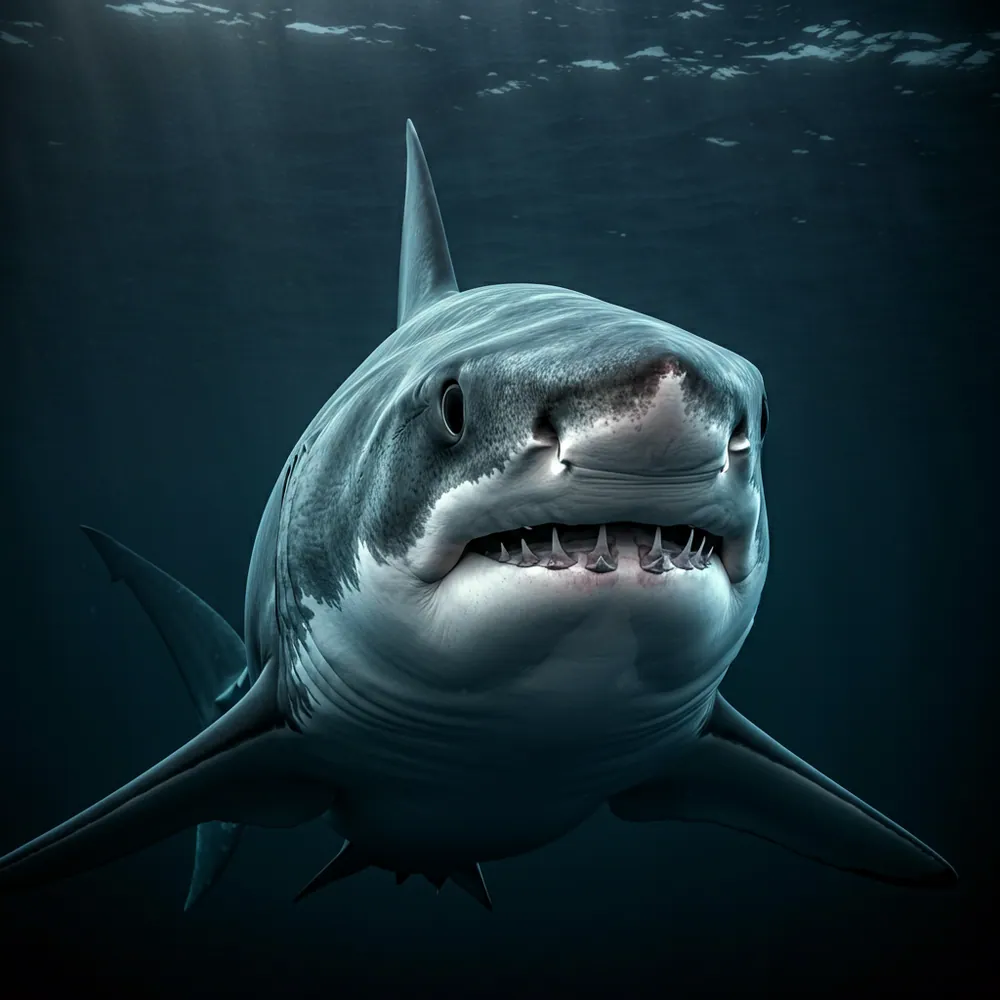
Get ready to meet one of the ocean's most incredible superstars! We're diving deep to talk about the magnificent Great White Shark! You might also hear it called the 'white pointer' because it's such a skilled hunter. Imagine a powerful, sleek torpedo, built for speed and strength, with a dark grey back that helps it blend in with the deep ocean, and a bright white belly that disappears against the sunny surface when you look up from below. This amazing creature is one of the biggest fish in the whole wide ocean – a true giant!
But what makes the Great White truly special? For starters, it has a mouth full of about 300 super-sharp, triangular teeth – and get this, if one breaks or falls out, a new one is always waiting in line to take its place! It's like having an endless supply of nature's best steak knives! And that's not all; this incredible shark has a giant, super-fatty liver that's like a built-in life jacket, helping it float effortlessly while also storing tons of energy. Plus, unlike most fish, the Great White is partially warm-blooded, which means it can keep its body warmer than the chilly ocean water. This gives it extra energy and speed to zoom through cold waters like a champion swimmer! How cool is that?!
It is about as long as two cars.
Where the great white shark still lives — Australia
Great white sharks need healthy ocean waters and plenty of food to live, but sometimes their important hunting and breeding grounds get polluted or changed by human activities. This means they have fewer safe places to grow up, find meals, and raise their babies.
Being done about itPeople are working hard to protect special parts of the ocean, like creating marine protected areas where sharks can live undisturbed. We can all help by keeping our beaches and oceans clean and reducing pollution that harms their homes.
Bycatch / Overfishing
Great white sharks can sometimes get tangled accidentally in fishing nets meant for other fish, which is called 'bycatch,' and this can hurt them. Also, if too many of the fish they eat are caught by humans, it leaves less food for the sharks to survive.
Being done about itScientists and fishermen are inventing new fishing gear that helps sharks and other animals escape safely from nets. We can also help by choosing to eat seafood that is caught in a way that doesn't harm the ocean or leave sharks without enough food.
Brave scientists and ocean protectors are working hard to create safe ocean areas where Great White Sharks can live and have their babies without being disturbed. They also use special tags to track the sharks, helping us learn how to protect them from accidental fishing nets and other dangers.
Also known asCarcharodon carcharias
GroupAnimal
HabitatOcean
DietPrimarily seals, sea lions, dolphins, and other large fish and marine animals.
PredatorsOrcas (killer whales) and occasionally larger sharks.
Lifespan40 - 70 years
SizeUp to 6.1 m (20 ft) long and over 2, 268 kg (5, 000 lbs)