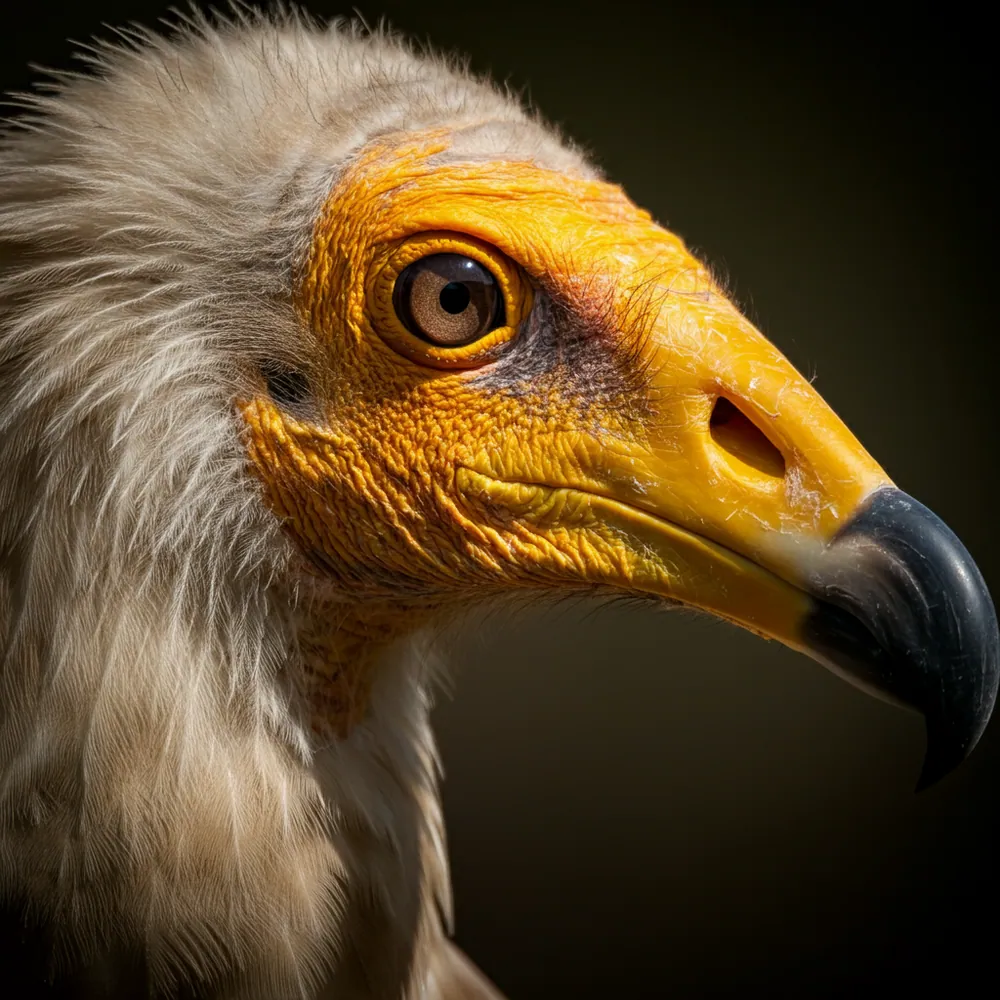
Hey adventurers! Get ready to meet one of the most amazing birds soaring the skies: the Egyptian Vulture! This incredible bird has some super cool nicknames, like the "white scavenger vulture" and even "pharaoh's chicken" – how fancy is that? You can find these feathered friends all the way from sunny Spain, across North Africa, and even in parts of Asia, including India. When they're flying high, look out for their striking black and white wings and a tail shaped like a wedge – they're super easy to spot as they glide effortlessly on warm air currents, like nature's very own hang gliders!
But here's where it gets REALLY cool! Egyptian Vultures are nature's clean-up crew, munching on leftovers that other animals leave behind. But they're not picky eaters! They might snack on a small lizard or even a bird. Their most incredible superpower? When they find a super tough egg, maybe from an ostrich, they don't just give up! Nope, these clever birds pick up a big pebble, hold it in their beak, and then *toss* it onto the egg to crack it open for a tasty treat! Imagine that – a bird using a tool! How awesome is that? They're super smart and super special, making them one of the coolest creatures in the wild!
Where the egyptian vulture still lives — Europe, Africa, Asia
Egyptian Vultures often eat dead animals that have been poisoned, either by accident from farm chemicals or on purpose by people trying to kill other animals. When the vultures eat these poisoned meals, they get very sick or can even die.
Being done about itScientists and rangers are teaching people not to use harmful poisons and are working to make sure dead animals are disposed of safely. They also help find and treat sick vultures that have been poisoned.
Habitat loss
These vultures need wide-open spaces with cliffs or tall trees to build their nests and find food. When people build more houses, farms, and roads, these important natural areas disappear, leaving the vultures with no safe place to live or raise their babies.
Being done about itConservationists are creating special protected areas where vultures can live safely without their homes being destroyed. They are also working with communities to protect important nesting cliffs and make sure new buildings don't harm these vital spots.
Wildlife heroes are on a mission to save them by setting up special 'vulture restaurants' with safe, healthy food, and by working hard to stop harmful poisons from hurting these important birds. They also protect nesting sites and even raise baby vultures in special centers to release them back into the wild!
Also known asNeophron percnopterus
GroupAnimal
DietScavenger (primarily carrion, also eggs, small animals, insects, fruit)