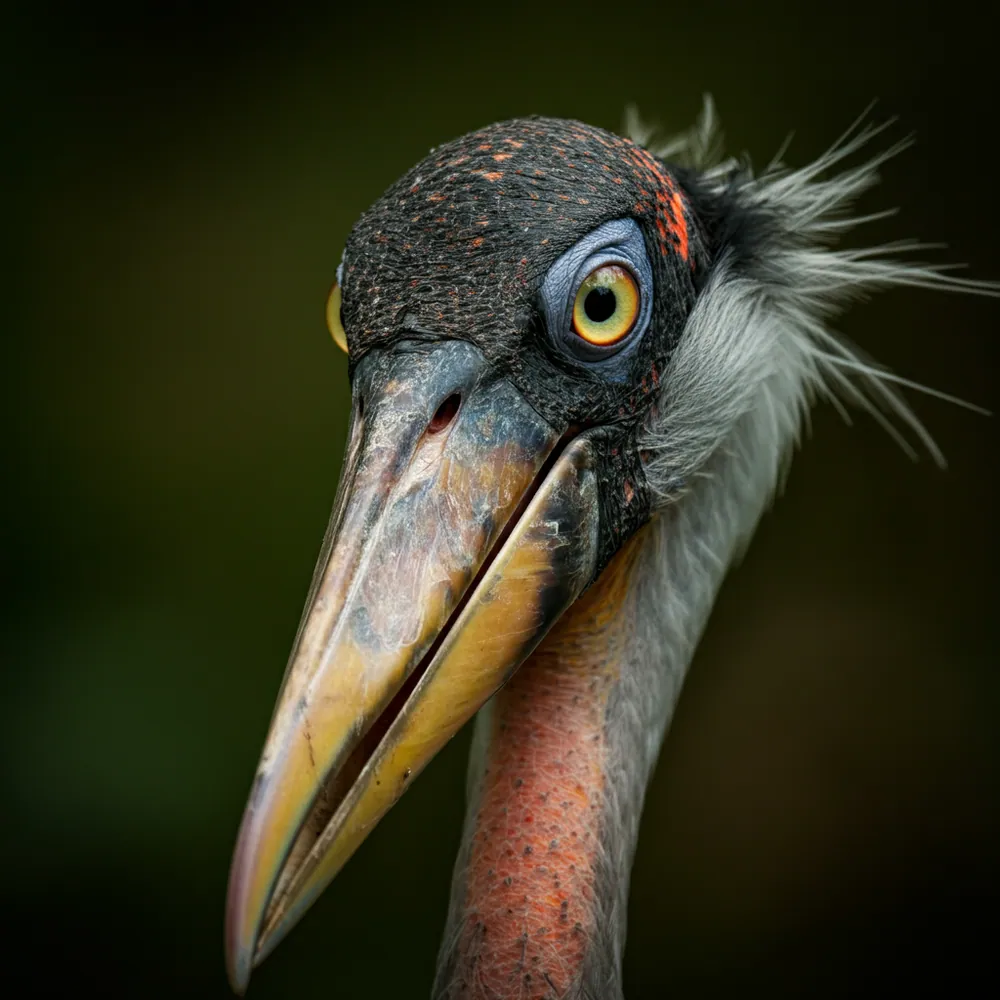
Get ready to meet one of nature's most extraordinary birds – the Greater Adjutant! Imagine a bird so tall it could look you in the eye, with a beak as big and strong as a wedge, and a super cool neck pouch that can puff up! This amazing stork might look a little serious with its bare head, but that's just its style. They even got their name 'Adjutant' because they walk with such a stiff, military-like stride, like a general inspecting the troops! But don't let their serious walk fool you, because when they take to the sky, they become masters of the air, soaring high above the clouds with the greatest of ease.
But what makes the Greater Adjutant truly special? They are like nature's very own clean-up crew! These incredible birds help keep our world tidy by eating things others leave behind, making sure everything stays neat and healthy. They're so good at their job that long ago, people in a big city called Calcutta even put them on their city's coat of arms and company logos – that's how important they were!
Sadly, there aren't many of these magnificent birds left today, making every single one a precious treasure. So next time you think about nature's helpers, remember the amazing Greater Adjutant, soaring high and keeping our world clean!
Where the greater adjutant still lives — India, Cambodia
Greater Adjutants often search for food near human areas, and sometimes they accidentally eat plastic bags or other trash, which can make them very sick or even stop them from eating real food. They can also be harmed by chemicals and dirty water found in polluted places.
Being done about itPeople are working hard to clean up landfills and stop trash from getting into the storks' homes, making sure garbage is put away safely. Scientists are also teaching communities that keeping their environment clean helps protect these magnificent birds.
Habitat loss
Many of the tall, old trees where Greater Adjutants build their enormous nests are being cut down to make room for farms or buildings, leaving them with no safe place to raise their chicks. Their feeding grounds, like wetlands and open fields, are also shrinking as human towns expand.
Being done about itConservationists and local people are protecting the remaining forests where these storks nest and planting new trees to create more homes for them. They are also working to save important wetlands and open areas so the storks have safe places to find food.
Brave scientists and local heroes, like the "Hargila Army" in India, are working super hard to protect these amazing birds by guarding their nesting trees and cleaning up their homes, making sure they have safe places to live and raise their babies. This important mission helps these special storks make a comeback!