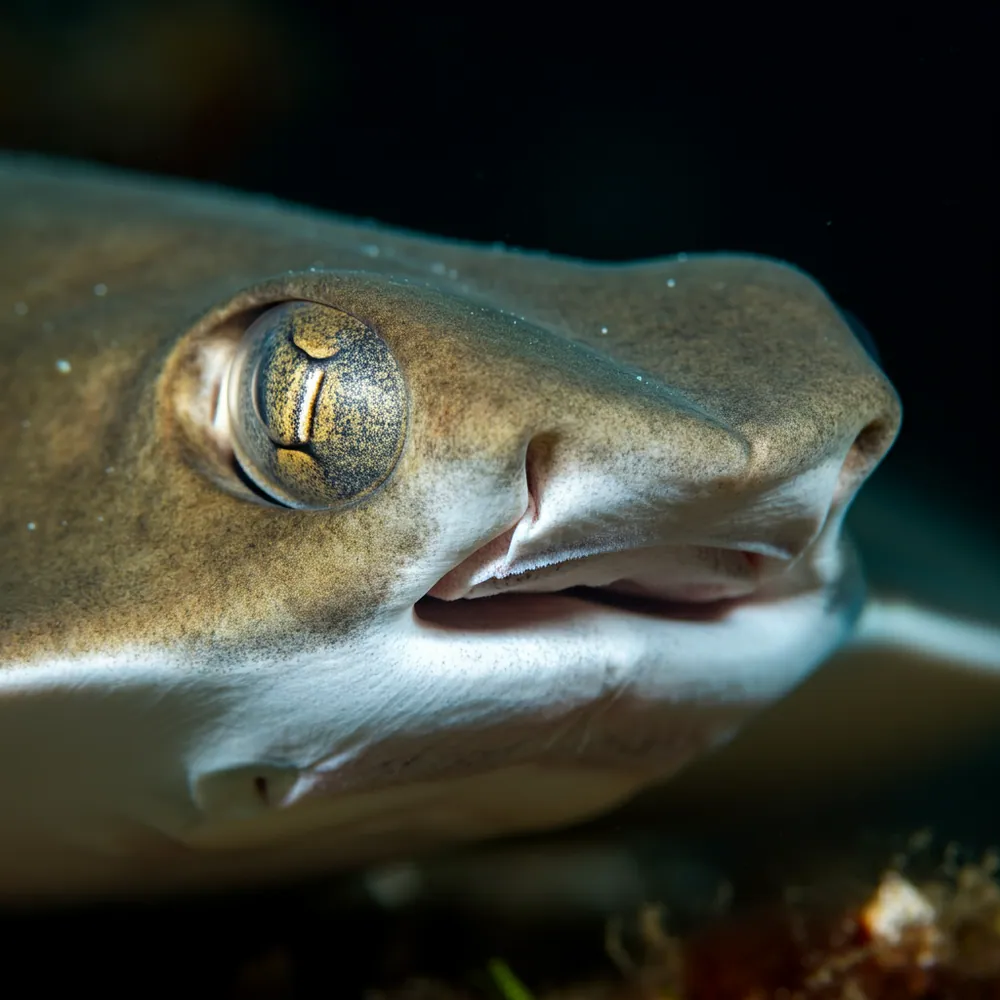
Imagine if a shark and a ray decided to have a super cool, super mysterious baby! That's kind of what you get with the amazing False Shark Ray! Sometimes called a "guitarfish" because of its awesome shape, this creature is a true ocean superstar. It has the flat, gliding body of a ray, perfect for sneaking around the seafloor, but then BAM! It also has a powerful sharky tail and two big fins on its back. And get this: its skin is like a chameleon's, mottled brown and grey, so it can disappear into the sand like magic!
Where does this incredible animal live? It loves warm, shallow waters near coasts and coral reefs, always hanging out on the sandy or muddy bottom. But don't expect it to zoom around like a speedy shark! The False Shark Ray is a master of disguise and patience. It often buries itself, leaving just its beady eyes peeking out, waiting for a tasty snack like small fish or crabs to swim by. Then, in a flash, it uses its special snout like a super-sensitive shovel to scoop up its yummy meal! It's like a secret agent of the seabed!
But wait, there's more! This "guitarfish" isn't just a cool hunter; it's also a fantastic ocean gardener! As it digs and sifts through the sand for food, it's actually helping to clean and aerate the seabed, which is super important for all the other plants and animals that live there. It's like giving the ocean floor a big, healthy stir! By keeping things balanced and tidy, the False Shark Ray is an unsung hero of the sea, making sure its underwater home stays healthy and full of life. How cool is that?!
Where the false shark ray still lives — Australia, Bangladesh, Brunei Darussalam, China, India, Indonesia…
Imagine your bedroom suddenly disappearing! That's a bit like what happens to the False Shark Ray when its home, the sandy seafloor and coral reefs, gets destroyed. Things like building new towns near the coast or pollution can mess up their special underwater places where they find food and hide.
Being done about itBut don't worry, people are working hard to protect these homes! Scientists and rangers are setting up special 'no-fishing' zones and cleaning up pollution, which helps keep the False Shark Ray's underwater neighborhoods safe and healthy.
Bycatch / Overfishing
Sometimes, when big fishing boats are trying to catch other fish, the False Shark Ray gets tangled in their nets by accident. This is called 'bycatch,' and it means many rays get hurt or can't swim away, even though they weren't the fish the fishermen wanted.
Being done about itTo help, clever scientists are inventing special fishing nets with escape hatches that let rays and other unwanted animals swim free. Also, some places are teaching fishermen how to fish in ways that are safer for all ocean creatures, including our False Shark Ray friends.
Ocean heroes are on a special mission, working hard to learn more about these mysterious creatures and protect their ocean homes from pollution and accidental fishing. This important work helps give the False Shark Ray a chance to grow their families and swim safely for years to come!