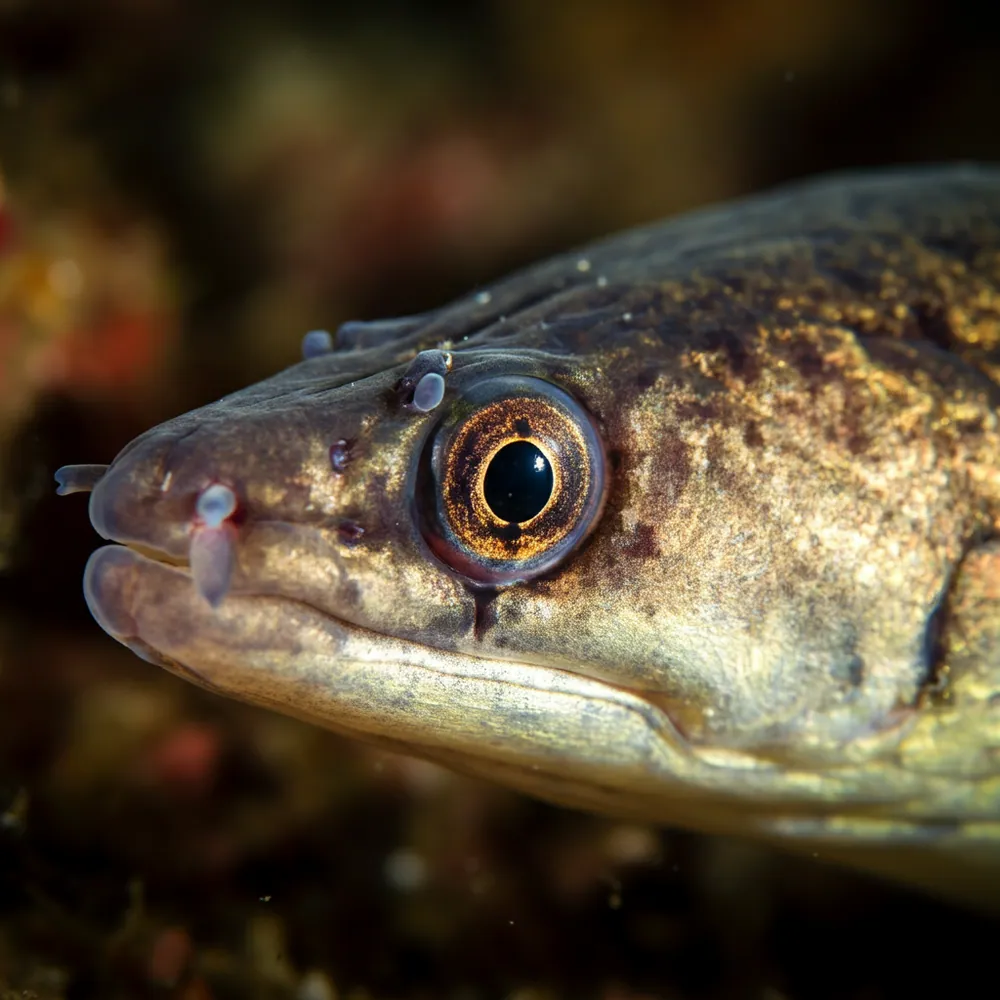
Hey adventurers! Get ready to meet one of the most mysterious and amazing creatures in our rivers: the European Eel! Imagine a long, slithery friend, like a living ribbon, that glides through the water with incredible grace. Its body is super sleek, often olive-green or brown on top and silver underneath, and its special fins run almost its whole length, making it look like it's wearing a continuous cape! Even though it looks smooth, its skin is thick and a bit slimy – perfect for protection. And get this: it can even wriggle across wet land to find new watery homes! How cool is that?
But the European Eel's life story is like an epic superhero movie! It starts thousands of miles away in a faraway ocean called the Sargasso Sea, as a tiny, see-through larva. These little guys drift all the way across the Atlantic, growing into transparent "glass eels" before they even reach our rivers. There, they become "yellow eels," hiding in the mud and hunting snacks like worms and bugs for years. Then, when it's time, they transform again! Their eyes get bigger, their bodies turn super shiny, and they stop eating! They become "silver eels" and swim *all the way back* to the Sargasso Sea to lay their eggs, a journey of thousands of miles, just once in their lives. Talk about a super swimmer!
This incredible eel isn't just a cool traveler; it's also a super important part of its watery home. It helps keep things balanced by eating smaller creatures and even stirs up the riverbed, like a tiny gardener! But sadly, these amazing explorers are now critically endangered. That means they need our help to keep their incredible journey going for many more generations. Let's learn more about them and protect their watery world!
It is about as long as you are tall.
Where the european eel still lives — Europe, North Africa
Eels spend their lives in rivers and the ocean, and sadly, these waters can become full of harmful chemicals, plastics, and other trash. This pollution can make eels very sick, poison their food, or even stop them from growing up strong and healthy.
Being done about itScientists are working hard to understand where pollution comes from and how to clean it up. Many people are also helping by cleaning rivers and beaches, and governments are creating rules to stop factories from dumping harmful waste into the water.
Habitat loss
Eels need healthy rivers, wetlands, and estuaries (where rivers meet the sea) to live and grow, but many of these special places are being destroyed or blocked. Things like building dams, draining wetlands for farms, or building houses can take away the eels' homes or stop them from moving freely.
Being done about itEngineers are now building special 'eel passes' or 'ladders' around dams to help eels swim past obstacles and reach their growing grounds. People are also working to restore damaged wetlands and protect riverbanks, giving eels more safe and healthy places to live.
Bycatch / Overfishing
Sometimes, young eels or adult eels get caught by accident in fishing nets meant for other fish, which is called bycatch. On top of that, too many eels have been caught by fishermen for food in the past, leading to a big drop in their numbers.
Being done about itFishermen are learning to use special nets and fishing methods that let eels escape, and there are now strict rules about how many eels can be caught and when. Scientists are also trying to raise eels in special farms, hoping to reduce the need to catch wild eels.
Scientists and helpers are working hard to build special 'eel ladders' around dams so eels can swim to their homes, and they're also carefully moving baby eels to safer waters to help them grow big and strong!