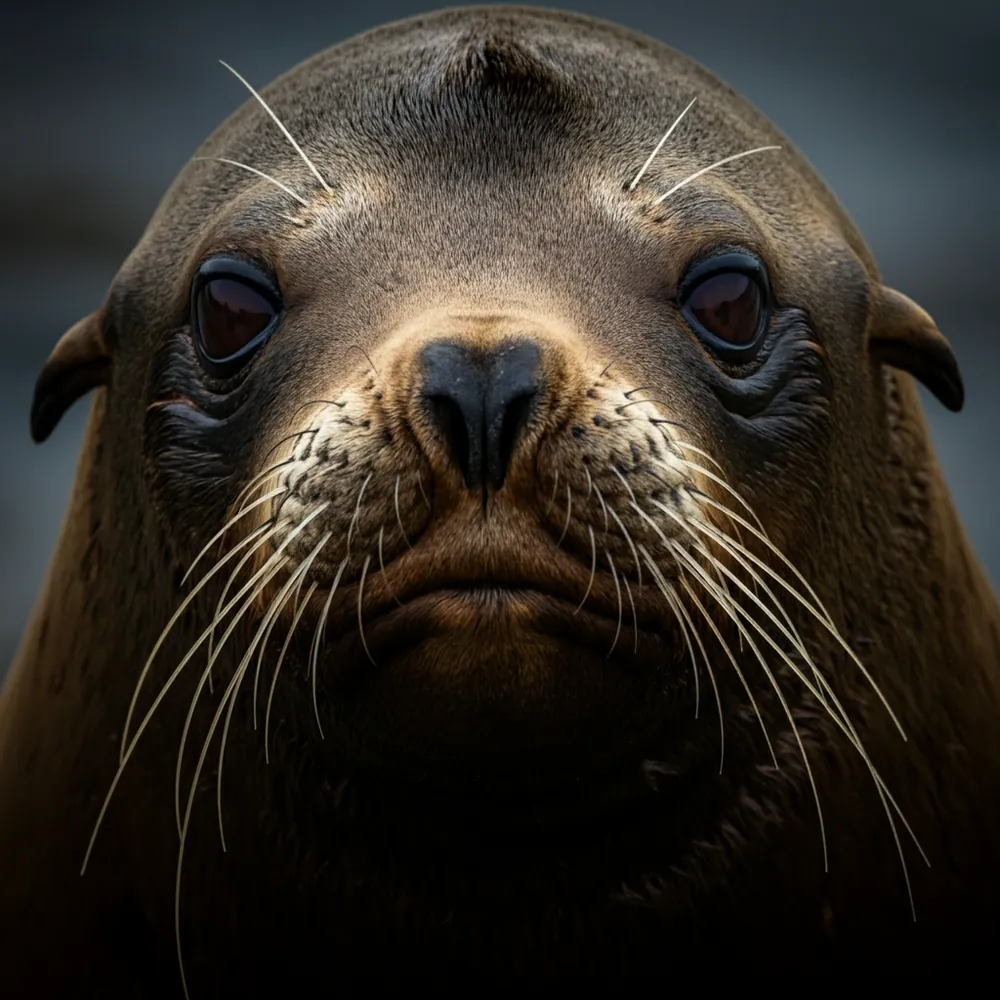
Get ready to meet a true superstar of the ocean – the mighty Steller Sea Lion! Imagine a creature so grand, it's often called the 'King of the North Pacific.' These amazing animals are the BIGGEST of all the eared seals, and they look super cool with their coats that can be golden-blonde or even reddish-brown. The grown-up boys, called bulls, are extra special because they have huge, powerful necks and a shaggy 'mane' of fur, just like a lion! That's how they got their name! Their strong, paddle-like front flippers help them zoom through the water super fast, and guess what? They can even use them to waddle around on land! Plus, they have long, wiggly whiskers that help them feel their way around and find yummy snacks in the dark, deep ocean.
But Steller Sea Lions aren't just big and strong; they're also super social! You can find them hanging out in huge, noisy groups called rookeries on rocky beaches and islands. Think of it like a giant, bustling sea lion party! They are incredible hunters, diving deep into the icy water to snatch up all sorts of tasty treats like fish, squid, and even octopus. When it's time for babies, the big bull sea lions roar to show who's boss, while the amazing moms lovingly care for their light-brown pups, teaching them everything they need to know to survive in their giant ocean home. How cool is that?
These magnificent sea lions are like the ocean's superheroes! As apex predators, they help keep the whole ocean healthy by eating lots of fish and other creatures, making sure no one animal takes over. If you see lots of healthy Steller Sea Lions, it's a super good sign that the ocean around them is also healthy and full of life! They are like a living thermometer for the ocean! While they're mostly at the top of the food chain, sometimes a young or sick sea lion might become a meal for a powerful killer whale or a big shark, which is just part of nature's big food circle. So next time you think of the ocean, remember these incredible, roaring, swimming kings!
Where the steller sea lion still lives — USA, Canada, Russia, Japan
Steller sea lions live in the ocean, and sometimes harmful things like plastic trash and chemicals end up there. They might accidentally eat plastic, which can make them very sick, or swim in waters that are dirty with pollution.
Being done about itScientists are studying how pollution affects sea lions, and many people are working hard to clean up beaches and oceans. We can all help by reducing the trash we make and making sure chemicals are disposed of safely.
Climate change
Climate change is making ocean waters warmer and changing where the fish that Steller sea lions eat can be found. This makes it harder for them to find enough food to survive and stay healthy.
Being done about itScientists are studying how climate change affects ocean animals, and governments are working to reduce the gasses that warm our planet. We can help by using less energy and choosing ways to travel that don't pollute as much.
Bycatch / Overfishing
Steller sea lions can accidentally get tangled in fishing nets meant for other fish, which is called bycatch, and they can get hurt or even drown. Overfishing also means there aren't enough fish left in the ocean for the sea lions to hunt and eat.
Being done about itFishermen are learning to use special fishing gear that helps sea lions avoid getting caught, and governments are setting rules to make sure not too many fish are caught. Scientists also watch sea lion populations and their food sources to ensure they have enough to eat.
Brave scientists and conservationists are on a very important mission to help Steller Sea Lions! They're working hard to protect their ocean homes from too much fishing and pollution, and they're also carefully studying these amazing animals to understand how to keep them safe and thriving for future generations.
Also known asEumetopias jubatus
GroupAnimal
DietCarnivore
SizeMales up to 1, 120 kg (2, 470 lb), females up to 350 kg (770 lb)