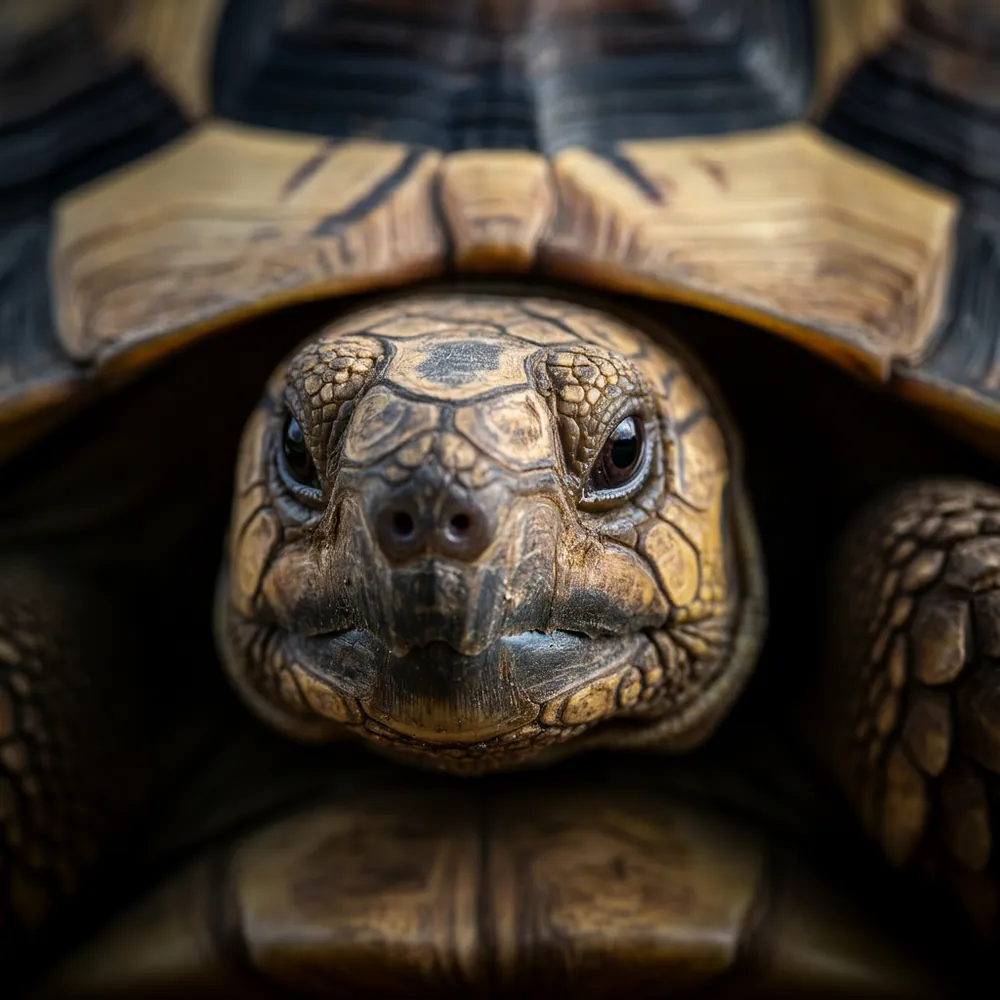
Hold onto your hats, adventurers, because today we're shrinking down to meet one of the desert's most adorable and amazing residents: the Egyptian Tortoise! Imagine a tiny, living sculpture, about the size of your hand, that looks like it was perfectly carved right out of the desert sand. Its beautiful shell is usually a pale, sandy yellow or golden-tan, often with cool star-like patterns. This isn't just for show – it's super camouflage, making it practically invisible to hungry predators (and even us!) against the rocky desert floor. It's like a desert ninja, blending in perfectly with its surroundings!
This little tortoise is a master of desert living! When the sun isn't too scorching, usually in the cool mornings and late afternoons, our shelled friend carefully pokes its head out to find its favorite snacks. It loves munching on tender desert grasses, juicy plants, and colorful wildflowers – talk about a healthy diet! But when the midday sun gets too hot, or if a tricky fox or soaring bird of prey comes by, this clever tortoise knows exactly what to do. It quickly tucks itself into a shallow dip in the ground, under a bush, or even into an abandoned burrow. Its slow and steady pace isn't just because it's relaxed; it's a super-smart way to save energy in its hot, dry home.
But wait, there's more! This amazing tortoise isn't just cute; it's a super important desert helper! As it snacks on plants and flowers, it actually helps spread seeds, like a tiny desert gardener, helping new plants grow. That makes it a vital part of its desert home. Sadly, these incredible "living fossils" are now critically endangered, which means they need our help to survive. Protecting the Egyptian Tortoise isn't just about saving one awesome animal; it's about keeping the whole desert ecosystem healthy and happy. Isn't that something truly special?
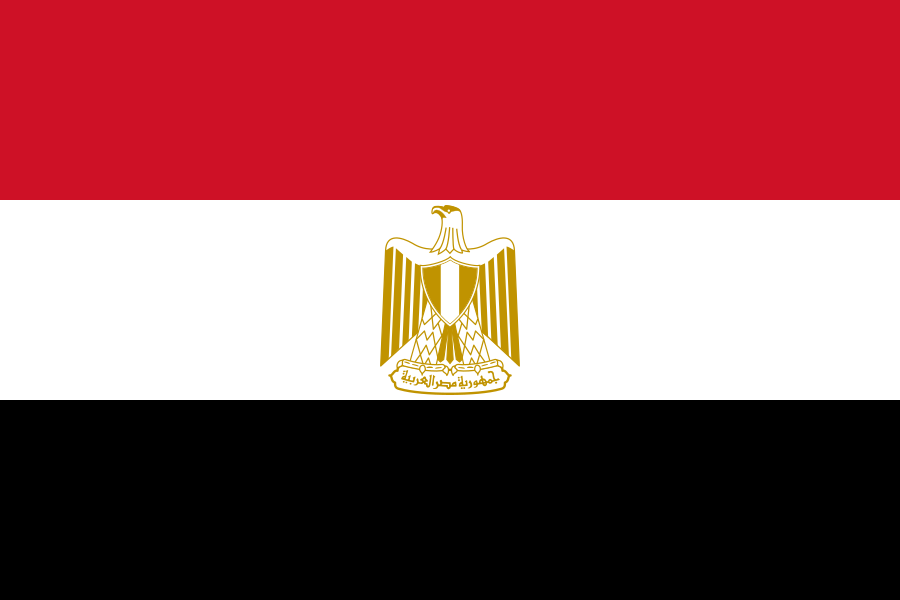
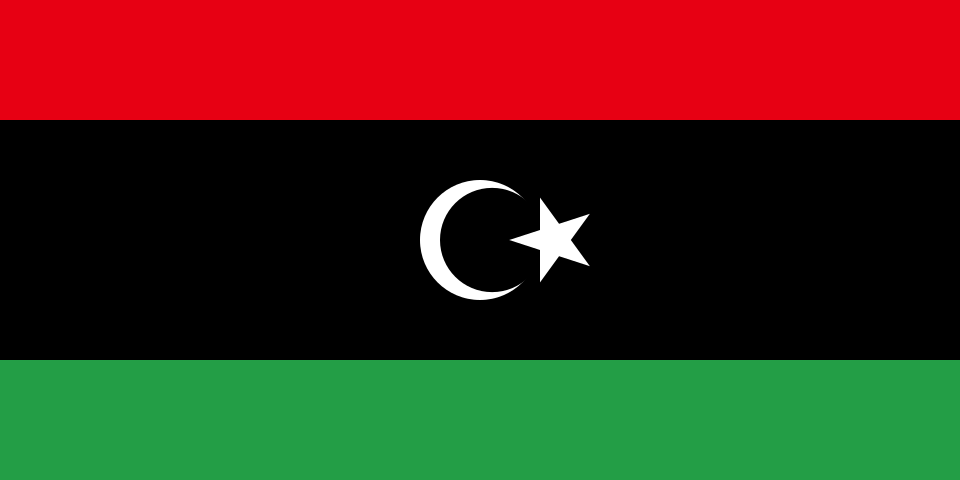
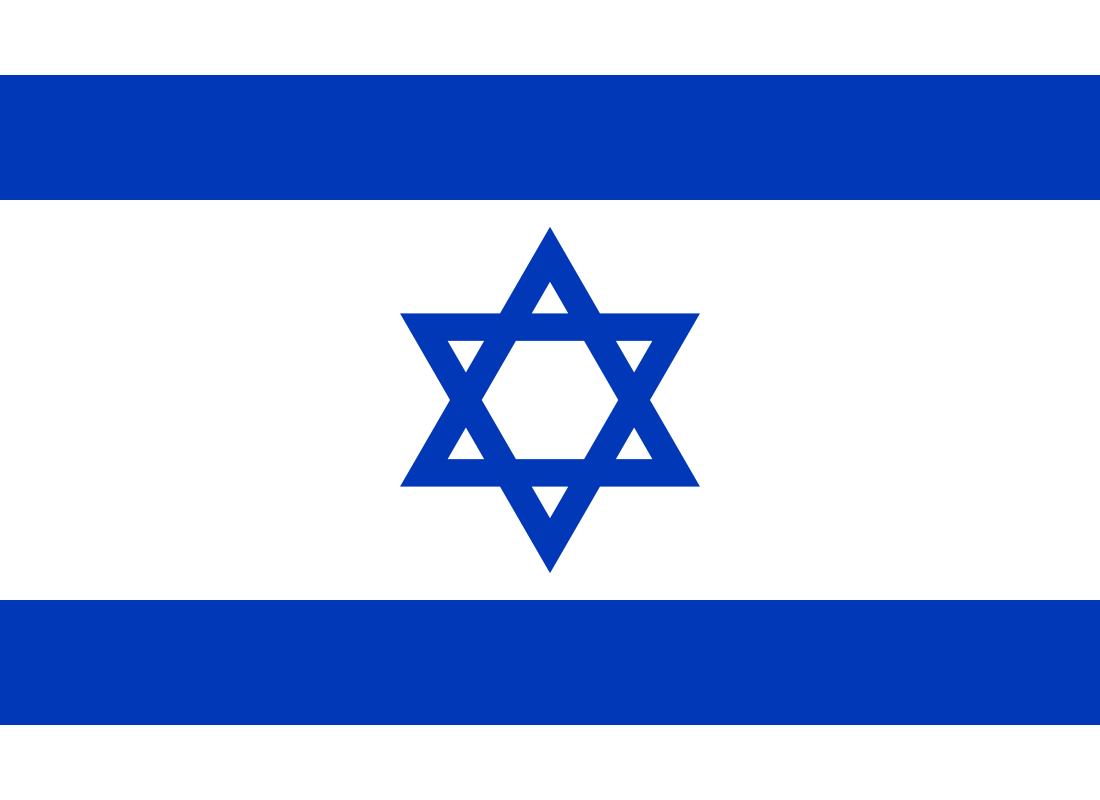
Where the egyptian tortoise still lives — Egypt, Libya, Israel
Sadly, some people illegally catch these small, adorable tortoises from their desert homes to sell them as pets, even though it's against the law. This means fewer and fewer Egyptian Tortoises are left to live freely in the wild.
Being done about itBrave rangers and police work hard to stop people from illegally taking tortoises, and scientists help teach everyone why these special animals belong in their natural desert habitat.
Habitat loss
The sandy, scrubby places where Egyptian Tortoises live are sometimes turned into farms, towns, or roads, which leaves them with no safe place to find food or hide. This makes it very hard for them to survive and raise their babies.
Being done about itScientists and conservationists are working to protect big areas of the desert where tortoises live, making sure these places stay wild and safe for them to roam and grow without being disturbed.
But don't worry, brave scientists and wildlife heroes are on a super important mission! Zoos and special breeding centers, like those working with the San Diego Zoo Wildlife Alliance, are carefully raising baby tortoises to help grow their numbers, and everyone is working hard to protect their desert homes from harm.