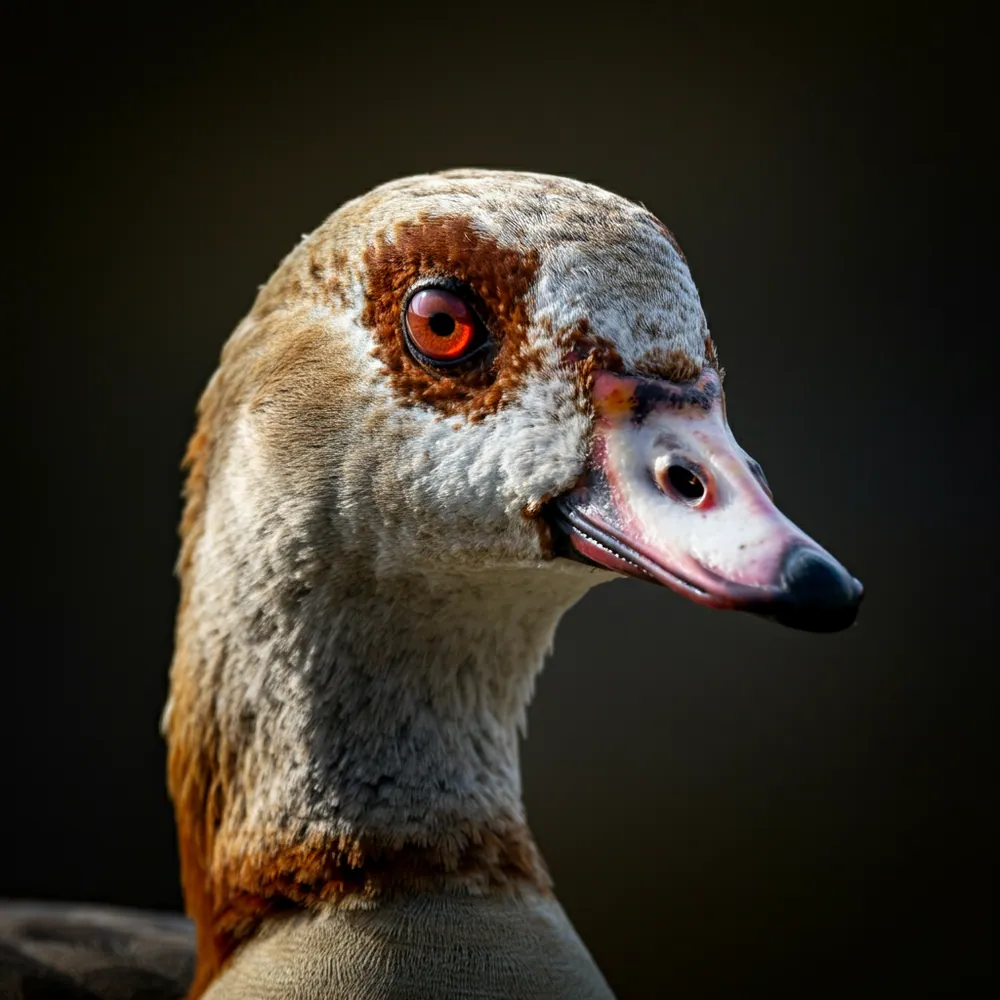
Hey explorers! Get ready to meet a bird that looks like it flew straight out of an ancient Egyptian painting – the incredible Egyptian Goose! Imagine a goose wearing a mysterious mask, with reddish-brown patches around its eyes, like a secret agent of the wetlands. It also has a cozy chestnut scarf around its neck, and its body is a beautiful patchwork of soft greys, browns, and tans. But wait, there's more! When it takes flight, BAM! Bright white patches flash on its wings, making it look like a flying superhero. And don't forget those long, salmon-pink legs and matching beak – they're super stylish!
These aren't just pretty faces, oh no! Egyptian Geese are super spirited and tough, living near rivers and lakes all over Africa. They love munching on tasty grasses and plants, like little lawnmowers for nature, keeping everything tidy. But here's the cool part: they are also super protective! If another animal gets too close to their home, they'll let out a loud, squawking call that sounds like they're saying, "Hey, you! This is *our* turf!" They're like the noisy, watchful guardians of their watery world.
And guess what? They're not just beautiful and bossy, they're super important too! By nibbling on plants, they help keep riverbanks neat, and when they drop seeds, they help new plants grow. Plus, their loud calls aren't just for scaring away intruders – they also warn other animals, like a feathered alarm system, letting everyone know if a sneaky predator is nearby. So, the next time you see an Egyptian Goose, remember, you're looking at a true superstar of the wild!
Climate change is making our world warmer, which can dry up the wetlands and rivers where Egyptian Geese live and find their yummy food. This means they might struggle to find enough water or a safe place to build their nests.
Being done about itScientists are working hard to understand how these changes affect the geese, while many people are trying to use less energy and plant more trees to help slow down climate change.
Habitat loss
Egyptian Geese are losing their homes when people build new houses, farms, or roads where their wetlands and grassy areas used to be. This means there's less space for them to find food, build nests, and safely raise their goslings.
Being done about itMany amazing people, like conservationists and park rangers, are working to protect and restore wetlands and riverbanks so the geese have safe places to live. They also teach us how important it is to share our planet with these beautiful birds.
Since these geese are doing quite well, there aren't special breeding programs just for them. Instead, people are working hard to protect the wetlands and rivers where they live, ensuring these important homes stay safe and clean for all wildlife!