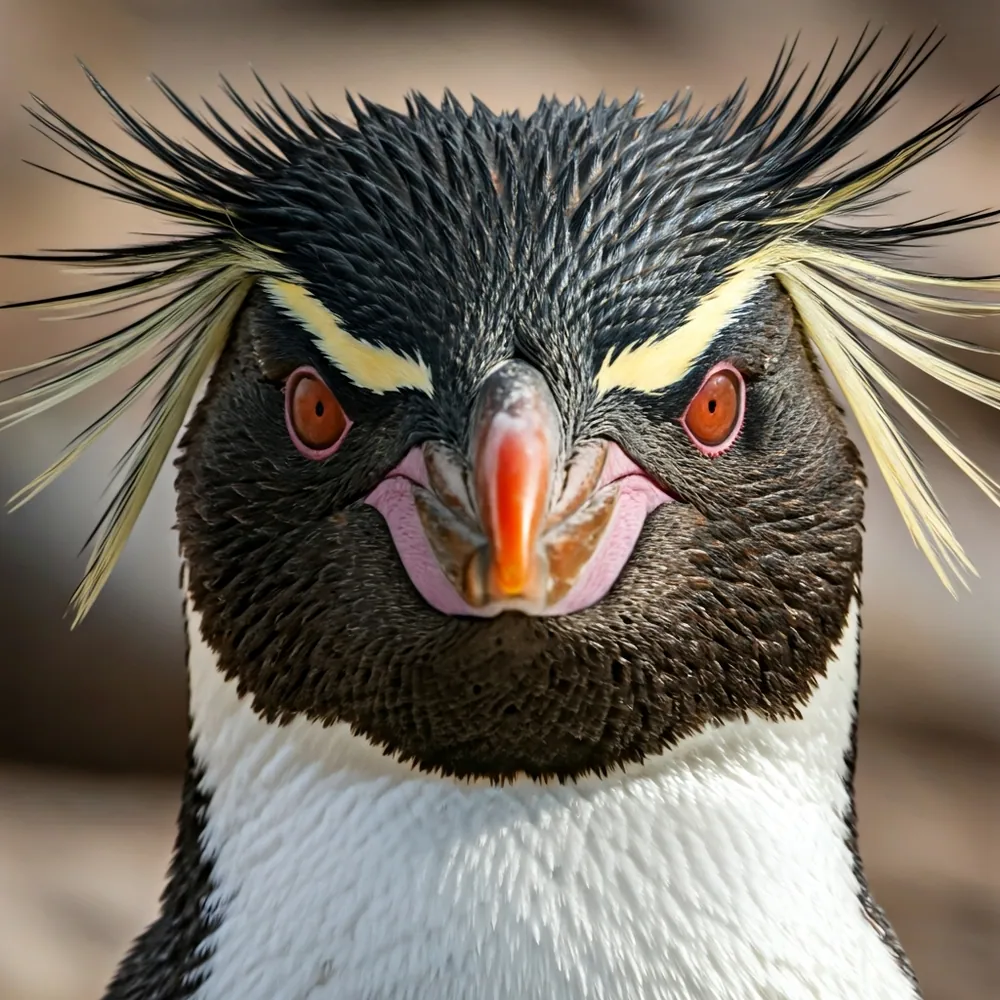
Hey there, future wildlife explorer! Get ready to meet one of the coolest, most energetic birds on the planet: the Southern Rockhopper Penguin! Imagine a little bird, barely two feet tall, rocking a super spiky, bright yellow hairdo that looks like it's ready for a rock concert. Add some fiery red eyes and a bright orange beak, all wrapped up in a sleek black and white suit, and you've got this amazing creature! These tiny titans are packed with energy and a whole lot of spunk.
Now, forget everything you know about penguins waddling! Our Rockhopper friends don't waddle; they literally *hop* and scramble like tiny mountaineers over rugged rocks and cliffs. It's like watching a super agile ninja penguin! When they dive into the chilly ocean, they transform into speedy, torpedo-like swimmers, zipping through the water to catch yummy krill, squid, and fish. They live in giant, bustling neighborhoods called colonies, where thousands of them chatter, bray, and flap their flippers – talk about a busy, bouncy place!
These incredible birds are not just cute and bouncy; they're super important for keeping the ocean healthy. They're like the ocean's little detectives, helping us understand what's happening in their remote, watery homes. So next time you think of a penguin, remember the Southern Rockhopper – a true punk-rock star of the sea, full of amazing bounces, incredible speed, and endless charm!
Where the southern rockhopper penguin still lives — Indian Ocean
Climate change is making the ocean waters where rockhopper penguins live warmer. This means it's harder for them to find their favorite food, like krill and small fish, and their homes can be hit by stronger storms.
Being done about itScientists are carefully watching how warming oceans affect the penguins and their food supplies. We can all help by using less energy at home, like turning off lights and walking more, to slow down climate change.
Habitat loss
Sometimes, people build things or cause pollution near the rocky shores and grassy cliffs where rockhopper penguins like to build their nests. When their nesting spots disappear or get dirty, it's tough for them to raise their fluffy chicks safely.
Being done about itRangers and conservationists are working hard to protect the special islands and beaches where penguins nest, making sure these places stay safe and clean. They also help remove trash from the beaches that could harm the penguins.
Brave scientists and conservation heroes are working hard to protect their wild island homes from pollution and keep our oceans clean so these penguins don't get tangled in trash or oil. They're also carefully watching over penguin colonies to make sure these spiky-haired birds have safe places to raise their chicks, which is a super important mission!