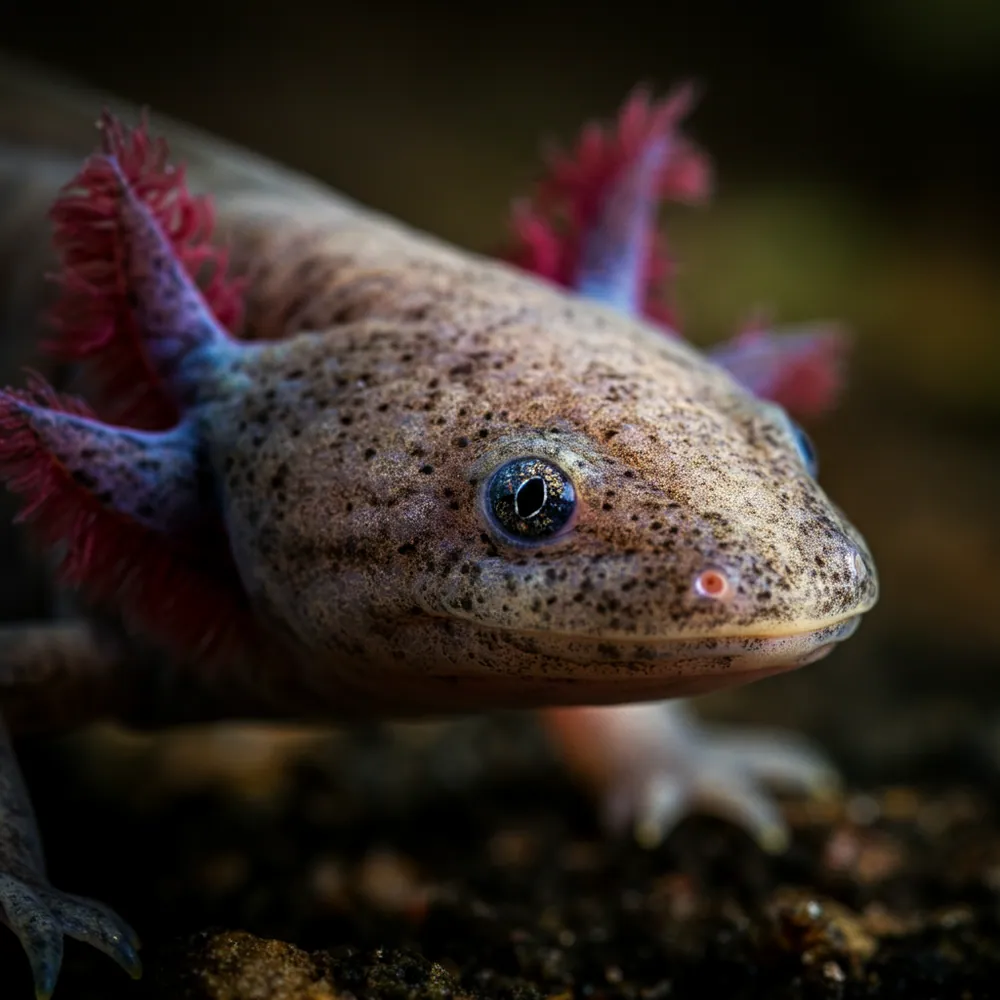
Get ready to meet one of the coolest, most mysterious creatures on Earth: the amazing axolotl! Imagine an animal that *never* truly grows up, staying a cheerful "teenager" its whole life. This super-special salamander swims around with a permanent, adorable smile and the most incredible feathery gills fanning out from its head like a magnificent, living crown! While wild axolotls often blend in with their murky homes, the ones you might see in aquariums glow in vibrant pinks, whites, and even gold.
But wait, there's more! The axolotl isn't just cute; it's a real-life superhero of regeneration! If it loses an arm or a leg, or even part of its heart or brain, it can grow it back perfectly, without any scars. How cool is that?! This shy, bottom-dwelling creature lives in the ancient canals near Mexico City, quietly lurking and waiting to snap up tasty worms or tiny insects. It’s like a secret, underwater ninja with incredible healing powers!
Sadly, these incredible creatures are critically endangered, which means they need our help. Their homes are shrinking, and they face dangers from pollution and new predators. But by learning about them and sharing their story, we can all become axolotl champions! Let's work together to protect these living wonders so they can keep inspiring us with their magic for generations to come.
Axolotls live in the waters of Lake Xochimilco near Mexico City, and when people throw trash or chemicals into the water, it makes their home dirty and sick. This dirty water can harm axolotls and make it hard for them to breathe and find food.
Being done about itScientists and local communities are working to clean up the lake, filtering out pollution and teaching people not to litter. They are also finding ways to stop dirty water from flowing into the axolotl's home in the first place.
Habitat loss
The special lake and canals where axolotls live are shrinking because cities are growing, and people are building more homes and roads. This means axolotls have less and less safe space to live, hide, and raise their young.
Being done about itPeople are creating special protected areas and restoring parts of the lake to make sure axolotls have safe, clean homes. They are also building 'shelter canals' where axolotls can live undisturbed.
Invasive species
New kinds of fish, like carp and tilapia, were introduced into the axolotl's lake, and these bigger fish eat axolotl babies and all their food. This makes it very hard for the axolotls to survive and grow up.
Being done about itScientists are working to control the number of these invasive fish and create special areas, like 'axolotl shelters,' where the native axolotls can live safely away from these predators. They are also teaching people about the importance of not introducing new species into the wild.
But don't worry, superhero scientists and caring communities are building special 'axolotl shelters' and cleaning up their lake home to give these amazing creatures a safe place to live and grow, so they can one day swim free again!
Also known asAmbystoma mexicanum
GroupAnimal
HabitatFreshwater lake
DietSmall insects, worms, and tiny fish.
PredatorsLarge fish and birds. Now, the main threat is invasive fish species.