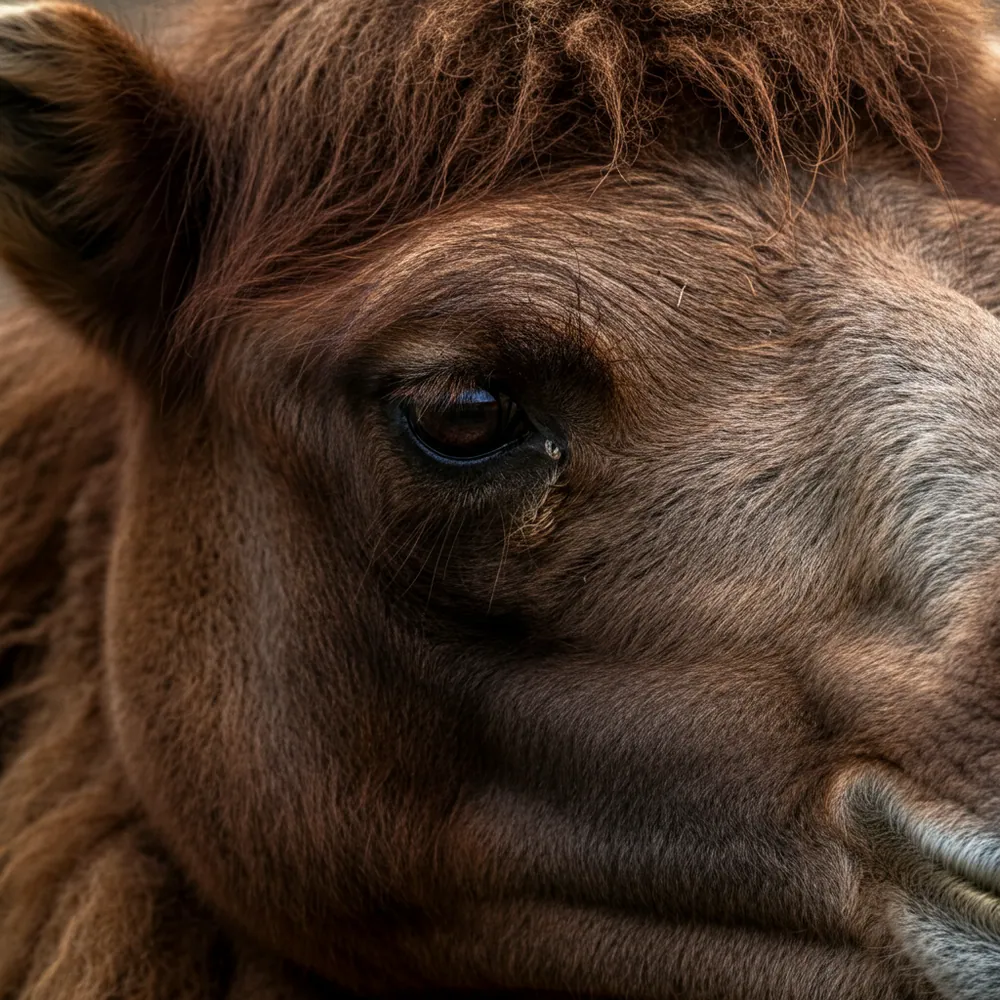
Hey adventurers! Get ready to meet one of the toughest, coolest creatures on Earth: the amazing Bactrian Camel! You know the kind with *two* big, fluffy humps? Well, those aren't water bottles like some people think! Nope, they're super-packed with energy-rich fat, like a giant snack bar they carry on their backs for when food is hard to find. And get this: their thick, shaggy coats keep them toasty warm in freezing winters, then magically shed in summer so they don't get too hot. Talk about a built-in air conditioner and heater! Plus, they have special wide feet to walk on sand without sinking, and long eyelashes with closable nostrils to keep out stinging sandstorms. Every part of them is like a superhero gadget for desert life!
These incredible camels call the Gobi Desert in Central Asia home – a place so extreme, it goes from scorching hot to freezing cold! But the Bactrian Camel doesn't just survive there; it *thrives*! They wander in small herds, munching on almost anything, even thorny bushes and super salty plants that would make other animals sick. And here's the real jaw-dropper: they can drink water so salty, it would be toxic to most other animals! It's like they have a superpower to drink the undrinkable. These amazing creatures are like living legends, showing us how tough and adaptable life can be, even in the harshest places on our planet. They even help new plants grow by spreading seeds as they roam, making them true desert heroes!
Where the bactrian camel still lives — China, Mongolia
Wild Bactrian camels are losing their homes in the desert because of things like mining, farming, and towns expanding into their territory. This means they have less space to find food and water, which makes it harder for them to survive.
Being done about itScientists and conservationists are working to create special protected areas, like national parks, where these camels can live safely without their habitat being destroyed. They are also trying to find ways for humans and camels to share the land without harming each other.
Poaching / Illegal hunting
Sadly, some people illegally hunt these rare camels for their meat or hides, even though it's against the law. When camels are hunted illegally, fewer adults are left to have babies, making it very difficult for their numbers to grow.
Being done about itBrave park rangers patrol the deserts to stop illegal hunters and protect the camels from harm. Scientists are also using special collars with GPS trackers to keep an eye on camel herds and alert rangers if they are in danger.
People are on a super important mission to save these amazing camels! They are working hard to protect their desert homes from dangers like mining and pollution, and even have special breeding programs to help more baby camels be born and grow up strong.