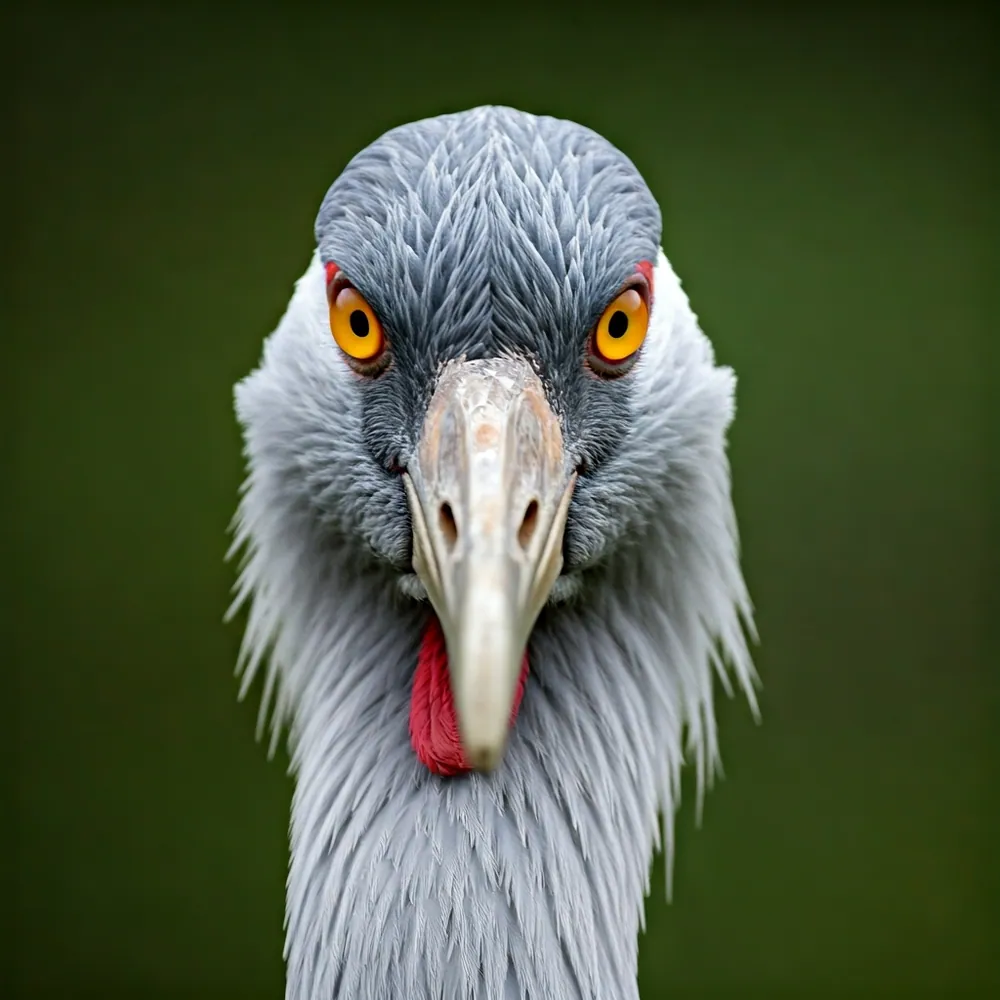
Hey explorers! Get ready to meet one of nature's most graceful superstars: the White-naped Crane! Imagine a bird almost as tall as you are, with super long, stilt-like legs and a neck that stretches to the sky. It wears a fancy suit of sleek, slate-grey feathers, but its real fashion statement is a bright white stripe that flows down its neck like a snowy scarf, topped off with a vivid red patch around its eye. It's like a feathered supermodel, standing tall and proud!
These amazing birds aren't just pretty faces; they're also champion travelers! Every year, they fly thousands of miles, all the way from icy Siberia to warmer places like Korea and Japan. Think of them as feathered adventurers on an epic journey! When they're not flying, they're busy being nature's detectives, using their long beaks to probe for yummy seeds, tiny insects, and even little fish in shallow water. But the coolest part? They have incredible dance parties! White-naped Cranes perform spectacular dances, bowing, leaping, and calling out with loud, trumpet-like sounds to find their lifelong partners. How incredible is that?!
And guess what? These cranes are also super important superheroes for their homes! As they forage, they help stir up the soil and spread seeds, acting like nature's very own gardeners. By protecting these magnificent birds and their marshy homes, we're actually helping countless other animals and plants that live there too! So, the White-naped Crane isn't just beautiful; it's a vital guardian of our planet's precious wetlands. Isn't that just incredibly cool and special?
Where the white-naped crane still lives — China, Russia, Mongolia, North Korea, South Korea, Japan
White-naped Cranes need special places like wetlands and grasslands to find yummy food and raise their fluffy chicks. When people build farms, houses, or roads, these important natural areas shrink, leaving the cranes with fewer safe places to live and grow.
Being done about itScientists and conservationists are working hard to save and even rebuild these wetland homes for the cranes. They help by setting aside land as protected areas and restoring damaged habitats so the cranes have safe places to call their own.
Climate change
Our Earth's changing climate can make the weather in the cranes' homes really unpredictable, bringing too much rain (floods) or not enough (droughts). This makes it super tough for them to find enough food and water, and even safe spots to build their nests.
Being done about itLots of people around the world are trying to slow down climate change by using less energy and finding cleaner ways to power our homes and cars. Scientists are also keeping a close eye on the cranes to understand how climate change affects them, so we can better protect their future.
Superheroes called conservationists, like the amazing International Crane Foundation, are working hard to protect the cranes' wetland homes and make sure they have safe places to raise their chicks!
Also known asAntigone vipio
GroupAnimal
DietOmnivore (seeds, roots, insects, small vertebrates, aquatic plants)