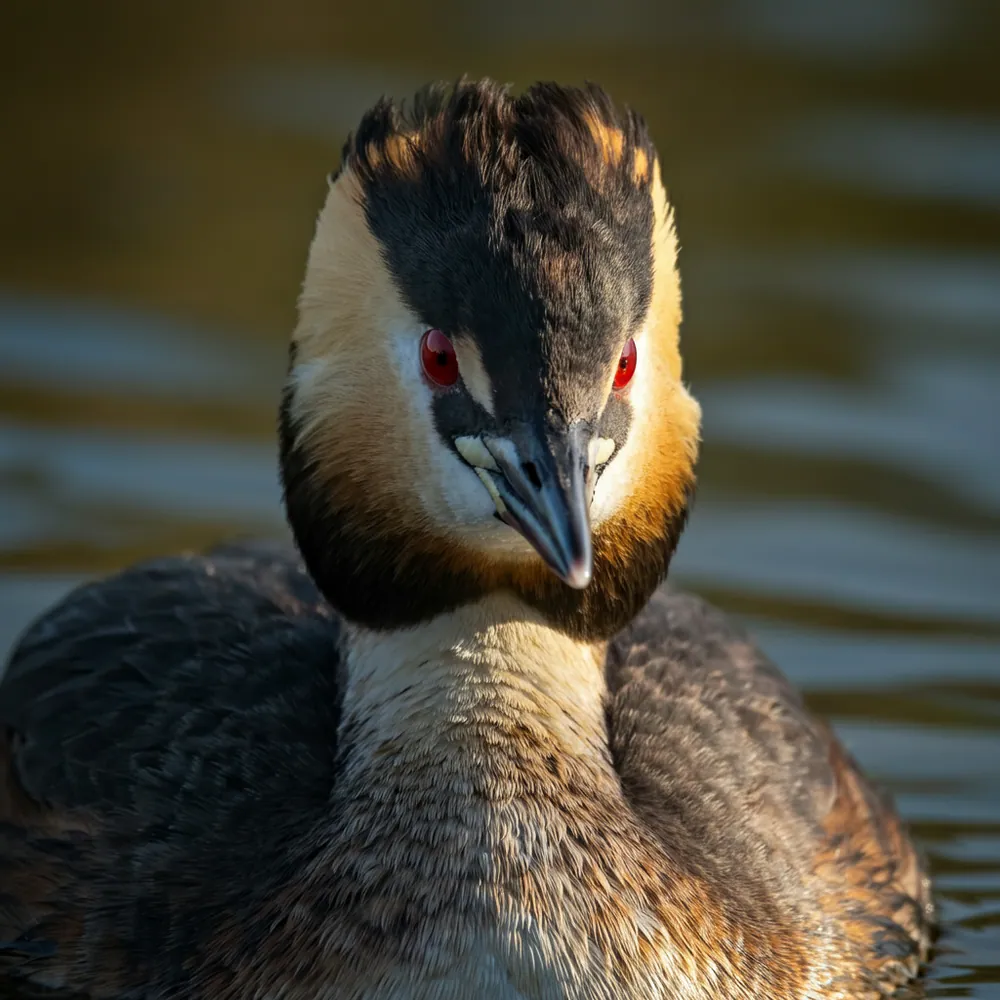
Hey there, wildlife explorers! Get ready to meet one of nature's most dazzling dancers: the incredible Hooded Grebe! Imagine a bird wearing a fancy black-and-white tuxedo, but with a super cool secret – a fluffy, fiery orange crest that bursts from its head like a magnificent halo! And just look into its eyes; they're like tiny, sparkling ruby jewels. This amazing bird lives in the wild, windy lands of Patagonia, and while it might waddle a bit on land, put it in water, and it transforms into a graceful underwater rocket, zipping through icy lakes with incredible speed!
The Hooded Grebe is an expert diver, always on the lookout for tasty snacks. But wait until you hear about its dance moves! When it's time to find a partner, two grebes will perform an amazing "tango" right on the water, bowing, dipping, and twirling perfectly together – it's like watching a magical ballet! They even build special floating nests from plants, creating cozy homes for their chicks. These fantastic birds are found *only* in these unique Patagonian lakes, making them a truly special treasure of our planet.
Sadly, these beautiful birds are facing some big challenges and need our help to keep their homes safe and sound. They're like a special alarm bell, telling us if their environment is healthy. By learning about the Hooded Grebe, you're helping to protect not just this unique creature, but also its one-of-a-kind watery world. Isn't that a super important and cool job?
The Hooded Grebe lives on special, cold lakes in faraway Patagonia, but some of these lakes are drying up or getting polluted. When this happens, the grebes lose their homes and places to find the tiny insects they love to eat.
Being done about itScientists and park rangers are working hard to protect these important lakes and make sure they stay healthy and full of water for the grebes. Regular people can help too by keeping lakes clean and learning about why these special places are so important.
Invasive species
Some people introduced new kinds of fish, like trout, into the grebes' lakes many years ago. These new fish eat all the grebes' favorite food, like small insects, and sometimes even scare away or eat baby grebes.
Being done about itScientists are carefully removing these hungry, non-native fish from some of the grebes' favorite lakes. This helps make sure there's enough food for the grebes and a safer place for their fluffy chicks to grow up.
Brave scientists and conservation groups, like the "Project Macá Tobiano" (Hooded Grebe Project), are working hard to protect these special birds by creating safe nesting areas, removing invading animals that bother them, and even building special floating platforms for their nests. It's a huge mission to make sure these amazing grebes have a future!