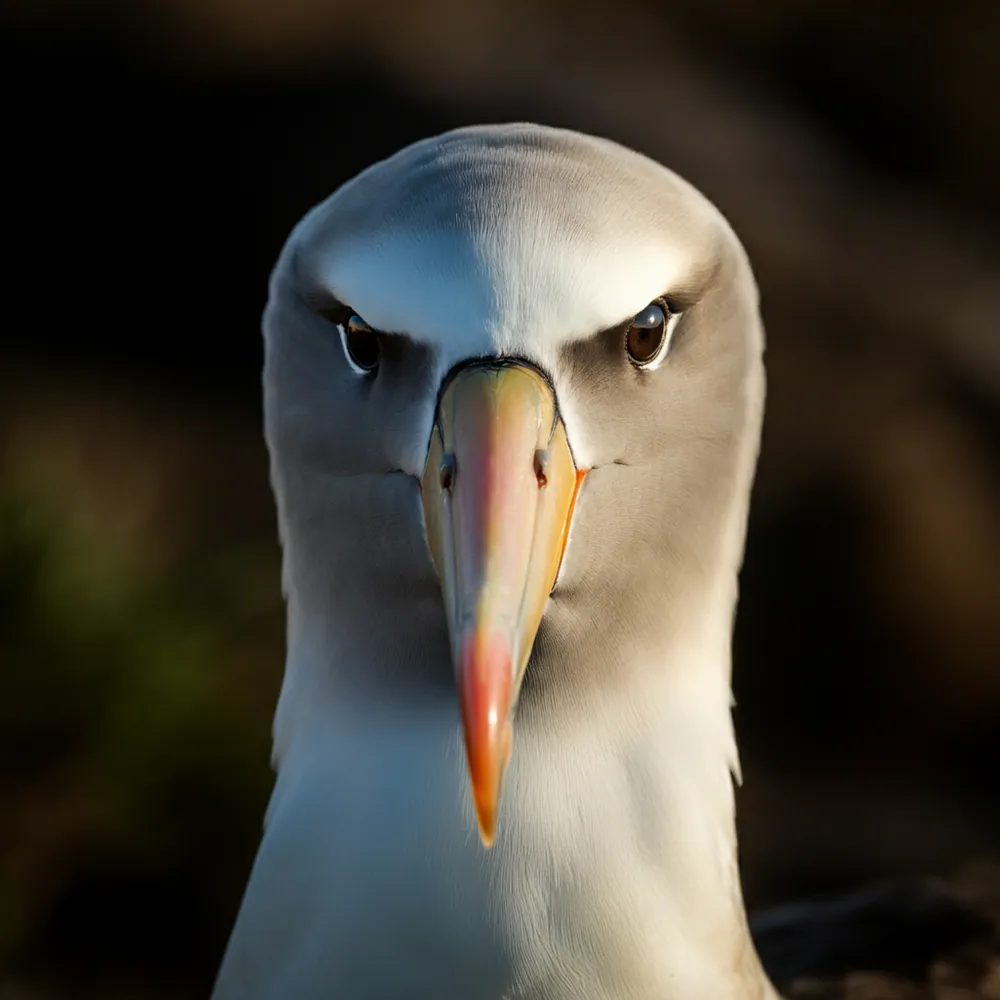
Imagine a bird so big, its wings could stretch wider than a small car! Meet the incredible Tristan Albatross, a true superstar of the sky and sea. These amazing birds have sleek white bodies and dark, powerful wings, with a special pink beak tipped in black. They are like nature's very own airplanes, soaring high above the waves for hours without even flapping their wings – talk about being a master glider!
Tristan Albatrosses are super loyal, finding one special partner for life! They spend almost their whole lives exploring the huge, wild ocean, only coming back to a few remote islands to build a nest. When it's time for a baby, the mom lays just one precious egg. Both parents then work super hard, taking turns to keep the egg warm and flying on epic fishing trips to bring back yummy squid and fish for their growing chick. It's a huge job, showing just how dedicated these bird parents are!
These magnificent birds aren't just pretty faces; they're like the ocean's clean-up crew and top hunters, helping to keep our seas healthy. But sadly, our amazing Tristan Albatrosses are in big trouble, and there aren't many left. Things like plastic in the ocean and dangerous fishing nets are making it hard for them to survive. By learning about them, we can all help protect these long-lived ocean adventurers and make sure they keep soaring for generations to come!
Where the tristan albatross still lives — United Kingdom
Climate change makes the ocean warmer and storms much stronger, which can wash away the albatross's nests and baby chicks on their small island homes. It also changes where their favorite fish and squid live, making it harder for hungry albatross parents to find food.
Being done about itScientists are carefully watching how climate change affects their food and nesting spots, and many people are working to use less energy to help slow down global warming for all animals. Conservationists are also protecting their island homes from rising sea levels and erosion.
Bycatch / Overfishing
Tristan Albatrosses fly long distances to find food like fish and squid, but sometimes they accidentally get caught on long fishing lines with sharp hooks or tangled in big nets. This "bycatch" is a huge problem, and too much fishing also means there's less food left for them to eat.
Being done about itScientists and fishing companies are working together to invent clever ways to stop albatrosses from getting caught, like using special weights on fishing lines or setting lines at night. Governments are also creating rules to make sure fishing is done sustainably so there's enough food for both people and albatrosses.
Brave scientists are on a super important mission to save these magnificent birds! One huge project is getting rid of sneaky, hungry mice from Gough Island, where the albatrosses build their nests, so tiny albatross chicks can grow up safe and sound.