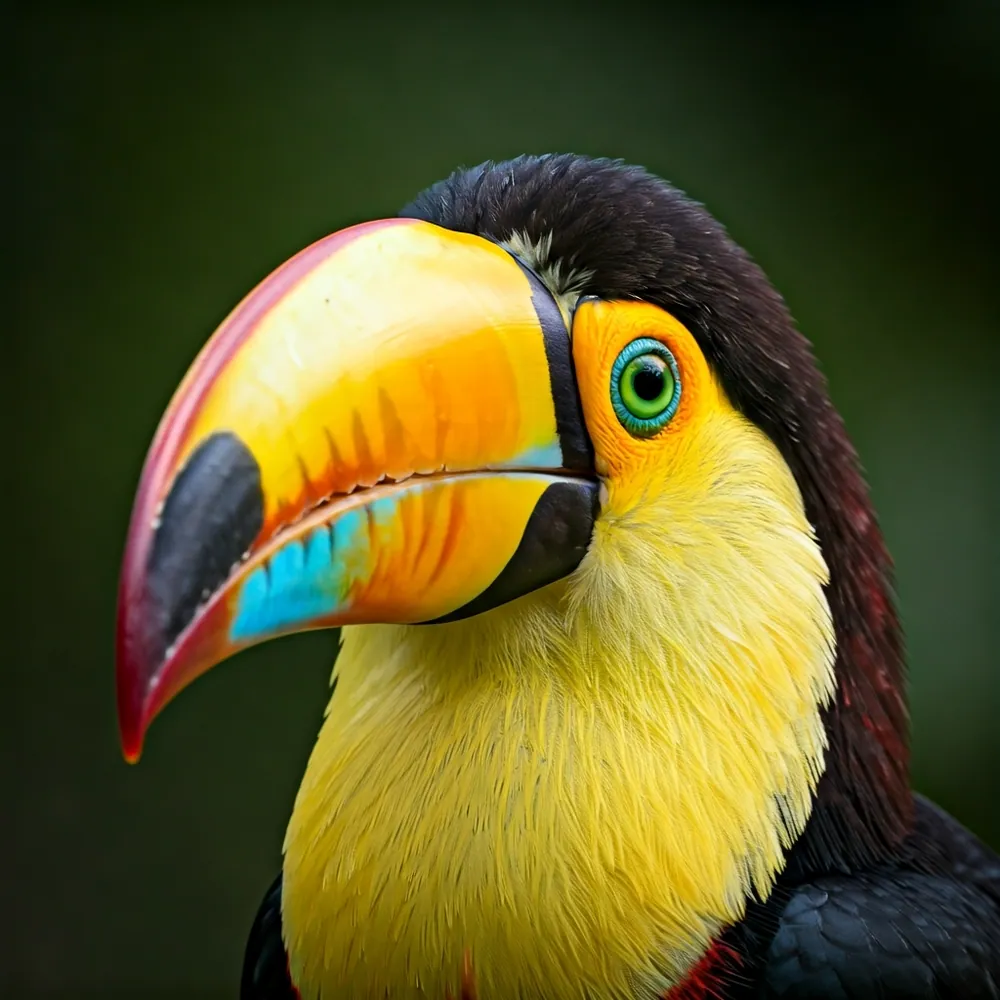
Hey there, future wildlife explorers! Get ready to meet one of the most dazzling birds on Earth – the magnificent toucan! Just one look, and you'll spot its most amazing feature: that HUGE, colorful beak! It looks like it's painted with the brightest greens, oranges, and blues you can imagine, contrasting beautifully with its sleek black feathers. You might think it's heavy, but guess what? It's actually super light, like a feather! This incredible beak isn't just for looking cool; it's a super tool for reaching yummy fruits, peeking into tiny spots, and even helping the toucan stay nice and cool in the warm rainforest air.
Imagine soaring high in the steamy rainforests of Central and South America. That's where toucans call home! They love to hang out in small family groups, hopping gracefully from branch to branch. While they can fly in short, zippy bursts through the dense jungle, they're mostly expert branch-hoppers. What's for dinner? Mostly a delicious buffet of tropical fruits, which they expertly pluck with their giant bills. But they also enjoy a crunchy insect or a little lizard snack now and then. Listen closely, and you might hear their funny, frog-like calls echoing through the trees!
But toucans are more than just pretty faces and cool beaks; they're superheroes of the rainforest! As they gobble up all those tasty fruits, they help spread the seeds far and wide through their droppings. This makes them the rainforest's best gardeners, helping new trees and plants grow everywhere! So, when you see a healthy toucan, you know the rainforest around it is thriving and happy. They are super important for keeping our planet's most amazing forests alive and bursting with life. Isn't that just incredibly special?
Toucans live in warm, green rainforests, but people are cutting down these trees to make farms or build towns. This means toucans lose their homes and can't find enough food or safe places to build their nests.
Being done about itMany people are working hard to protect toucan homes by creating special protected areas called national parks where trees can't be cut down, and they are also planting new trees to grow back the forests.
Climate change
Climate change is making the weather in toucans' rainforest homes hotter or drier, which can change the kinds of fruits and insects they rely on for food. Sometimes, big storms become more common, making it harder for toucans to survive.
Being done about itScientists are studying how climate change affects toucans, and many people are trying to use less energy and find cleaner ways to power our world to help slow down these big weather changes.
People are working hard to protect toucans by saving their rainforest homes from deforestation and creating special protected areas where they can live safely. Zoos also have important breeding programs for toucans, helping to teach everyone about these amazing birds and ensure their future.
Also known asRamphastos toco
GroupAnimal
HabitatForest
DietPrimarily fruit (frugivore), but also eats insects, eggs, and small lizards.
PredatorsLarge birds of prey, jaguars, and snakes.
Lifespan15 - 20 years
SizeLength: up to 65 cm (26 in); Weight: 500-860g (1.1-1.9 lbs)