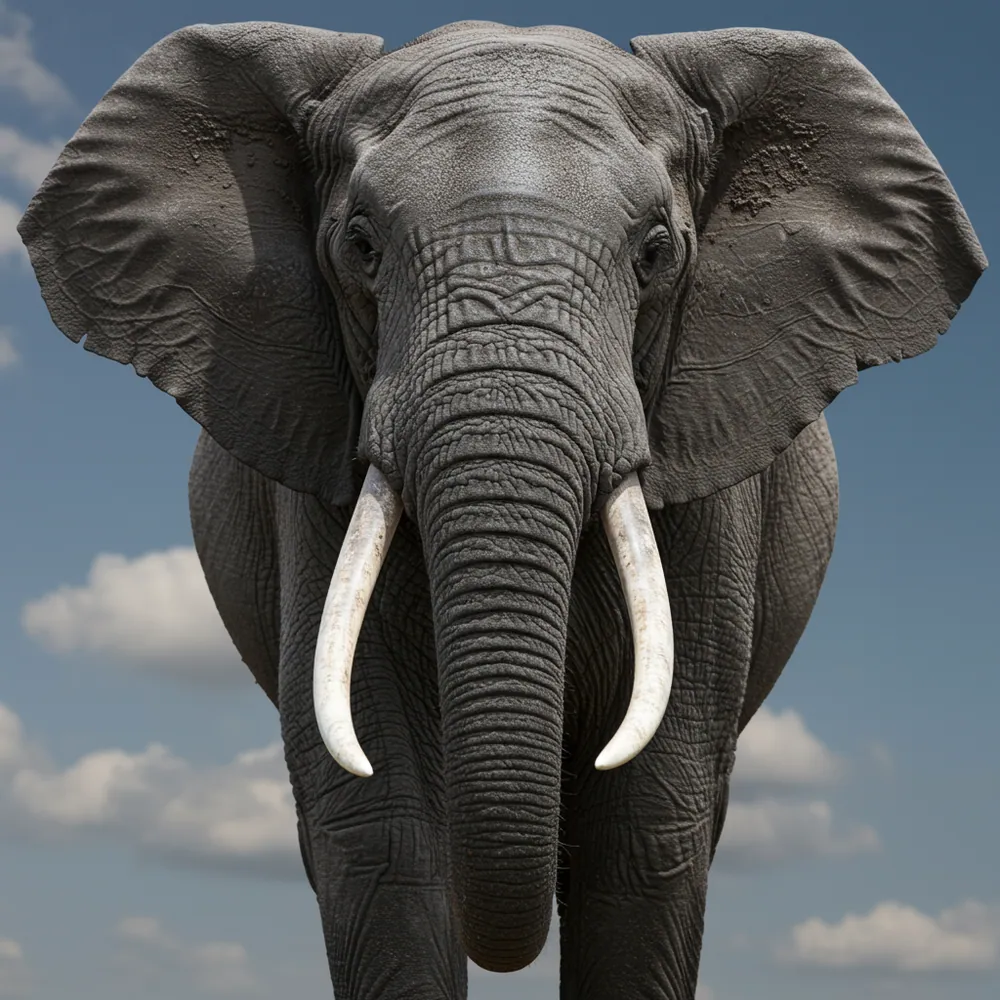
Hey there, future wildlife explorers! Get ready to meet Earth's biggest, most amazing land animal: the African Elephant! Imagine a creature as tall as a bus and weighing as much as six whole cars – that's these magnificent giants! Check out their incredible ivory tusks! These aren't just pretty decorations; they're actually super-long teeth perfect for digging up tasty roots, lifting heavy branches, and even giving a friendly nudge. But wait, there's even more! Their trunk is like a super-powered, super-flexible, super-long nose with over 100,000 muscles! It can sniff out snacks, grab tiny leaves, suck up water like a straw for a refreshing drink, or even spray themselves with a cool shower. And those giant, continent-shaped ears? They're not just for listening to far-off friends; they're also like built-in air conditioners, fanning to keep these enormous bodies cool under the hot African sun!
But African elephants aren't just big; they're super smart and have huge hearts! They live in close-knit families, always led by the oldest, wisest grandma elephant who remembers all the best places to find food and water. They "talk" to each other with deep rumbles you can feel in your bones, loud trumpets, and lots of body language – they even show love, sadness, and joy, just like us! They spend their days munching on tons of plants, traveling across vast lands, and taking amazing care of their little ones.
Here's the coolest part: African elephants are like superheroes for the entire savanna! As they stomp through the bush, they clear paths and prune trees, making space for other animals to live. When they eat fruits and then, well, *poop* out the seeds, they help new plants grow all over the place! And when things get really dry, their powerful tusks dig deep into the ground to find hidden water, creating precious watering holes that save countless other creatures. These gentle giants are truly nature's engineers, making sure the African wilderness stays healthy and bursting with life for everyone!
How many are left?
Have a guess first — how many do you think are still alive?
about 415,000
each dot ≈ 10,000 individuals
Imagine a giant parade of elephants, all 415,000 of them! While that sounds like a lot, it's actually a special number because these amazing African Elephants are endangered, meaning there aren't as many left in the wild as there used to be, and they need our help.
Where the african elephant still lives — D.R of the Congo, Gabon, Congo, Cameroon, Central African Republic
Elephants need huge areas of land to find enough food and water, but people are building farms, towns, and roads where elephants used to live. This means elephants have less space to roam freely and find what they need to survive.
Being done about itScientists and park rangers are working to create and protect large national parks and wildlife corridors, which are safe paths for elephants to travel. People are also learning better ways to share the land with elephants without harming them or their homes.
Poaching / Illegal hunting
Poachers are bad people who illegally hunt elephants for their tusks, which are made of a material called ivory. This cruel hunting makes elephant numbers go down very quickly, threatening their survival.
Being done about itBrave rangers work hard to protect elephants from poachers, often using technology like drones and GPS to track them. Many countries are also making it illegal to buy or sell ivory, helping to stop this harmful trade.
Brave rangers are like superheroes, working hard every day to protect elephants from dangers like poaching, while special groups are creating safe national parks and wildlife corridors for these gentle giants to roam. It's an important mission to make sure these magnificent creatures have a safe future!
Also known asLoxodonta africana
GroupAnimal
HabitatSavanna & woodland
DietHerbivore, consuming grasses, leaves, bark, and fruit.
PredatorsHealthy adults have no natural predators other than humans; calves may be hunted by lions and hyenas.
Lifespan60 - 70 years
SizeUp to 13 ft tall at the shoulder, weighing up to 7.5 tons (15, 000 lbs).