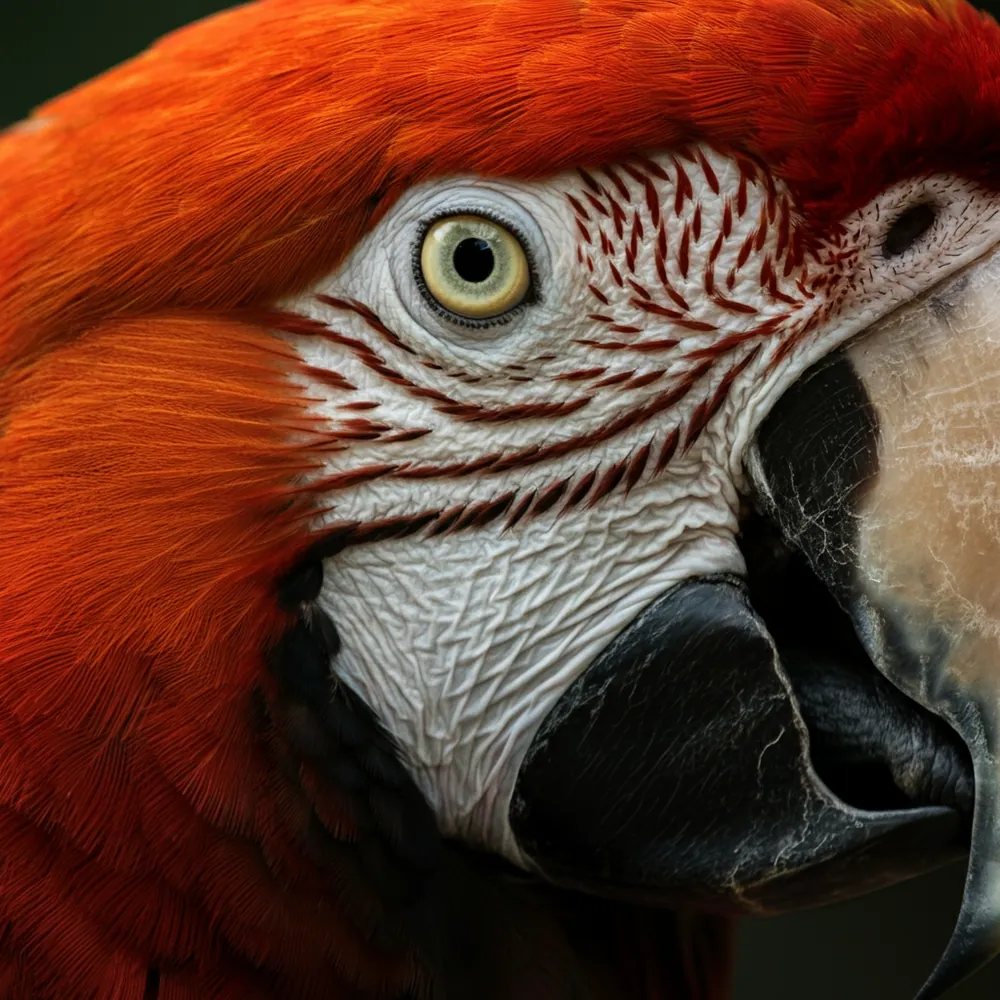
Get ready to meet one of the most dazzling birds on Earth – the Scarlet Macaw! Imagine a living, breathing rainbow soaring through the sunny rainforest. That's a Scarlet Macaw! These amazing birds are like flying works of art, with fiery red bodies, bright yellow patches on their wings, and brilliant blue tips on their tail feathers. They have super strong, hooked beaks, perfect for cracking open the toughest nuts and seeds, and a cool white patch on their face that makes each one look unique. From beak to tail, they can be as long as your arm, making them truly spectacular aerial acrobats of the jungle!
But Scarlet Macaws aren't just pretty faces; they're also super smart and incredibly social! You'll often see them flying in noisy flocks, chatting away with loud calls that echo through the trees. They even find a special mate and stay with them for life, often flying side-by-side! These clever birds love to munch on yummy fruits, nuts, and seeds. And here's a secret: sometimes they eat clay from riverbanks! It's like nature's antacid, helping them digest tricky foods and stay healthy.
What makes the Scarlet Macaw extra special is its role as a "gardener of the forest." As they fly around eating fruits, they drop seeds all over the place. This helps new plants and trees grow, keeping the rainforest healthy and thriving for all the other animals that live there. So, next time you think of a rainforest, imagine these magnificent, colorful heroes, flying high and helping nature bloom!
Where the scarlet macaw still lives — Brazil, Peru, Colombia
Scarlet Macaws live in beautiful, big rainforests, but people are cutting down these trees to make space for farms or buildings. This means the macaws lose their homes, their food, and safe places to raise their colorful babies.
Being done about itScientists and park rangers are working hard to protect parts of the rainforest where macaws live, making sure those areas are safe from cutting. Some people are even planting new trees to help grow the macaws' homes back!
Climate change
Climate change is making the weather in the rainforest a bit wacky, with some days being too hot or rain coming at strange times. This can make it harder for macaws to find their favorite fruits and plants to eat, which they need to stay healthy.
Being done about itScientists are studying how these weather changes affect macaws, and people all over the world are trying to use less energy and choose cleaner ways to power our lives. This helps slow down big changes to the Earth's weather, making a safer home for macaws.
Brave scientists and conservation heroes are on an important mission to protect Scarlet Macaws! They work hard to save their rainforest homes, stop illegal pet trade, and even raise baby macaws in special centers to release them back into the wild, like the amazing work done by the Macaw Recovery Network.