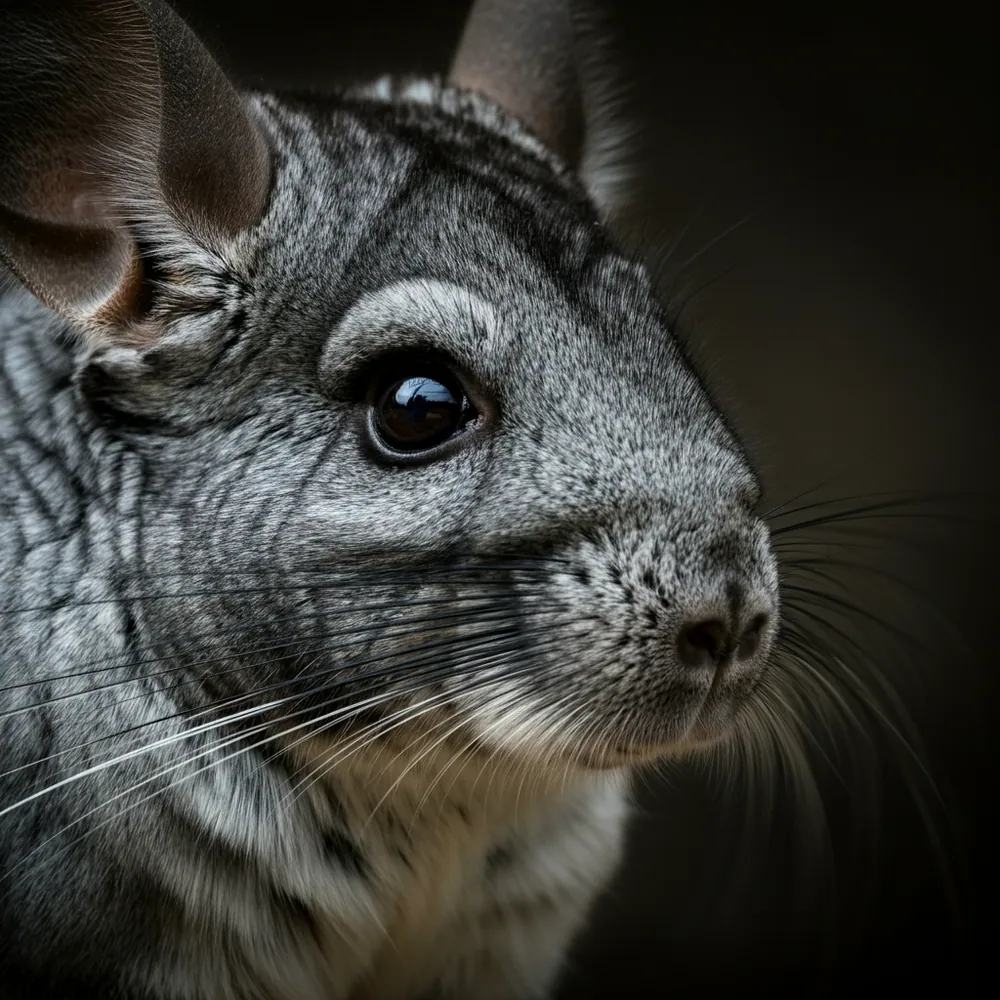
Hey there, animal adventurers! Get ready to meet one of the fluffiest, fuzziest creatures on Earth: the Long-tailed Chinchilla! Imagine a tiny, gray cloud with a super long, bushy tail – that’s pretty close! These amazing critters live high up in the super-tall Andes mountains of South America, where it’s often chilly. But guess what? They have a secret weapon: their fur is the thickest of any land animal! It’s like wearing the warmest, fuzziest winter coat ever, with up to 60 hairs growing from just one tiny spot!
When the sun goes down, that's when these chinchillas really shine! They're like little night-time ninjas, with big, dark eyes that help them see in the dark and huge, swiveling ears that act like super-sensitive radar dishes, listening for any sound. Their long, bushy tails help them balance perfectly as they leap and climb through rocky mountains, like tiny parkour experts! And for a spa day? They don't use water! Instead, they roll and tumble in fine volcanic dust, which keeps their incredible fur clean and silky soft.
Long-tailed Chinchillas are super social, living in big families in hidden rocky caves. They munch on plants, seeds, and fruits, helping keep the mountain plants healthy. Sadly, these incredibly special fluff-balls are Critically Endangered, which means there aren't many left in the wild. But by learning about them, we can all help protect their mountain homes and make sure these wonderful, fluffy mountaineers can keep leaping and dust-bathing for many more years to come!
Where the long-tailed chinchilla still lives — Chile
Long-tailed Chinchillas live in rocky, dry areas in the mountains, but their homes are disappearing. People are clearing land for farms, building new places, or digging mines, which leaves the chinchillas with fewer safe spots to live and find food.
Being done about itScientists and conservationists are working hard to protect special areas where chinchillas live, turning them into national parks or reserves. This helps make sure their natural homes are safe from being destroyed and keeps their food sources growing.
Poaching / Illegal hunting
Chinchillas were once hunted a lot for their incredibly soft fur, which sadly made them very rare. Even though it's now against the law, some people still try to catch them illegally, making it hard for chinchilla families to grow.
Being done about itPark rangers and police are working hard to stop illegal hunting and catch people who try to harm chinchillas. They also teach everyone, especially children, why it's so important to protect these gentle creatures and keep them safe in the wild.
Brave scientists and animal heroes are working hard to protect the chinchillas' mountain homes and are even running special breeding programs in safe places, like zoos, to help more baby chinchillas be born and grow up strong!