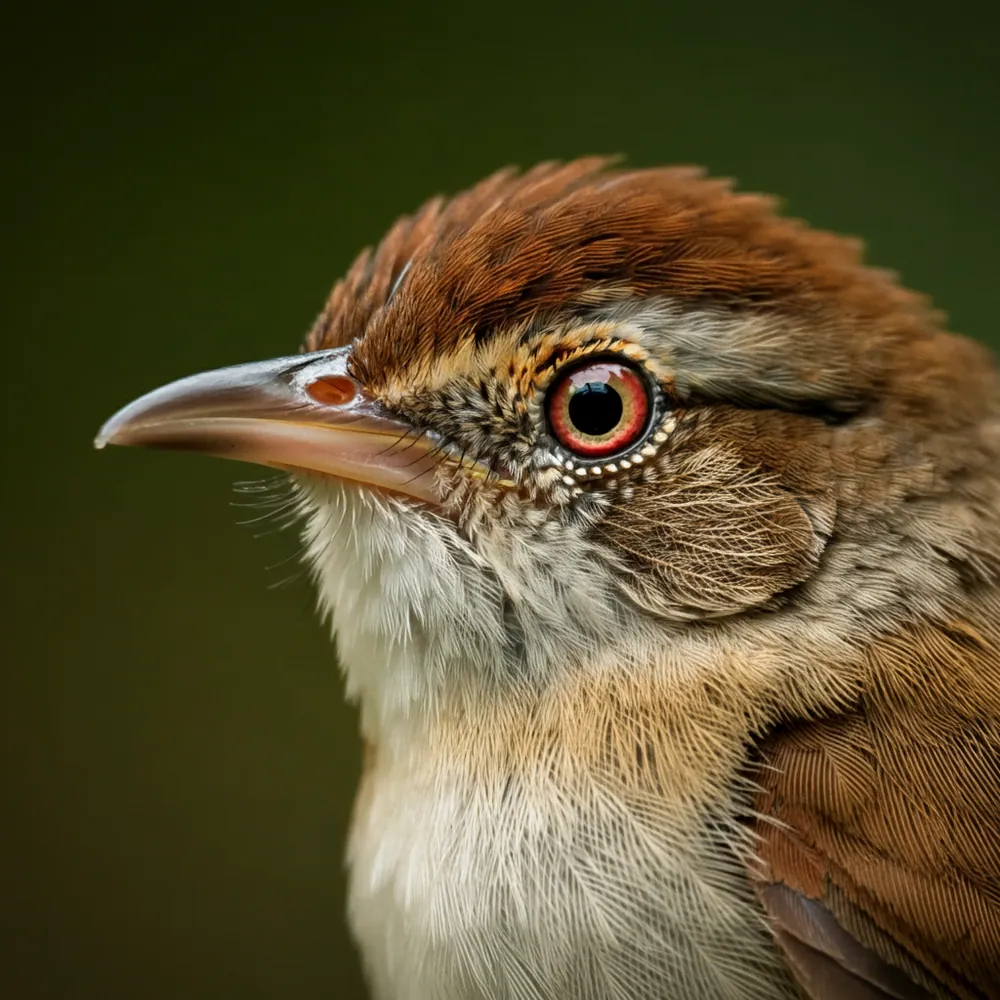
Hey there, wildlife adventurers! Get ready to meet one of the tiniest, zippiest birds you'll ever hear about – the Rufous-fronted Prinia! Imagine a bird no bigger than your thumb, wearing a super cool, reddish-brown "ginger cap" on its head. That's where it gets its fancy name, "rufous" meaning reddish-brown. This little feathered friend has an olive-brown back to blend in perfectly with the grass and a clean white belly, making it look like a tiny, speedy superhero of the bushes!
Don't expect this prinia to sit still! It's like a tiny, buzzing energy ball, always flitting and darting through tall grasses and reeds. You'll often hear its speedy "trrt-trrt-trrt" or a zippy "zip-zip-zip" call before you even spot it. Why so busy? It's on a mission to gobble up tiny insects, caterpillars, and spiders, helping to keep our gardens and farms healthy by being a natural pest controller. High five to this little bug-muncher!
But here's the *really* amazing part: the Rufous-fronted Prinia is a real-life tailorbird! Can you believe it? It doesn't just build a nest; it *sews* one! Using super-strong spider silk or plant fibers, it stitches leaves together to create a cozy, secret cup-shaped home for its babies. How cool is that? This tiny bird shows us that even the smallest creatures can have the most incredible talents and play a huge part in our amazing world!
Where the rufous-fronted prinia still lives — India, Pakistan
Rufous-fronted Prinias need specific grassy and scrubby places to build their nests and find food, but these important homes are disappearing. People are often clearing these areas to make farms, build houses, or for other human activities, leaving the prinias with nowhere safe to live.
Being done about itScientists and nature protectors are working hard to set aside and protect these special grassy habitats, creating safe zones where the prinias can thrive. They are also replanting native plants to restore lost homes and teaching communities how important it is to keep these areas wild for all the animals living there.
Wildlife experts are working hard on an important mission to find these shy birds, learn more about their lives, and protect the grassy habitats they call home. By understanding where they live and what they need, we can help keep these unique prinias safe for the future!