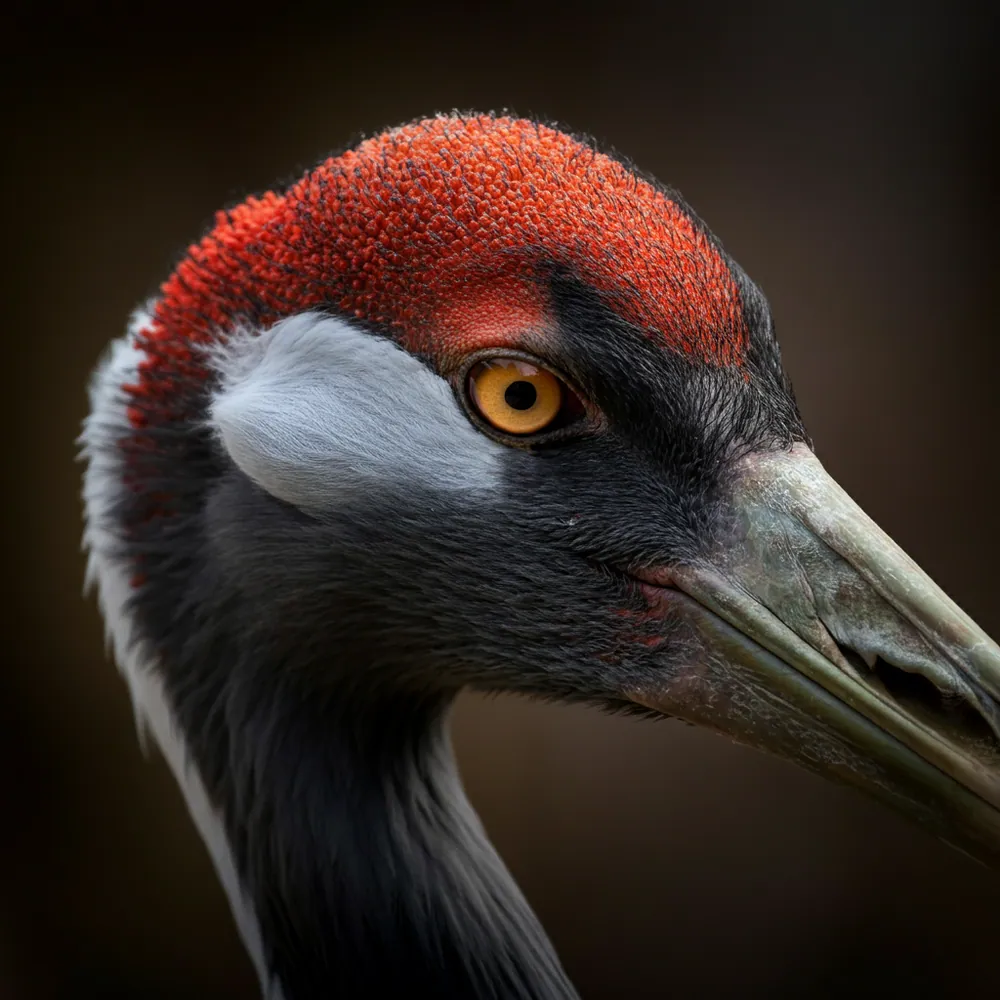
Get ready to meet one of the most stunning birds on Earth: the Red-crowned Crane! Imagine a bird that looks like it just stepped out of a painting, with feathers so pure white they gleam, highlighted by dramatic black accents on its neck and wings. But the coolest part? That famous "red crown" isn't feathers at all! It's a special patch of bare skin that flushes a vibrant scarlet, especially when this magnificent bird is excited or showing off – talk about a natural mood ring! Standing nearly five feet tall with an impressive wingspan, these elegant giants truly look like dancers floating across the wetlands.
These incredible cranes are not just pretty faces; they're also amazing performers! They're famous for their spectacular "dance," a dazzling show of bowing, jumping, and synchronized calls that helps them find a mate or even tell other cranes to back off. Their super loud, trumpeting calls can travel for miles, helping them chat across vast open spaces. You'll find them snacking on everything from fish and frogs to yummy plants in marshy wetlands and rice paddies – they're omnivores, meaning they love a varied diet!
Red-crowned Cranes are super special not only for their beauty but also because they help us understand how healthy their wetland homes are. They're like nature's thermometers! Plus, in many cultures, they're symbols of good luck, long life, and loyalty. Protecting these majestic birds means we're also protecting their precious wetland homes, which are super important for countless other animals and even for us humans. Isn't that just incredibly cool?
Where the red-crowned crane still lives — China, Japan, Russia, North Korea, South Korea
Red-crowned Cranes need big, healthy wetlands like marshes and rice paddies to find food and build their nests. Sadly, people are sometimes draining these wetlands to build farms, cities, or roads, leaving the cranes with fewer safe places to live.
Being done about itScientists and rangers are working to protect the wetlands that cranes already use, and sometimes they even create new wetland homes for them. They also teach communities why it's so important to keep these special places safe for cranes and other animals.
Climate change
Climate change is making the weather go a bit wild, causing things like stronger storms, long dry spells, or strange temperatures. These changes can make it difficult for cranes to find enough food or even damage their precious wetland homes.
Being done about itExperts are studying how climate change affects the cranes so they can better protect them, and many people are working to reduce pollution that causes climate change. They are also helping to make sure cranes have safe places to go, even if their usual homes change.
Brave scientists and animal heroes are on a mission to save these magnificent birds by protecting their precious wetland homes and even helping raise baby cranes in special wildlife centers, giving them a safe start in life!