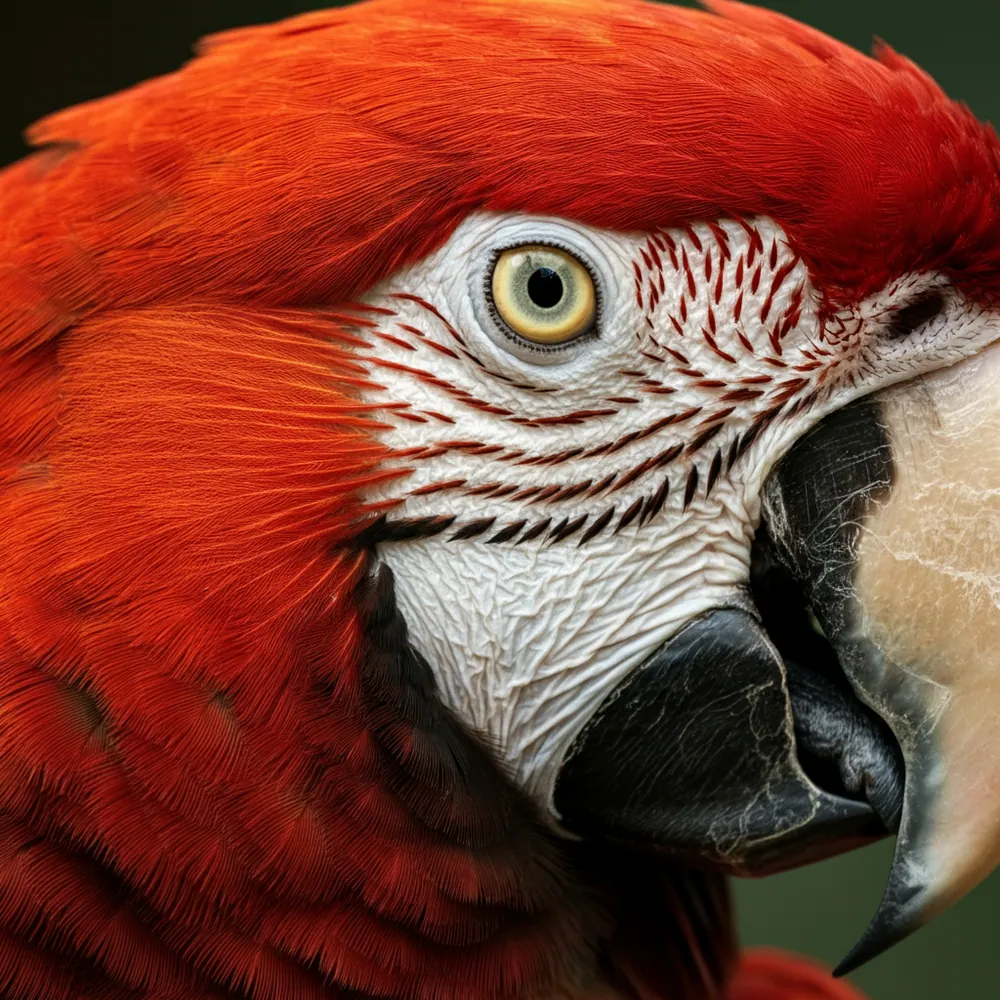
Hey there, future wildlife adventurers! Get ready to meet a real-life superhero of the skies, a bird so spectacularly colorful it looks like it flew straight out of a painter's wildest dreams! Say hello to the Red-fronted Macaw, a magnificent feathered friend from the sunny, dry valleys of Bolivia. Imagine a bird dressed in the most brilliant emerald green, with a fiery red forehead that looks like it's wearing a superhero mask! Plus, it has bright red patches around its eyes and ears, and a splash of sunny yellow-orange on its shoulders. Its powerful wings flash with blue as it soars – truly a living jewel!
These macaws aren't just pretty faces; they're super smart and super social! You'll often hear them before you see them, as they fly around in noisy gangs, chatting loudly with their special calls as they search for their favorite snacks. And what do they munch on? Super tough seeds and fruits from spiky cacti! Good thing they have a giant, hooked beak that's like a built-in nutcracker, perfect for cracking open the trickiest treats. When it's time for babies, these clever birds find secret hideouts in deep crevices high up on tall, rocky cliffs, keeping their little ones safe and sound from any sneaky predators.
But wait, there's even more to love about this amazing bird! The Red-fronted Macaw is like a tiny, feathered gardener for its home. When it eats fruits and drops the seeds, it's actually helping new plants grow, especially those unique cacti that only live in its special corner of the world! How cool is that? This incredible bird plays a super important role in its high-desert home, but it needs our help. There aren't many left, and protecting these spectacular, colorful friends isn't just about saving a bird; it's about saving a whole unique ecosystem where they uniquely belong!
Sadly, some people try to catch these beautiful macaws from their homes in the wild to sell them illegally as pets. This makes it very hard for the wild macaw families to grow and thrive in nature.
Being done about itBrave rangers and police officers work hard to stop people from illegally catching and selling these birds. They also help teach everyone that wild macaws are happiest and safest when they stay in their natural homes.
Habitat loss
These macaws are losing their homes because people are cutting down their favorite trees and turning forests into farms or places for animals to graze. This leaves them with fewer safe places to live, find food, and raise their babies.
Being done about itScientists and conservationists are working hard to protect special areas where these macaws live by making them national parks or reserves. They also teach local people how to farm in ways that don't hurt the macaws' forest homes.
Brave conservationists are on a vital mission, working with local communities to protect their cliffside homes and stop illegal bird catchers, making sure these amazing macaws have a safe place to live and grow.