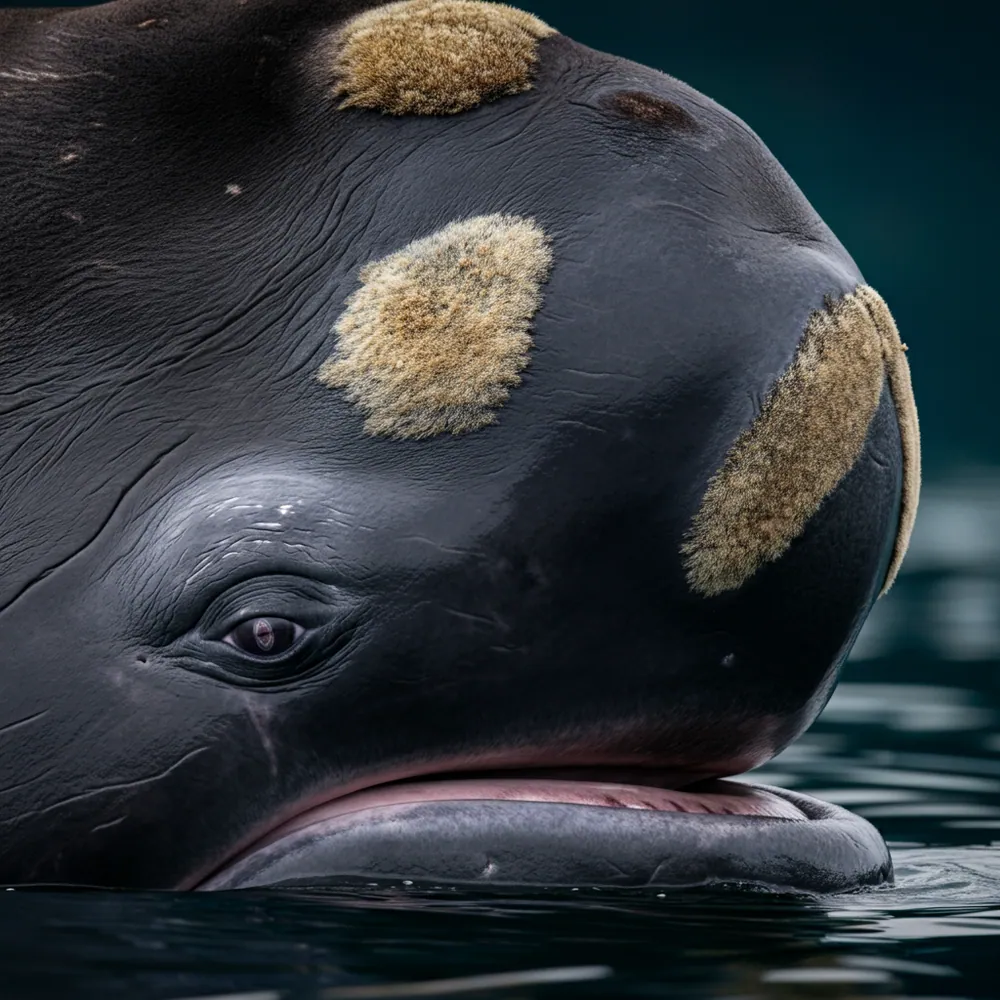
Hey ocean adventurers! Get ready to meet a true superstar of the sea, the North Atlantic Right Whale! Imagine a creature as long as a school bus and weighing more than ten big elephants, gliding gracefully through the water. This gentle giant doesn't have a pointy fin on its back like some whales, but it does have super cool, bumpy patches on its head called "callosities." These bumps are like its very own fingerprints – no two whales have the same pattern, and scientists use them to tell everyone apart! Sometimes, tiny whale "lice" live on these patches, making them look a bit yellowish, but don't worry, they don't bother the whale much!
This amazing whale is a master at snack time! Instead of chasing fish, it's a "skim feeder," meaning it opens its giant, arched mouth wide and slowly cruises through the water, filtering out millions of tiny, microscopic critters called copepods – its favorite food! These whales are also champion travelers, swimming thousands of miles from warm sunny waters where their babies are born, all the way to chilly, food-rich oceans to feast. They're like the ocean's gardeners, too, stirring up nutrients from the deep to help all the other sea creatures grow and keep the whole ocean healthy!
But here's the thing: these magnificent ocean engineers are super rare, with fewer than 350 left in the entire world! They face big dangers like accidental bumps with ships and getting tangled in fishing gear. Protecting these incredible whales isn't just about saving one amazing animal; it's about keeping the entire North Atlantic Ocean balanced and healthy for *all* its amazing creatures, including us! Isn't that something worth cheering for and helping with?
How many are left?
Have a guess first — how many do you think are still alive?
about 360
each dot ≈ 10 individuals
Imagine a whole city, but instead of people, there are only about 360 North Atlantic Right Whales left in the entire ocean! That's super, super few, like finding just a handful of your favorite candies in a giant jar.
It is longer than a bus.
Where the north atlantic right whale still lives — North Atlantic Ocean
North Atlantic Right Whales often get tangled in thick fishing ropes and nets that are meant for other ocean animals like lobsters or crabs. These strong ropes can wrap tightly around their bodies, mouths, or tails, making it very hard for them to swim, eat, or even breathe.
Being done about itTo help, scientists and fishermen are inventing new, safer fishing gear, like ropes that sink to the seafloor or have special weak points that break if a whale bumps into them. People are also using fancy underwater microphones and drones to listen for whales, so boats can steer clear of areas where these gentle giants are swimming.
Brave scientists and ocean protectors are on a super important mission, asking big ships to slow down in places where whales swim and inventing special fishing gear that won't get these gentle giants tangled up, like ocean superheroes!
Also known asEubalaena glacialis
GroupAnimal
HabitatMarine coastal
DietTiny crustaceans called copepods, which they filter from the water.
PredatorsKiller whales (Orcas) sometimes attack calves.