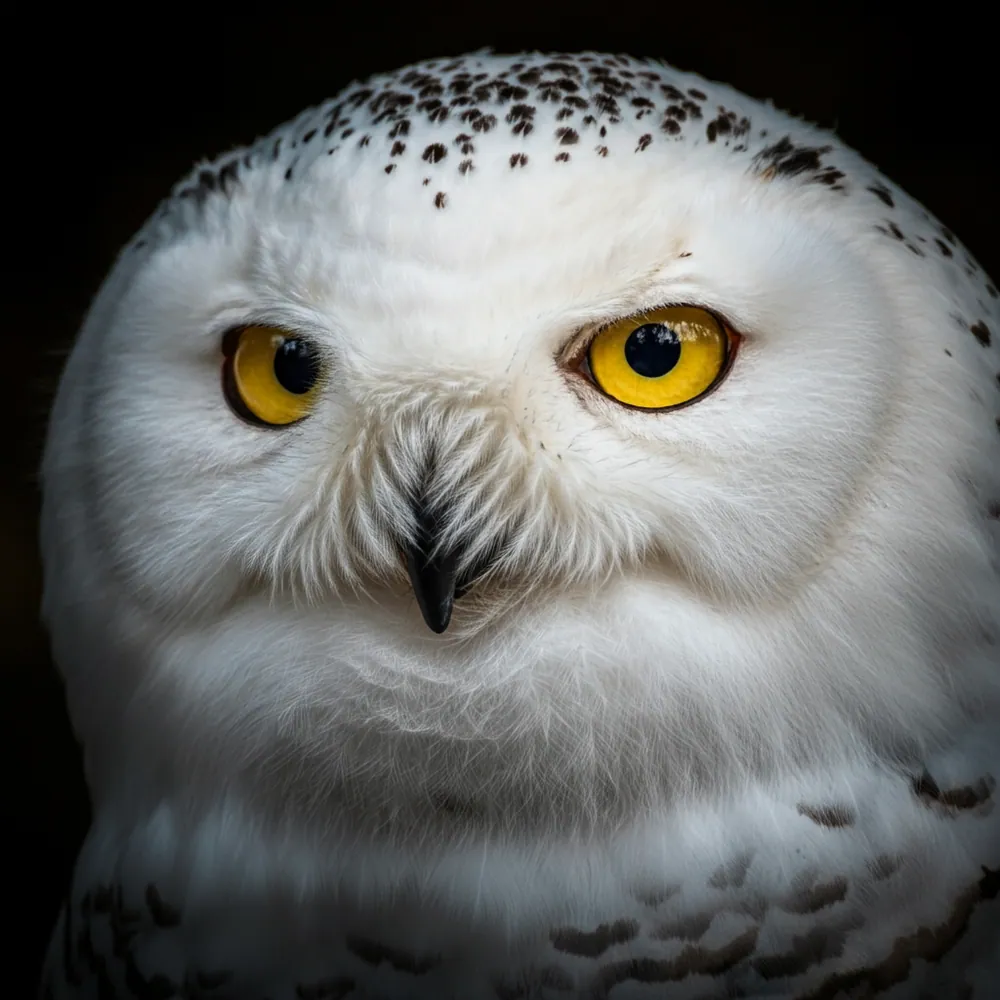
Imagine a magical ghost drifting silently over a snowy landscape – that's kind of like meeting a Snowy Owl! These incredible birds are like living snowdrifts, with feathers so bright white they practically disappear into the Arctic snow. Look closely, and you might spot tiny dark spots on the females, like secret messages on a winter canvas. Their huge, golden eyes stare right ahead, helping them spot even the tiniest mouse from far away. And get this – even their feet are covered in fluffy feathers, like built-in snow boots to keep them warm and help them walk on snow! Every part of them is super-powered for life in the freezing cold.
Guess what? Unlike most owls that hunt at night, Snowy Owls are often out and about during the day! That's because in the Arctic summer, the sun shines almost all the time. They are super-smart hunters, perching quietly or soaring silently, listening and looking for their favorite snack: lemmings! These little rodents are like candy to a Snowy Owl. If the lemmings decide to move to a new area, the Snowy Owls pack their bags (or rather, spread their wings!) and follow them, sometimes flying thousands of miles! How cool is that? It's like having a special guest from the North Pole visit your town!
These amazing birds aren't just beautiful; they're also super important for their Arctic home. By keeping the lemming population in check, Snowy Owls are like the silent guardians of the tundra, making sure everything stays balanced. When you see a healthy group of Snowy Owls, it's a sign that the whole Arctic ecosystem is doing great! They are tough, smart, and a true symbol of how incredible nature can be. Isn't that something to hoot about?
It is longer than a grown-up is tall.
Where the snowy owl still lives — Canada, USA, Russia, Greenland
Climate change is making the Arctic, where snowy owls live, much warmer. This melts the snow and ice they need to hunt for food like lemmings, and it changes the plants and animals around them.
Being done about itScientists are carefully watching snowy owls to understand how a warmer world affects them, helping us learn the best ways to protect their homes. Everyone can help by using less energy, like turning off lights, which slows down climate change and keeps the Arctic cold for these amazing birds.
Scientists are working hard to protect their icy homes in the Arctic and learn more about their amazing migrations, so these beautiful birds can continue to hunt and raise their families safely.
Also known asBubo scandiacus
GroupAnimal
HabitatArctic tundra
DietPrimarily small mammals like lemmings and voles, but also preys on birds and fish.
PredatorsArctic foxes and jaegers (prey on eggs and chicks); adults have few natural predators.
Lifespan9 - 10 years
SizeWeight: 1.6 - 3 kg (3.5 - 6.6 lbs); Wingspan: up to 1.5 m (5 ft)