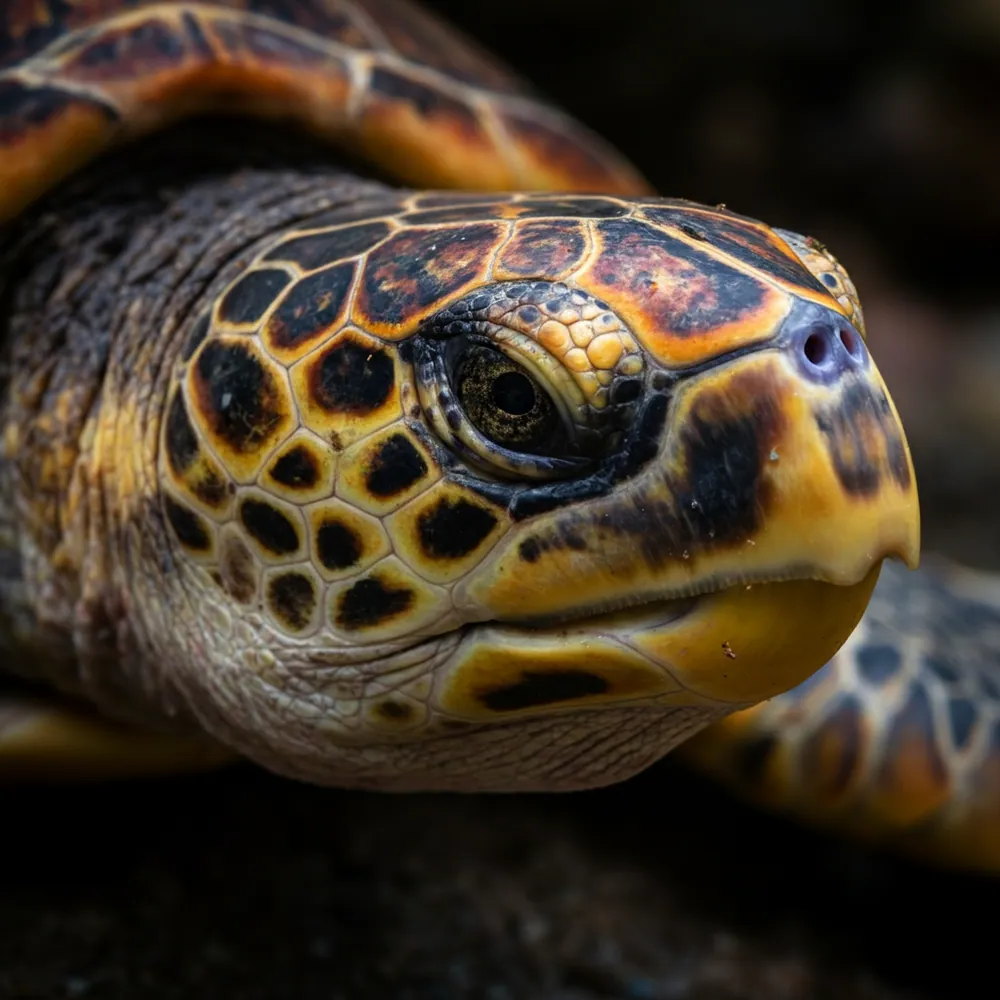
Hey ocean adventurers! Get ready to meet one of the coolest creatures of the deep: the Loggerhead Sea Turtle! Ever wonder how they got their name? Just look at that head – it's HUGE and super strong, like a built-in helmet! These gentle giants glide through the water with their reddish-brown, heart-shaped shells, which can be over three feet long – that's taller than some kids! – and weigh as much as a few grown-ups! But don't let their calm looks fool you; hidden inside that massive head are jaws strong enough to crack open the toughest snacks!
With powerful, paddle-like flippers, Loggerheads are true ocean explorers, traveling thousands of miles all by themselves. They love warm waters all over the world, but when it's time for mommy turtles to lay their eggs, they go on an incredible journey. They swim all the way back to the *exact same beach* where *they* were born! Under the moonlight, they carefully dig a nest and lay their precious eggs. Weeks later, tiny hatchlings emerge, making a super-fast dash for the sparkling sea, beginning their own epic ocean adventure! Their favorite foods are crunchy crabs, snails, and sea urchins, which those powerful jaws munch through like it's no big deal.
But Loggerheads are more than just amazing travelers and snack-crunchers; they're ocean superheroes! By eating creatures like sea urchins, they help keep our beautiful coral reefs and important seagrass beds healthy, just like a gardener prunes plants to help a garden grow. They even help bring special nutrients from the ocean back to the land when they nest. So, when you see a Loggerhead, remember they're not just a magnificent turtle; they're helping to keep the whole ocean happy and balanced for everyone!
Loggerhead turtles often mistake plastic bags for jellyfish, which they love to eat, making them very sick. They can also get tangled in plastic debris like old fishing lines, making it hard for them to swim or breathe.
Being done about itMany people organize beach cleanups to remove harmful trash from turtle habitats, and scientists are finding ways to make less plastic pollution. You can help by recycling and using reusable items instead of single-use plastics!
Habitat loss
Loggerhead turtles need quiet, dark beaches to lay their eggs, but human buildings and bright lights scare them away or confuse baby turtles. Important feeding grounds, like seagrass beds, are also being destroyed by coastal development.
Being done about itConservationists work hard to protect nesting beaches by limiting building and light pollution, creating safe spaces for turtles to lay their eggs. They also protect vital ocean habitats where turtles find their food and rest.
Bycatch / Overfishing
Loggerhead turtles often get accidentally caught in large fishing nets or on long lines meant for other fish, which is called bycatch. When they're trapped, they can't swim to the surface to breathe and sadly drown.
Being done about itFishermen are now using special nets with Turtle Excluder Devices (TEDs), which are escape hatches that allow turtles to swim out safely. Scientists are also working with fishing communities to develop new fishing methods that don't harm turtles.
Brave scientists and volunteers are on a special mission, working hard to protect Loggerhead Turtles by guarding their nesting beaches where baby turtles hatch, and by using special fishing nets that help turtles escape if they get caught. These amazing efforts are helping to give these ancient mariners a brighter future!