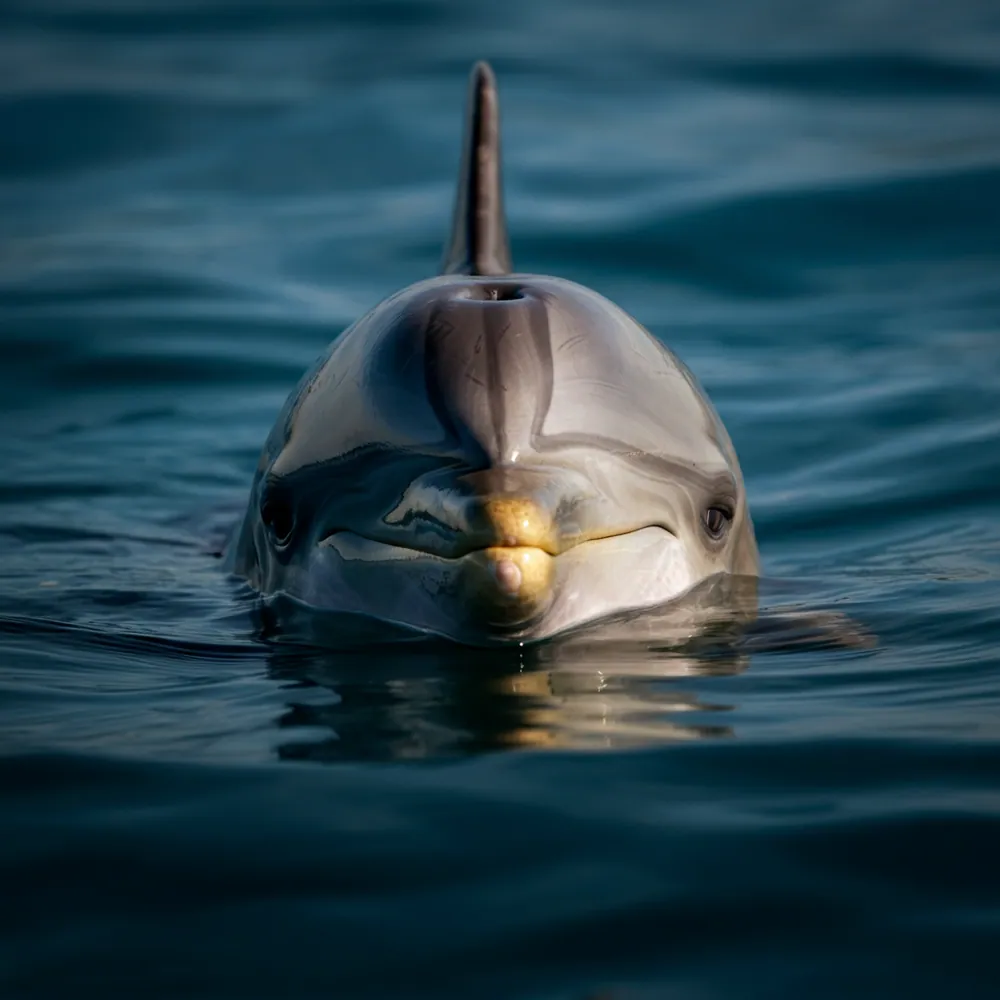
Hey ocean explorers! Get ready to meet one of the coolest creatures of the deep blue: the Long-beaked Common Dolphin! Imagine a super-sleek swimmer, about as long as a small car (up to 8 feet!), zipping through the waves. What makes them super special? Just look at them! They wear a dazzling outfit with a bright yellow or tan stripe that looks like an hourglass painted on their sides, blending into a dark grey back and a sparkly white belly. But their most amazing feature? That super-long, pointy beak! It's like a special tool, perfect for snapping up slippery fish for lunch!
But wait, there's more! These dolphins are the ultimate party animals of the sea. You won't often find them alone; instead, they hang out with hundreds, sometimes even *thousands*, of their friends in giant 'superpods'! Imagine a whole stadium full of dolphins, all jumping, spinning, and racing together! They love to ride the waves at the front of boats (that's called bow-riding!) and rocket out of the water in powerful leaps. They even have secret whistles and clicks to talk to each other and use special 'sonar' (echolocation) to find their favorite snacks: tiny fish like sardines, which they cleverly herd into a big ball before feasting!
These amazing ocean acrobats aren't just fun to watch; they're also super important for keeping the ocean healthy. By munching on all those small fish, they help make sure the ocean stays balanced, like a super-cool underwater gardener! So, when you see a Long-beaked Common Dolphin leaping and playing, remember you're looking at a true superstar of the sea, helping to keep our blue planet happy and thriving!
Where the long-beaked common dolphin still lives — Mexico
When trash like plastic bags and bottles gets into the ocean, Long-beaked Common Dolphins can accidentally eat it, which makes them very sick. Yucky chemicals from factories and farms also flow into the water, making it unhealthy for these dolphins to live in.
Being done about itScientists are studying how pollution affects dolphins to find better ways to protect them, and many people are organizing beach cleanups to remove harmful trash. We can all help by using less plastic and making sure our trash goes in the bin, not the ocean!
Bycatch / Overfishing
Sometimes, Long-beaked Common Dolphins get accidentally caught in big fishing nets that are meant for other fish, and they can't get free to swim and breathe. Also, if too many fish are caught by people, there isn't enough food left for the dolphins to eat.
Being done about itScientists and fishermen are working together to design special fishing nets that let dolphins escape safely, and some areas have rules about how much fish can be caught to make sure there's enough food for everyone. When we choose seafood caught in a smart, ocean-friendly way, we also help protect these amazing dolphins.
Brave scientists and ocean heroes are on an important mission to protect these amazing dolphins! They work hard to keep our oceans clean, reduce accidental catches in fishing nets, and create safe underwater 'parks' so these vulnerable dolphins can swim and play freely.