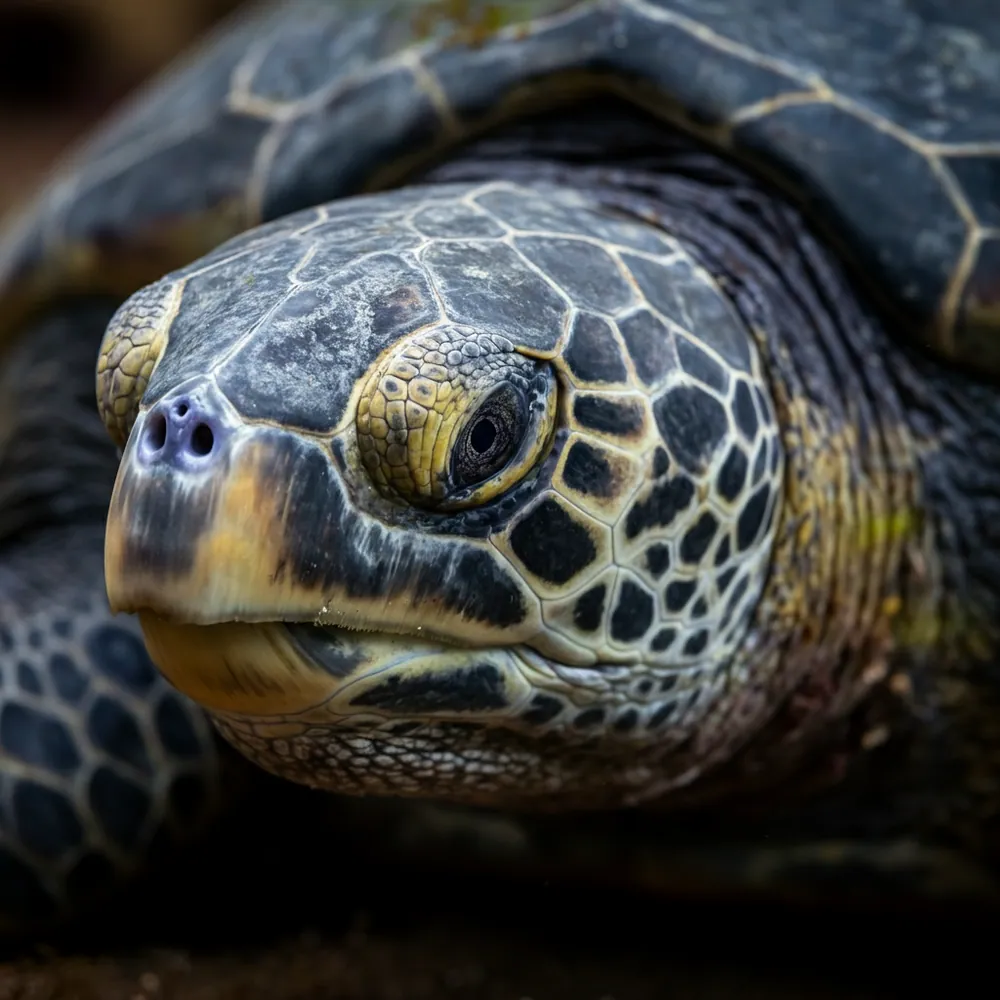
Hey ocean explorers! Get ready to meet a true superstar of the deep blue – the magnificent Leatherback Sea Turtle! This isn't just any turtle; it's like the superhero of the turtle world. Imagine a turtle so big it can be longer than a car and heavier than a small elephant! But here's the coolest part: it doesn't have a hard, bony shell like other turtles. Instead, it has a tough, rubbery 'leather jacket' stretched over its back, with seven cool ridges. That's why it's called the Leatherback! Its dark, speckled skin makes it look like it just swam out of an ancient ocean story.
These gentle giants are super travelers, journeying thousands of miles across the ocean – that's like going across an entire country, or even a continent, just for dinner! And what's on their menu? Mostly squishy, wobbly jellyfish! Leatherbacks are expert deep-sea divers, plunging deeper than almost any other animal – sometimes as deep as 300 stories down! They have giant, powerful flippers that help them zoom through the water. But wait, there's a sad secret: sometimes, a floating plastic bag looks *just* like a yummy jellyfish to them, and that's a big problem for these amazing eaters.
Leatherbacks are super important for keeping our oceans healthy because they eat so many jellyfish. Without them, the jellyfish might take over! But these amazing turtles are in danger, mostly because of plastic pollution and fishing nets. So, next time you see a plastic bag, remember our Leatherback friends and think about how we can all help protect these ancient ocean legends and keep their watery home safe and clean!
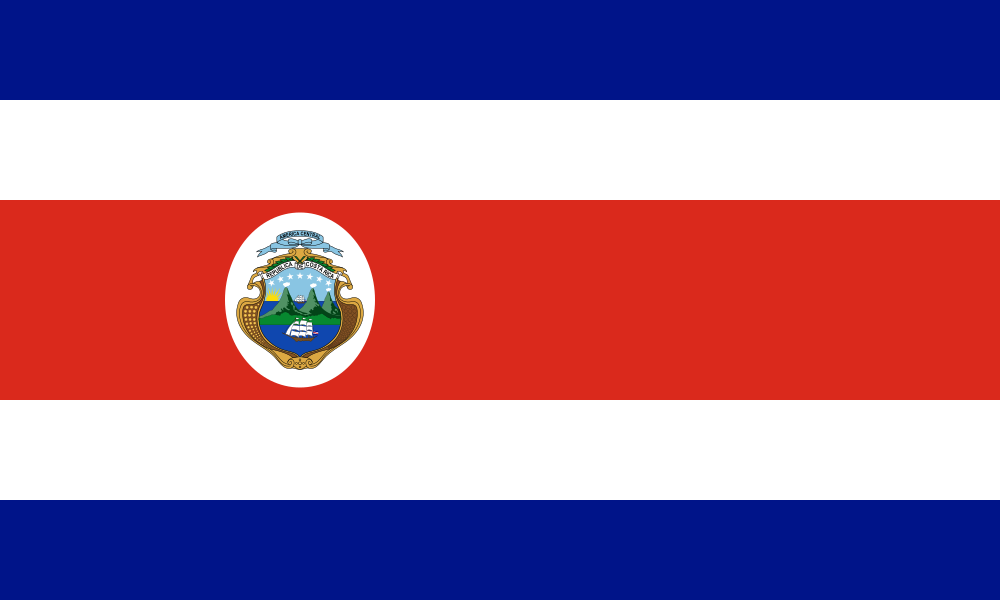
Where the leatherback sea turtle still lives — Costa Rica
Sometimes, the sandy beaches where mommy leatherback turtles lay their precious eggs are taken over by buildings, roads, or bright lights. This means they lose their special nesting spots, and baby turtles can get confused by the lights trying to find the ocean.
Being done about itMany people are working hard to protect these important beaches, making sure they stay wild and dark for the turtles. They might create special parks or ask people to turn off bright lights so baby turtles can find their way safely to the sea.
Bycatch / Overfishing
Leatherback turtles sometimes get tangled by accident in big fishing nets meant for other fish, which can hurt them or stop them from swimming freely and breathing. They might also struggle to find enough jellyfish, their favorite food, if too many are caught by people.
Being done about itScientists are inventing special fishing nets that have escape hatches for turtles, so they can swim out safely if they get caught. Fishermen are also learning new ways to fish that are safer for turtles and other amazing ocean animals.
Brave scientists and volunteers are on a super important mission to save these gentle giants! They patrol nesting beaches to protect eggs and tiny hatchlings, and they're helping design fishing nets that let turtles escape safely.
Also known asDermochelys coriacea
GroupAnimal
DietCarnivore (primarily gelatinovore, feeding on jellyfish and other soft-bodied invertebrates)
Size250-700 kg (550-1, 500 lbs), with some individuals exceeding 900 kg (2, 000 lbs)