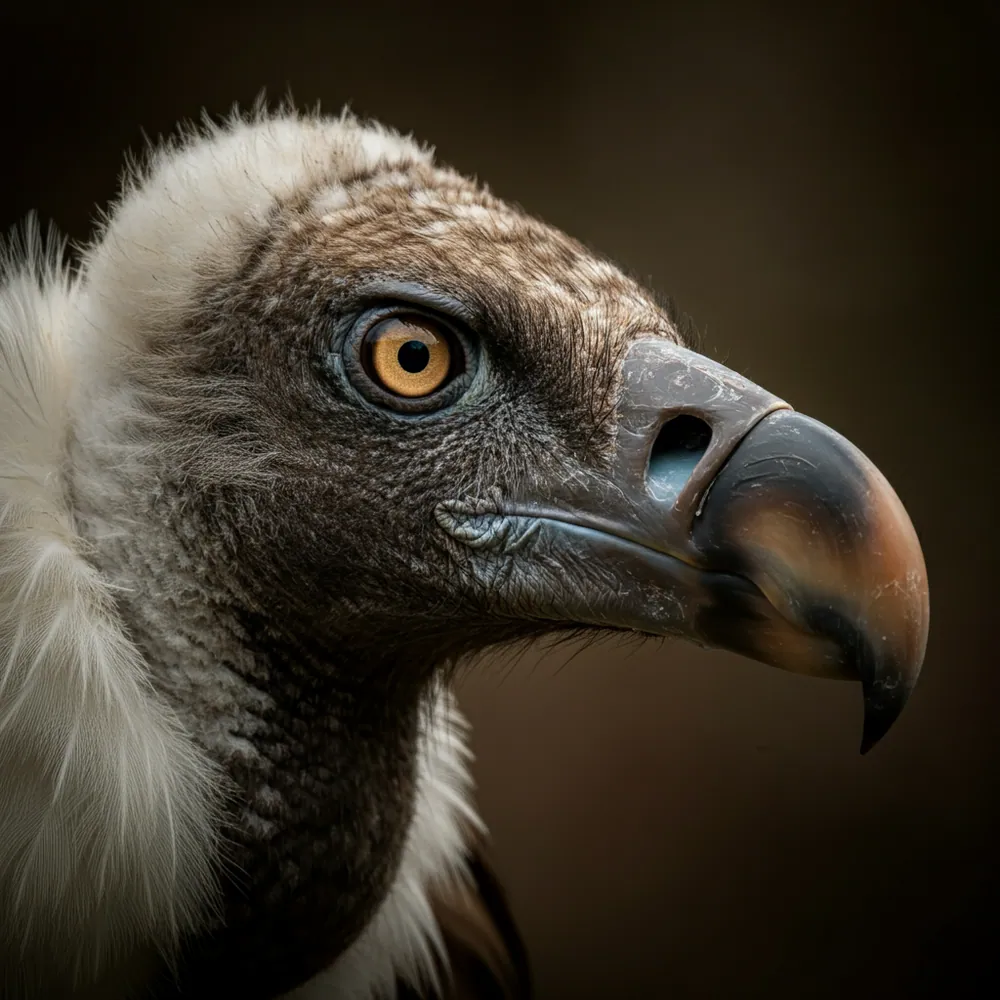
Hey super explorers! Get ready to meet a true unsung hero of the animal kingdom: the Indian Vulture! Now, it might not win a beauty contest, but this bird is packed with amazing superpowers. Imagine a medium-sized bird with sandy-colored feathers and super dark wings. But here's the coolest part: its long, skinny neck and head are almost completely bare! Why? Because it's like wearing a special uniform that never gets messy when it's doing its important job – helping keep the world clean!
These incredible birds are kings and queens of the sky! They spend hours and hours soaring high above India, riding invisible air currents called thermals, like expert surfers catching waves. Their eyesight is super sharp, like having built-in binoculars, constantly scanning the ground below. When they spot something that needs cleaning up (like a leftover meal from another animal), they swoop down, sometimes inviting other vultures to join the feast. Together, they gobble up decaying stuff super fast, making sure everything stays neat and tidy.
Think of the Indian Vulture as nature's ultimate clean-up crew – real-life superheroes of sanitation! By quickly eating up old animal remains, they stop yucky germs from spreading and keep everyone, from other animals to us humans, safe and healthy. They're like living vacuum cleaners for the ecosystem! Protecting these amazing birds means protecting our planet, and that's a job for all of us!
Where the indian vulture still lives — India, Pakistan, Nepal
Imagine a vulture eating its dinner, which is usually the leftover bits of dead animals. If a cow or buffalo was given a special medicine called diclofenac when it was alive, and then the vulture eats its body after it dies, that medicine becomes a deadly poison for the vulture, making them very sick.
Being done about itGood news! Scientists and governments worked super hard to ban diclofenac, so farmers can't use it for their animals anymore. Now, people are working to make sure farmers use safe medicines that don't hurt our helpful vultures, and they are encouraging special 'vulture restaurants' where only safe food is left out for them.
Brave scientists and conservation heroes are on a super important mission to save Indian Vultures! They are working hard to protect areas where vultures live, create special "Vulture Safe Zones" free from harmful medicines, and even raise baby vultures in safe places called breeding centers, hoping to release them back into the wild one day.