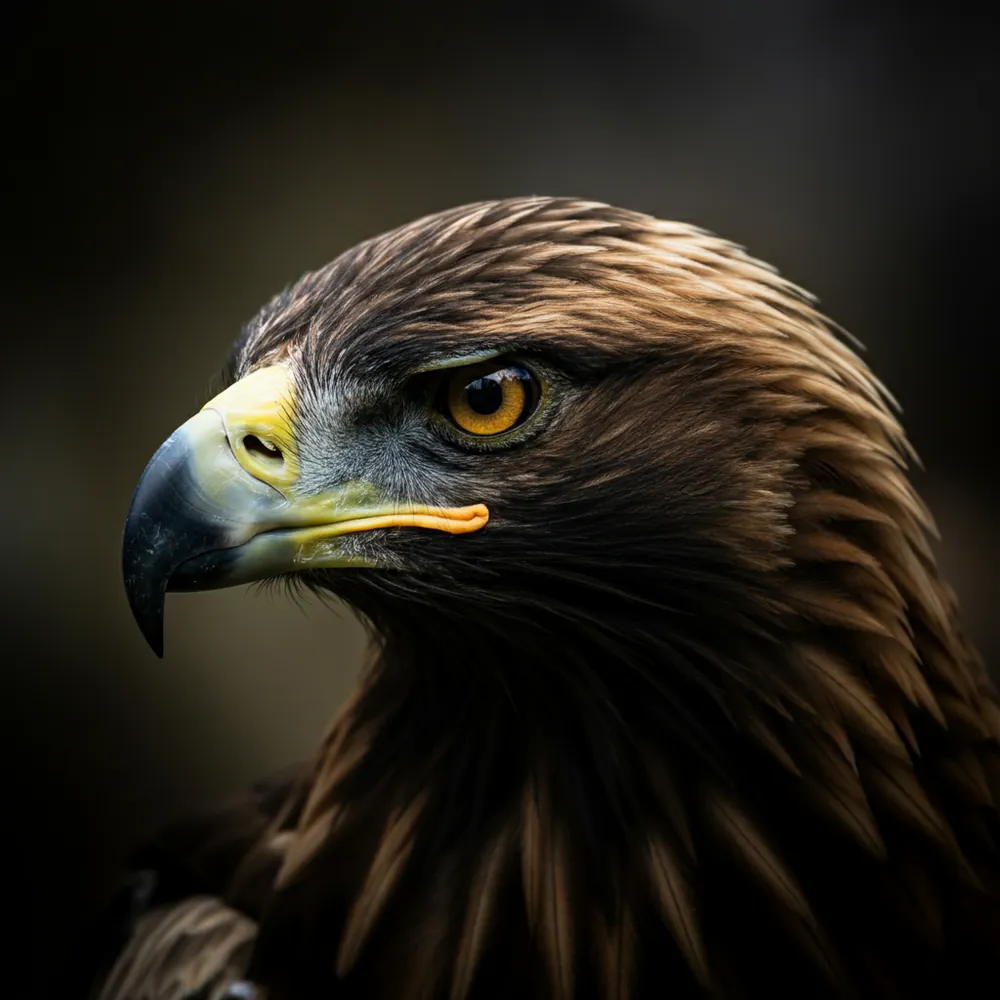
Get ready to meet a true king of the sky – the magnificent Imperial Eagle! Imagine a bird so grand, it looks like it's wearing a golden crown. This isn't just any bird; it's an avian monarch, draped in rich, dark chocolate-brown feathers that almost look black. But wait, look closely at its head and neck – a dazzling splash of golden-buff plumage glows like sunshine, giving it that royal touch! With wings that stretch wider than a grown-up (up to seven feet!), piercing eyes that can spot a tiny mouse from way up high, and a powerful hooked beak, this eagle truly lives up to its imperial name. It's like a superhero of the skies!
But this majestic bird isn't just about looking good; it's an incredible hunter and a super parent! The Imperial Eagle is a master of soaring, riding invisible air currents high above the land. From its lofty perch, its amazing eyesight helps it find its dinner – maybe a quick-moving squirrel or a fluffy hare. These eagles are also super loyal! Once they find a partner, they stay together forever, building giant stick nests high in strong trees. They come back to the same nest year after year, carefully raising their fluffy chicks. They're like super protective parents, making sure their little ones grow up strong!
Why is this eagle so special? Well, as a top hunter, it plays a super important role in keeping nature healthy and balanced. By helping to keep animal populations strong, it makes sure that the whole ecosystem stays vibrant. So, when we protect the Imperial Eagle, we're not just saving one amazing bird; we're helping to protect the whole wild world around us. Isn't that cool? It's a true symbol of a healthy, thriving planet!
Where the imperial eagle still lives — Central Asia
Imperial Eagles can get very sick if they eat animals that have been poisoned by chemicals like pesticides used on farms, because these poisons build up in their bodies and make them unwell or unable to lay healthy eggs.
Being done about itScientists are working hard to understand how pollution harms eagles and are teaching people how to use fewer harmful chemicals, while others clean up polluted areas to make the eagles' hunting grounds safe again.
Habitat loss
Imperial Eagles need tall, old trees to build their giant nests and wide-open spaces to hunt for food, but when forests are cut down for farms, roads, or new buildings, they lose their homes and places to find food.
Being done about itConservationists are buying and protecting important forest areas where eagles live, and sometimes they even build special, tall platforms to give eagles safe new places to build their nests when old trees are scarce.
Brave wildlife heroes are on a mission to protect these magnificent birds! They work hard to make sure power lines are safe so eagles don't get hurt, and they protect the big, quiet forests where eagles build their giant nests, making sure these special places stay wild.