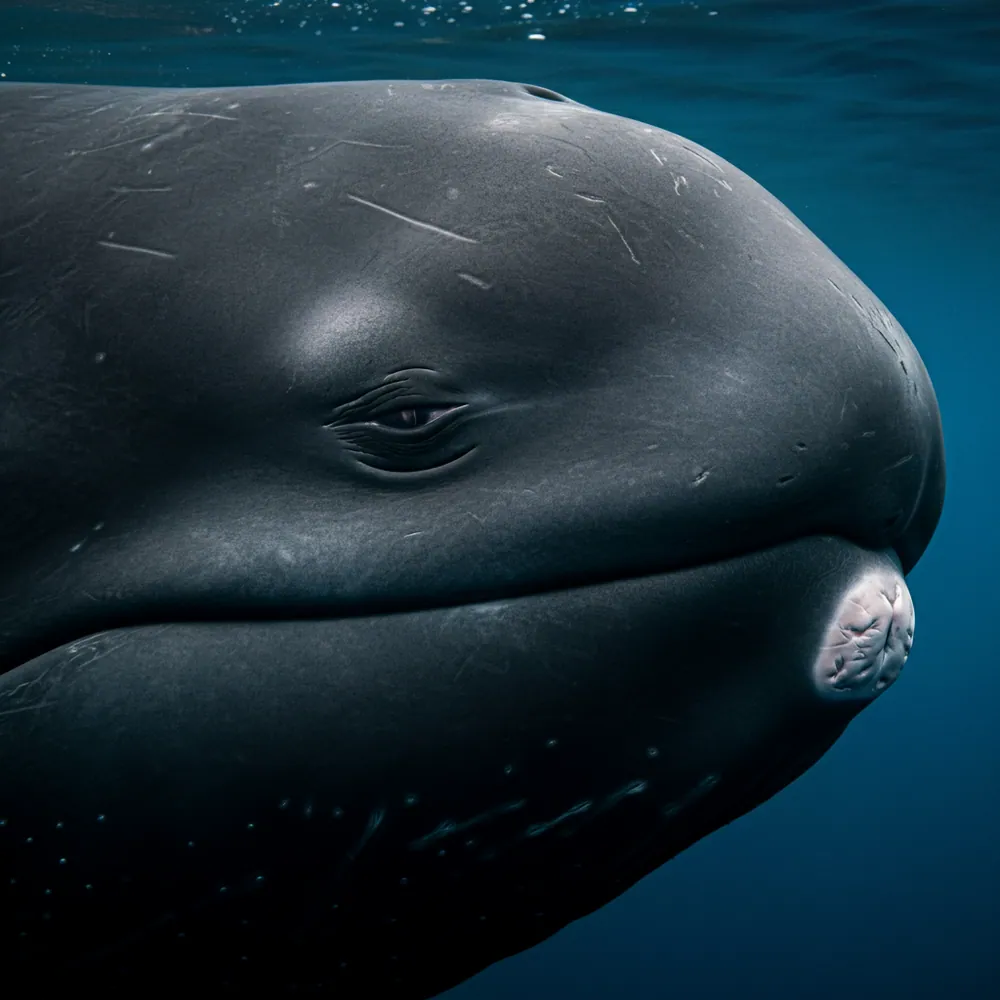
Hey ocean explorers! Get ready to meet one of the coolest creatures in the sea: the Sei Whale! (That's pronounced "say," like what you say when you talk!) Imagine a giant, super-fast submarine that's alive – that's kind of like a Sei Whale. These magnificent ocean giants can grow up to 60 feet long, which is like four school buses lined up end-to-end! With their sleek, dark grey bodies and a special pointy ridge on their head, they're often called the "greyhound of the sea" because they can zoom through the water at over 30 miles per hour! That's faster than most cars drive in town!
But how does such a speedy giant eat? Well, the Sei Whale doesn't have teeth! Instead, its mouth is filled with hundreds of long, bristly plates called baleen. It's like having a giant comb inside its mouth! This amazing whale "skims" along the surface with its mouth slightly open, filtering out tiny, tiny snacks like krill and small fish from the water. It's like a living, breathing, super-efficient ocean vacuum cleaner! These amazing whales often travel alone or in small groups, journeying thousands of miles across the ocean every year from cold feeding grounds to warm breeding spots.
These incredible filter feeders do a super important job for our planet. By eating all those tiny critters, they help keep the ocean's food web balanced and healthy. They even help recycle important nutrients from the deep ocean back to the surface, making the ocean a better place for everyone! Sadly, there aren't as many Sei Whales as there used to be because of hunting long ago, which makes every sighting of these elegant, speedy giants even more special. So next time you think about the ocean, remember the magnificent Sei Whale, a true underwater superhero!
Climate change is warming the ocean, which means the tiny animals Sei whales eat, like copepods and krill, might have trouble finding food or moving to new places. This makes it harder for Sei whales to find enough to eat and grow big and strong.
Being done about itScientists are carefully studying ocean temperatures and whale food to understand these changes better. Also, people around the world are working to use less energy, like riding bikes or turning off lights, to help slow down ocean warming and protect the whales' home.
Bycatch / Overfishing
Sometimes, Sei whales accidentally swim into big fishing nets meant for other fish, which is called bycatch, and they can get hurt or trapped. Also, if too many fish are caught by humans (overfishing), there might not be enough food left for the whales to eat.
Being done about itFishermen are trying new kinds of fishing gear that are safer for whales, and scientists are inventing alarms or special nets to keep whales away. Governments are also setting rules to limit how much fish can be caught, making sure there's plenty of food for both people and Sei whales.
Many countries are working together like a global superhero team, making sure Sei whales are safe from harm and keeping their ocean homes clean and protected for future generations.
Also known asBalaenoptera borealis
GroupAnimal
DietCarnivore (filter feeder, primarily zooplankton like copepods and krill, also small fish and squid)