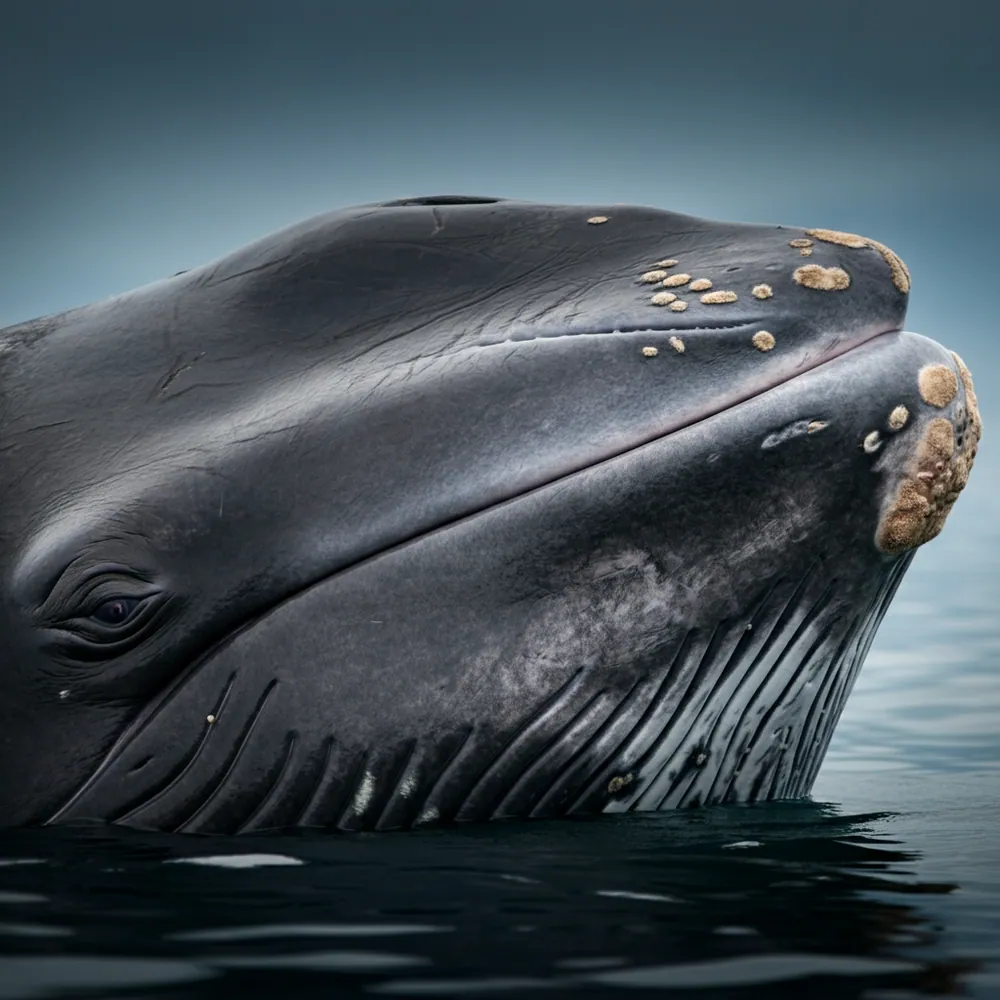
Get ready to meet one of the ocean's most magnificent superstars: the Humpback Whale! Imagine an animal as long as a school bus, weighing as much as *ten* elephants, gracefully gliding through the water. That's our incredible Humpback! They have super-long, wing-like fins that are almost a third of their body length, and their heads are covered in unique, bumpy "tubercles" – like nature's own polka dots! These gentle giants are truly a sight to behold.
But what makes them *extra* special? Humpbacks are the acrobats of the sea! They love to put on a show, leaping completely out of the water in a spectacular "breach," crashing back down with a giant splash. And guess what? The male Humpbacks are also incredible singers! They belt out complex, haunting songs that can last for many minutes, echoing through the ocean depths. Scientists think these amazing songs are how they communicate and maybe even find a mate.
So, next time you think of the ocean, picture these amazing creatures with their powerful tails, long fins, and bumpy heads, performing incredible jumps and singing their hearts out. The Humpback Whale is a true marvel, reminding us of the endless wonders hidden beneath the waves!
Climate change is making the ocean warmer, which changes where the tiny animals and fish that humpback whales love to eat can live. This means there might be less food for these big whales, making it harder for them to find enough to eat and grow strong.
Being done about itScientists are studying the ocean to understand how climate change affects whales, and many people are working to use less energy from fossil fuels by walking, biking, or using solar power to help keep our planet cooler.
Bycatch / Overfishing
Humpback whales can accidentally get tangled in big fishing nets or ropes meant for other sea creatures, which is called bycatch. This can hurt them, stop them from swimming and finding food, or even make it hard for them to breathe.
Being done about itFishermen are learning to use special gear that helps whales avoid getting tangled, and scientists are inventing new ways to fish that are safer for all ocean animals. Rules are also being made to protect areas where whales often swim, keeping them safe from fishing gear.
People are working hard to protect humpbacks by creating special ocean zones where they can safely swim and by developing new fishing gear that doesn't accidentally trap them. This important mission helps ensure these magnificent giants can splash and sing for many years to come!
Also known asMegaptera novaeangliae
GroupAnimal
HabitatOcean
DietPrimarily krill and small fish, filtered through baleen plates.