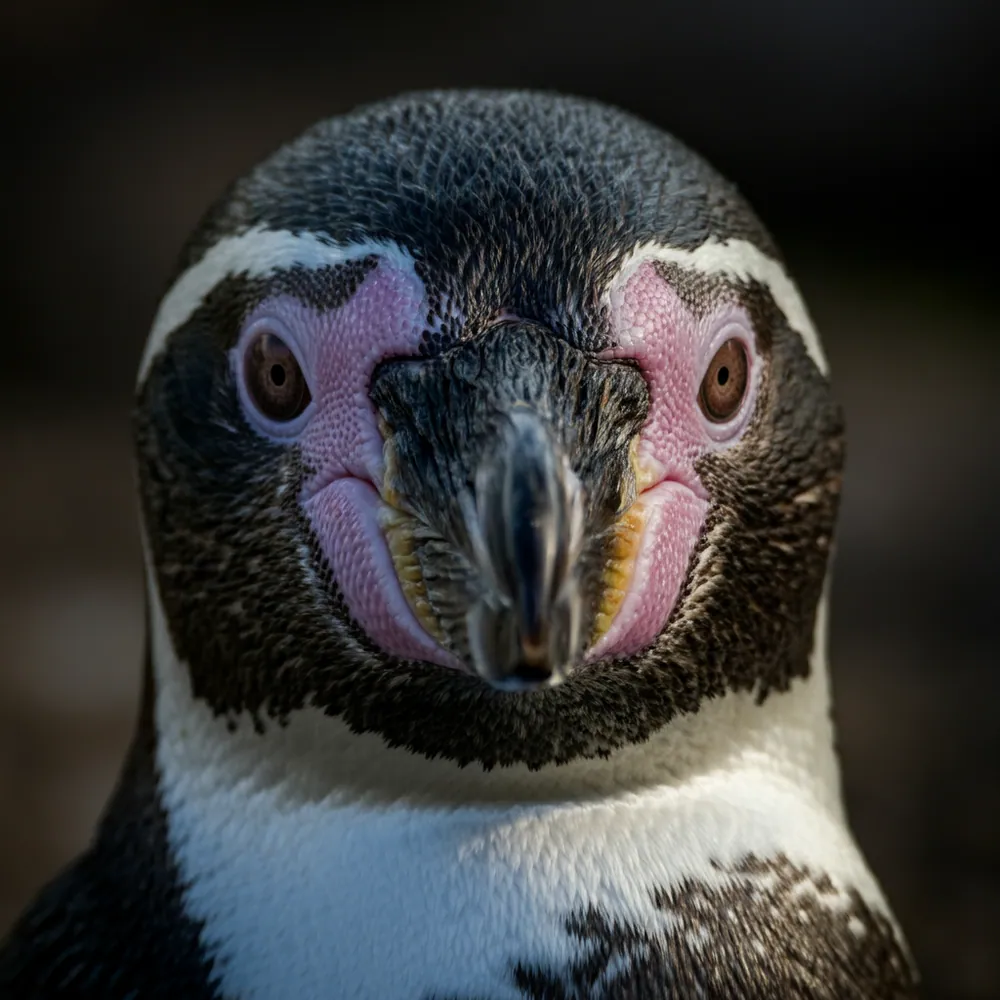
Get ready to meet one of the ocean's coolest feathered friends, the incredible Humboldt Penguin! Imagine a medium-sized penguin, not too big, not too small, sporting a snazzy black and white tuxedo. These amazing birds don't live in the icy Antarctic like some of their famous cousins; oh no, they call the sunny Pacific coast of Peru and Chile in South America their home! They love to dive and dart through the ocean waves, looking for a tasty fish snack.
But here's a super cool secret: the Humboldt Penguin and the chilly ocean current they swim in are *both* named after a famous explorer called Alexander von Humboldt! How neat is that? These penguins are also amazing travelers, a bit like feathered adventurers, moving along the coast as they follow their food. They're related to other awesome penguins like the African and Galápagos penguins, making them part of a very special bird family.
Now, here's something that makes them extra special: these incredible birds are quite rare. There are only about 23,800 grown-up Humboldt Penguins left in the wild, and their numbers are getting smaller. This means every single one is super precious! By learning about them, you're helping us all understand how important it is to protect these amazing, tuxedo-wearing ocean explorers so they can keep swimming and waddling for many more years to come. Isn't that a fantastic mission?
Where the humboldt penguin still lives — Peru, Chile
Climate change is making the ocean warmer, which means the fish Humboldt Penguins eat are moving to cooler places or becoming harder to find. It also causes bigger storms and higher sea levels that can flood their homes on the coast.
Being done about itScientists are studying how climate change affects penguins, and people around the world are working to use less energy and switch to clean power like solar and wind to keep our planet from getting too warm.
Habitat loss
People are building more and more houses, roads, and ports along the coast where Humboldt Penguins live, taking away their sandy beaches and rocky cliffs where they build nests and raise their chicks. This means they have fewer safe places to call home and raise their families.
Being done about itGovernments and conservation groups are creating special protected areas along the coast where building is not allowed, giving penguins safe beaches and cliffs to live. They are also working to clean up pollution and restore damaged habitats so penguins have good homes again.
Bycatch / Overfishing
Sometimes, Humboldt Penguins accidentally get caught in big fishing nets that are meant for other fish, which can hurt them or make it hard for them to swim and breathe. Also, when too many fish are caught by humans, there isn't enough food left in the ocean for the penguins to eat.
Being done about itFishermen and scientists are working together to design special fishing nets that help penguins escape if they get too close, and governments are setting rules about how many fish can be caught so there's always enough food left for the penguins. You can help by choosing seafood that is caught in a way that doesn't harm other animals.
Lots of amazing people are on a special mission to protect Humboldt Penguins by cleaning up their ocean homes and making sure they have plenty of fish to eat. They're also creating safe nesting areas so these cool birds can raise their fluffy chicks without worry!