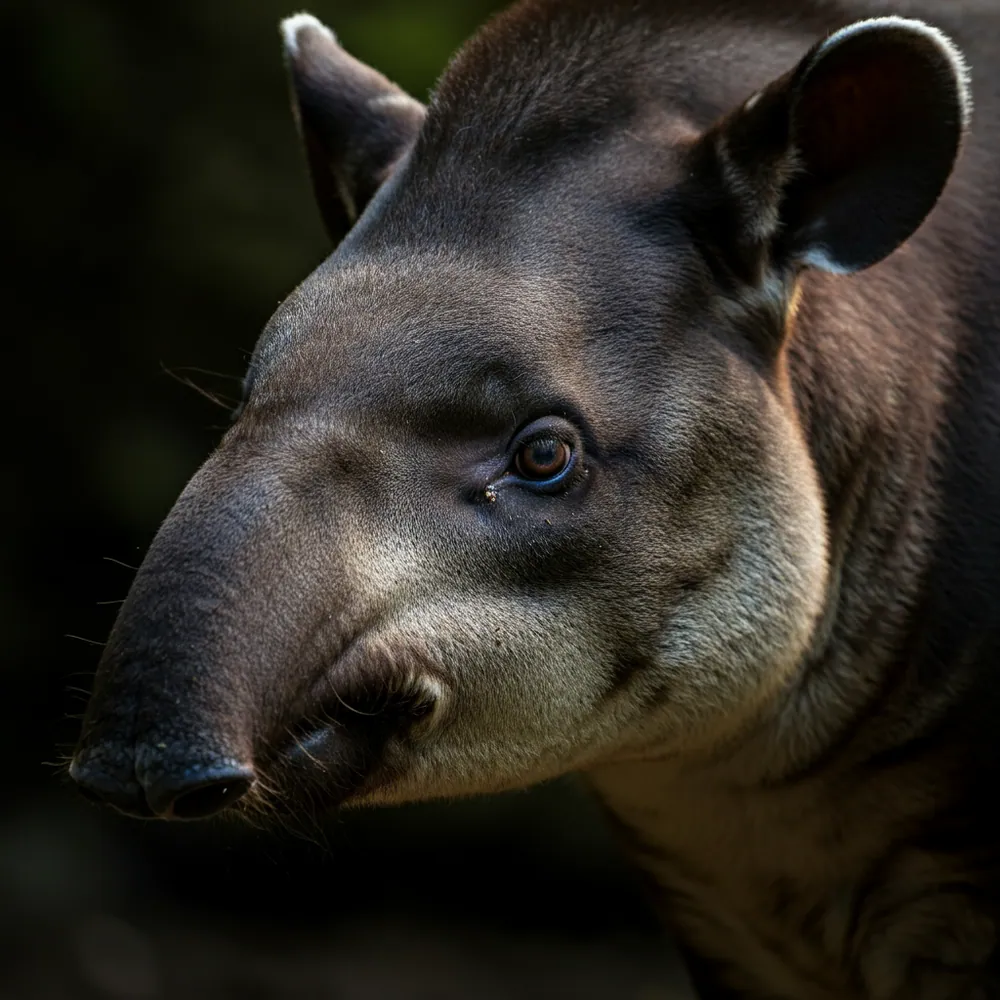
Imagine a creature that looks like it's wearing a fancy tuxedo, but it's actually super good at hiding! Meet the Malayan Tapir, a truly one-of-a-kind animal from the steamy rainforests of Southeast Asia. It has a shiny black front and back, with a big, bright white "saddle" across its middle. This isn't just a fashion statement – it helps the tapir disappear into the dappled sunlight of the forest, making it a master of camouflage! But the coolest part? Its super-duper flexible, wiggly nose, called a proboscis. It's like a built-in sniffer and a handy grabber, perfect for finding and plucking tasty leaves!
These gentle giants are a bit shy and love to explore at night, using their amazing snouts to sniff out juicy leaves, shoots, and fallen fruits. Even though they're big, Malayan Tapirs are incredibly graceful, especially when they take a dip! They are champion swimmers and love to cool off or escape danger by diving into rivers. And get this – they can even hold their breath and walk on the riverbed, using their special nose like a snorkel to breathe! It’s like watching an elegant underwater ballet from a big, sturdy friend.
But the Malayan Tapir is more than just a cool-looking, deep-diving explorer. It's a superhero for its rainforest home! As it munches on yummy fruits and travels through the forest, it helps spread seeds far and wide through its droppings. This makes the tapir a super important "gardener of the forest," helping new plants grow and keeping the rainforest healthy and full of life. So, let's cheer for the Malayan Tapir – a truly ancient, indispensable, and totally awesome creature that helps keep our planet green!
Where the malayan tapir still lives — Southeast Asia
Malayan Tapirs live deep in the rainforests, but these forests are shrinking. People are cutting down trees to make way for farms, roads, and towns, leaving the tapirs with nowhere to live or find their favorite leafy snacks.
Being done about itScientists and conservationists are working to protect large areas of rainforest and even plant new trees. This creates safe, connected homes where tapirs can roam freely and find plenty of food.
Poaching / Illegal hunting
Sometimes, people illegally hunt tapirs, even though it's against the law and they are gentle creatures. This can happen when tapirs wander close to human areas or if hunters are looking for other animals.
Being done about itForest rangers are working hard to patrol the tapirs' habitats to stop illegal hunting and catch poachers. They also teach local communities about how special tapirs are and why we need to protect them.
Brave conservation heroes are working hard to protect the Malayan Tapir's rainforest homes from disappearing and are setting up special breeding programs in zoos to help grow their families. It's a super important mission to ensure these unique animals have a bright future!