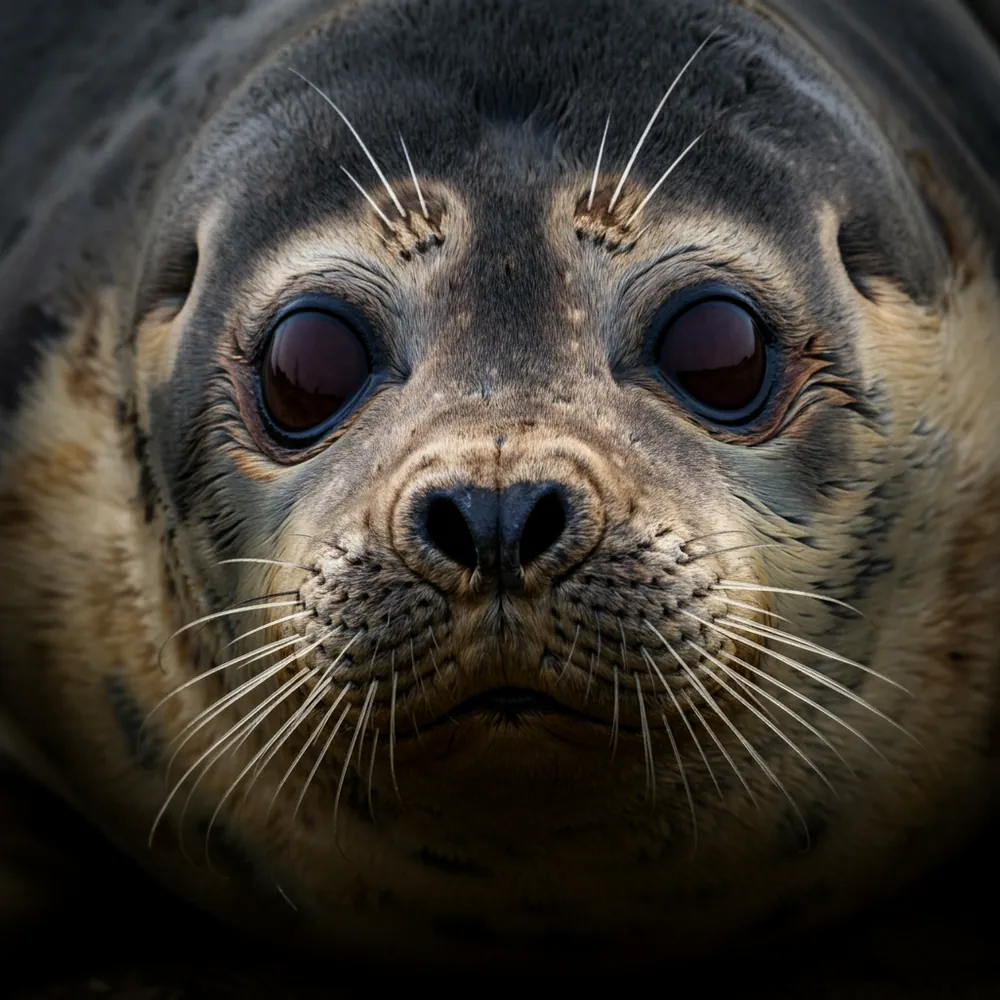
Hey there, wildlife adventurers! Get ready to meet one of the ocean's most amazing superstars: the Hooded Seal! This incredible seal lives in the super chilly waters of the North Atlantic Ocean, all the way from icy Svalbard to the Gulf of St. Lawrence. Imagine a seal that's usually silver-grey with cool black spots, like a speckled ocean explorer. But wait, there's a secret superpower hidden in its name!
That's right! Male Hooded Seals have a super special "hood" on their head that they can inflate like a giant balloon! It's actually a stretchy sac on their nose. And if that's not wild enough, they can even blow out a bright red, balloon-like membrane from one of their nostrils! They do this to show off to other seals and say, "Hey, look at me!" How cool is that? It's like having a built-in party trick!
And guess what their babies are called? "Blue-backs!" These adorable pups are born with a beautiful blue-grey coat on their backs and a white belly, making them look like little ocean clouds. They keep this special coat for over a year before they get their grown-up look. This seal is so unique, it's the only member of its special seal group! Isn't that just mind-blowing?
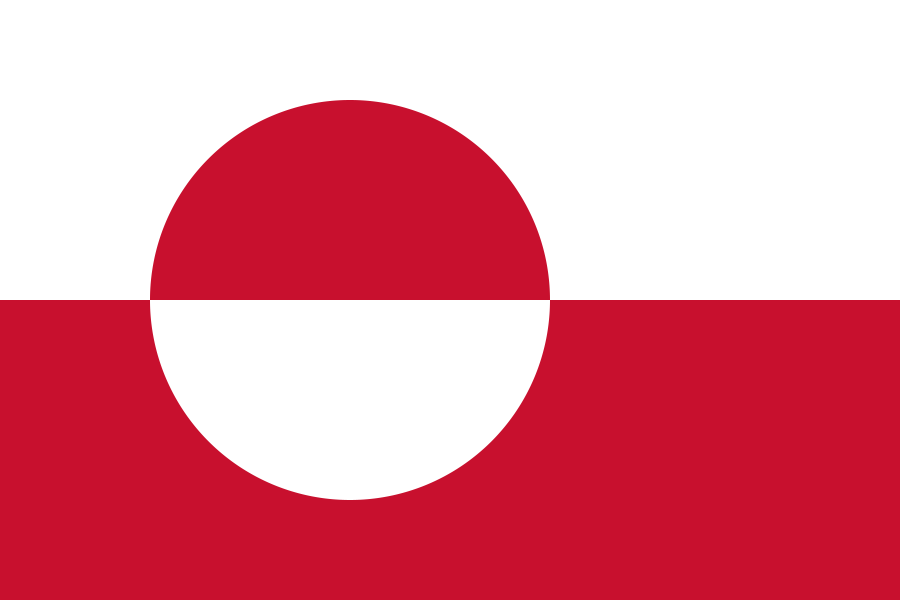
Where the hooded seal still lives — Canada, Greenland, Iceland, Norway, Russia
Hooded seals live in the ocean, and pollution like plastic bags or chemical spills can make their home unsafe. They might get tangled in old fishing nets or eat tiny pieces of plastic that make them very sick.
Being done about itScientists are studying how pollution affects these seals, and many people are helping by cleaning up beaches and trying to use less plastic so that less trash ends up in the ocean where seals live.
Climate change
Hooded seals depend on sea ice to rest, give birth to their pups, and hunt for food. As our planet gets warmer, this important sea ice melts away, making it very difficult for them to find safe places to live and raise their young.
Being done about itScientists are carefully watching the melting ice and telling everyone how climate change affects animals like the hooded seal. People and governments are working to reduce the pollution that causes warming, hoping to save the ice.
Poaching / Illegal hunting
Sadly, some people still illegally hunt hooded seals for their fur or blubber, even though it's against the law. This illegal hunting makes it harder for the seal population to grow and thrive.
Being done about itWildlife rangers patrol the seas to catch illegal hunters and protect the seals, and strict laws are in place to keep them safe. Scientists also count the seals to make sure their numbers are healthy and protected from harm.
Brave scientists and conservationists are on an important mission to protect these amazing seals by studying their icy homes and working to keep the ocean clean and safe from pollution and climate change, so future generations can marvel at them.
Also known asCystophora cristata
GroupAnimal
DietCarnivore
SizeMales typically 300-400 kg (660-880 lbs), females 160-230 kg (350-500 lbs). Pups are born weighing 10-30 kg (22-66 lbs).