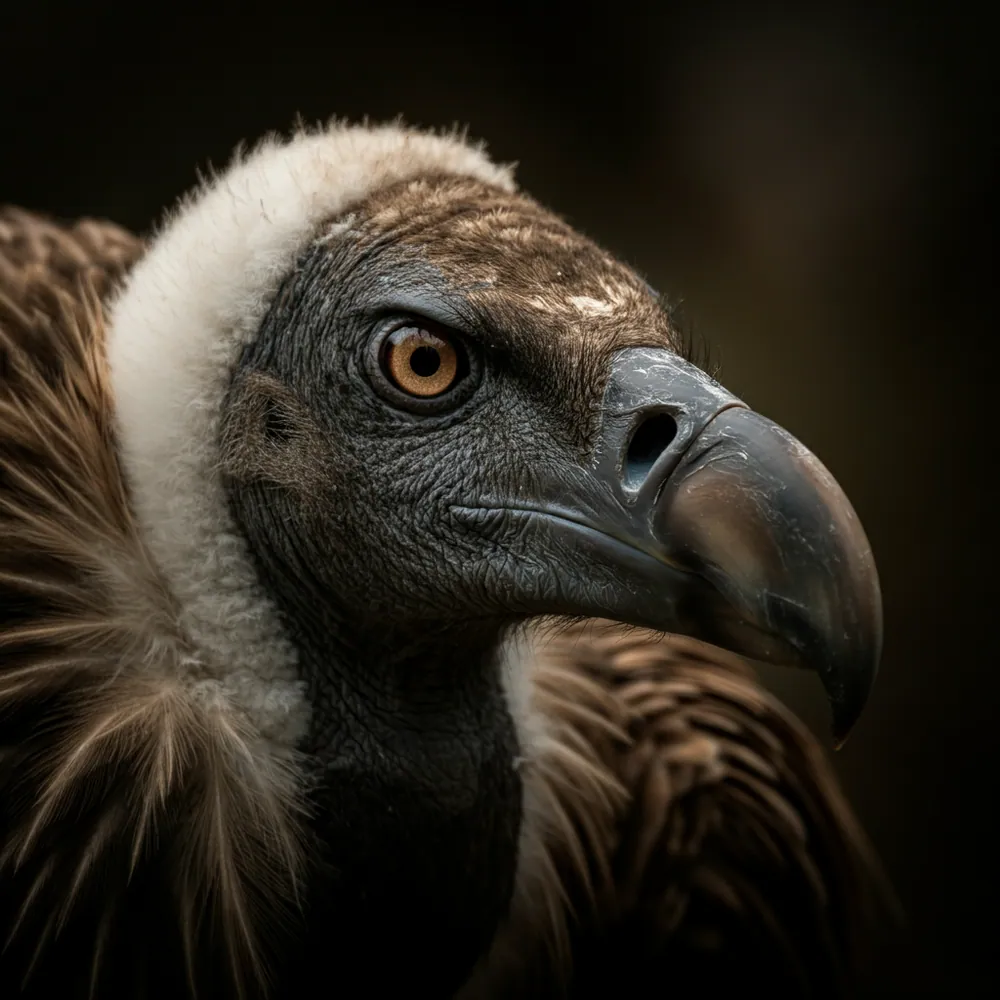
Hey there, wildlife adventurers! Get ready to meet one of Africa's most fascinating feathered friends: the Hooded Vulture! Now, don't let its name fool you – it doesn't actually wear a hood. Instead, this amazing bird rocks a super unique look, almost like it's got a cool, scruffy haircut! It's related to fierce eagles and soaring hawks, but it has its very own special style with dark brown feathers, a long, thin beak, and a bare, reddish face that makes it stand out in the African savanna.
So, what makes the Hooded Vulture so incredibly cool and special? It's nature's ultimate clean-up crew! While other animals might turn up their noses, our Hooded Vulture swoops in to gobble up leftovers from other animals' meals. This might sound a bit yucky, but it's actually super important! By cleaning up carcasses, these vultures help stop diseases from spreading and keep their African home healthy and tidy. Talk about a superhero job that keeps the environment sparkling!
Sadly, our amazing Hooded Vulture needs a little help. Because of things like losing their homes and other dangers, these special birds are now critically endangered, which means there aren't many left in the wild. But don't worry, people are working hard to protect them, especially in places like The Gambia where many of them still live. Learning about them is the first step to becoming their champion. Isn't it wonderful how every creature, even one that eats leftovers, plays such an important role in our world?
Hooded vultures often eat dead animals that have been poisoned, perhaps by farmers trying to protect their crops or livestock. When the vultures eat these poisoned meals, they get very sick and can even die, which is a big problem for their survival.
Being done about itScientists are finding safer ways for farmers to protect their farms without using poisons, and animal rescuers help sick vultures recover. People are also working to clean up environments so there's less harmful stuff for the vultures to accidentally eat.
Habitat loss
Hooded vultures need tall trees to build their nests and open spaces to find food, but these areas are shrinking as people cut down forests for farms and new buildings. This means vultures lose their homes and places to hunt, making it hard to raise their families.
Being done about itConservation groups are working hard to protect forests and plant new trees where vultures can live and nest safely. They also help create special protected areas where these birds can thrive without their homes being destroyed by human activity.
Poaching / Illegal hunting
Sadly, some people illegally hunt hooded vultures for their feathers or body parts, which are sometimes used in traditional beliefs, or because they are unfairly seen as pests. This illegal hunting greatly reduces the number of vultures, making it harder for them to find mates and have babies.
Being done about itRangers and police are working hard to stop illegal hunting and catch those who harm these important birds. Educators also teach communities why vultures are vital for a healthy environment, helping everyone understand why they should be protected.
Dedicated animal heroes are setting up 'Vulture Safe Zones' across Africa where these birds can find safe food, and they're teaching communities how to prevent accidental poisoning, which is a big threat to their survival.
Also known asNecrosyrtes monachus
GroupAnimal
HabitatSavannah
DietCarcasses of dead animals (scavengers).
PredatorsNone as adults. The main threat is poisoned bait and illegal trade.