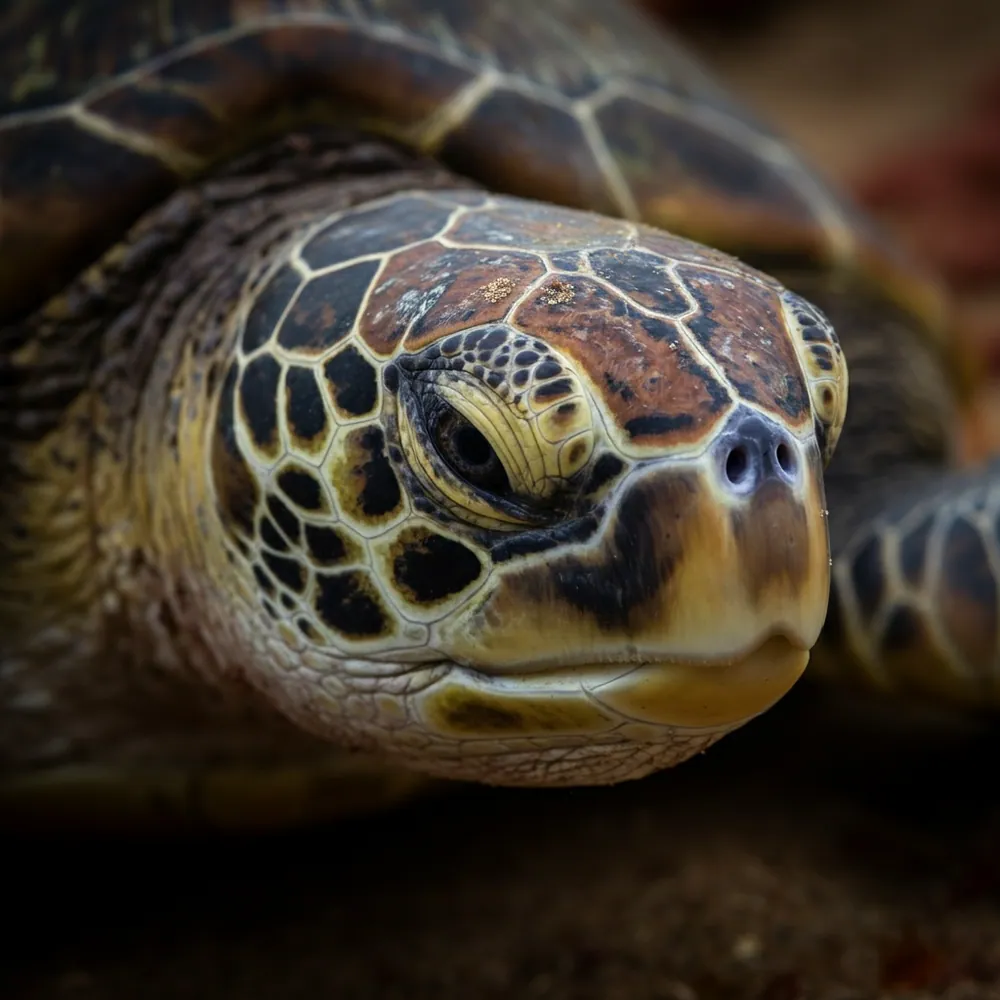
Imagine a creature that has been swimming in our oceans since the time of dinosaurs! Get ready to meet the incredible Green Sea Turtle, a true ocean superstar. These gentle giants glide through warm waters all around the world, from sunny beaches to coral reefs. They might look like they're wearing a big, strong shield, but don't let that fool you – they're super graceful swimmers and amazing travelers!
Now, here's a fun secret: even though they're called "Green Sea Turtles," their shells aren't usually bright green! They can be olive, brown, or even black. So, where does the "green" come from? It's all thanks to their favorite snack! These turtles are mostly vegetarian, munching on tasty seagrass. All that green goodness turns the fat *underneath* their shell a beautiful green color – how cool is that? It makes them one of a kind!
These amazing turtles are like ocean explorers, traveling huge distances across the Atlantic, Pacific, and Indian Oceans. They're the only species in their special family called *Chelonia*, making them extra unique. Green Sea Turtles are super important for keeping our ocean healthy, like underwater gardeners. Isn't it wonderful to think about these ancient, peaceful creatures swimming freely in our big blue world?
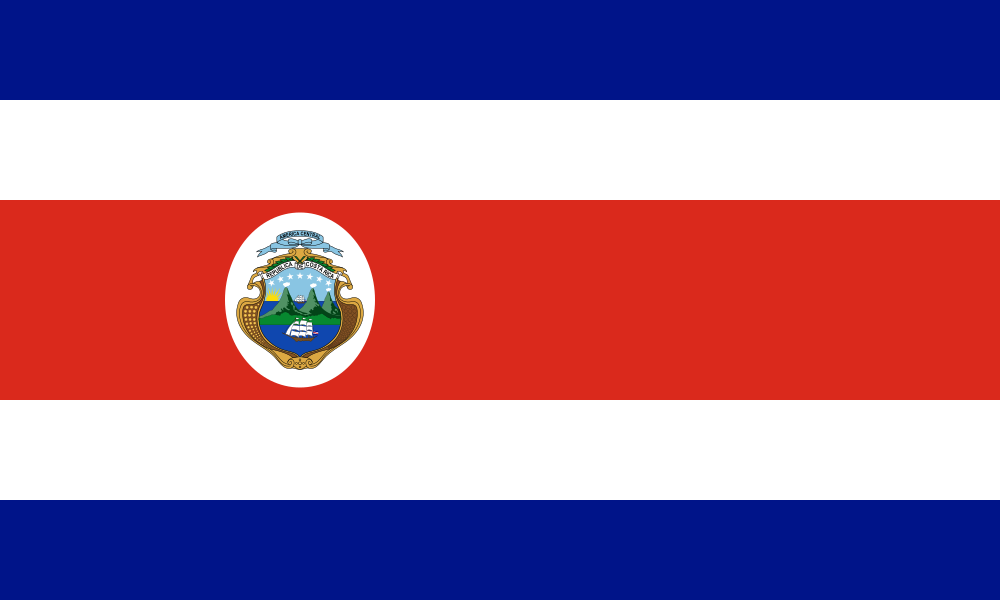
Where the green sea turtle still lives — Costa Rica
Green sea turtles need clean, quiet beaches to lay their eggs and healthy seagrass beds in the ocean to eat their favorite food. When people build on beaches or pollute the ocean, these important places disappear, making it hard for turtles to find homes and food.
Being done about itMany people are working hard to protect important nesting beaches and clean up ocean pollution to restore seagrass beds. This helps ensure turtles have safe places to lay their eggs and plenty of healthy food to eat.
Bycatch / Overfishing
Sometimes, green sea turtles accidentally get caught in fishing nets or on hooks meant for other fish, which is called bycatch. This can hurt them, make it hard for them to breathe, or even prevent them from swimming away.
Being done about itScientists and fishermen are working together to design special fishing nets with escape hatches for turtles, and they are learning new fishing methods. This helps turtles swim free if they accidentally get caught, keeping them safe.
Brave scientists and volunteers are working hard on an important mission to protect the beaches where mama turtles lay their eggs and clean up plastic from the ocean! They're also developing special fishing nets that help turtles escape, giving these amazing creatures a safer future.
Also known asChelonia mydas
GroupAnimal
DietHerbivore (primarily seagrass and algae as adults; juveniles can be omnivorous)
SizeAdults typically 150-200 kg (330-440 lbs), with some individuals exceeding 300 kg (660 lbs).