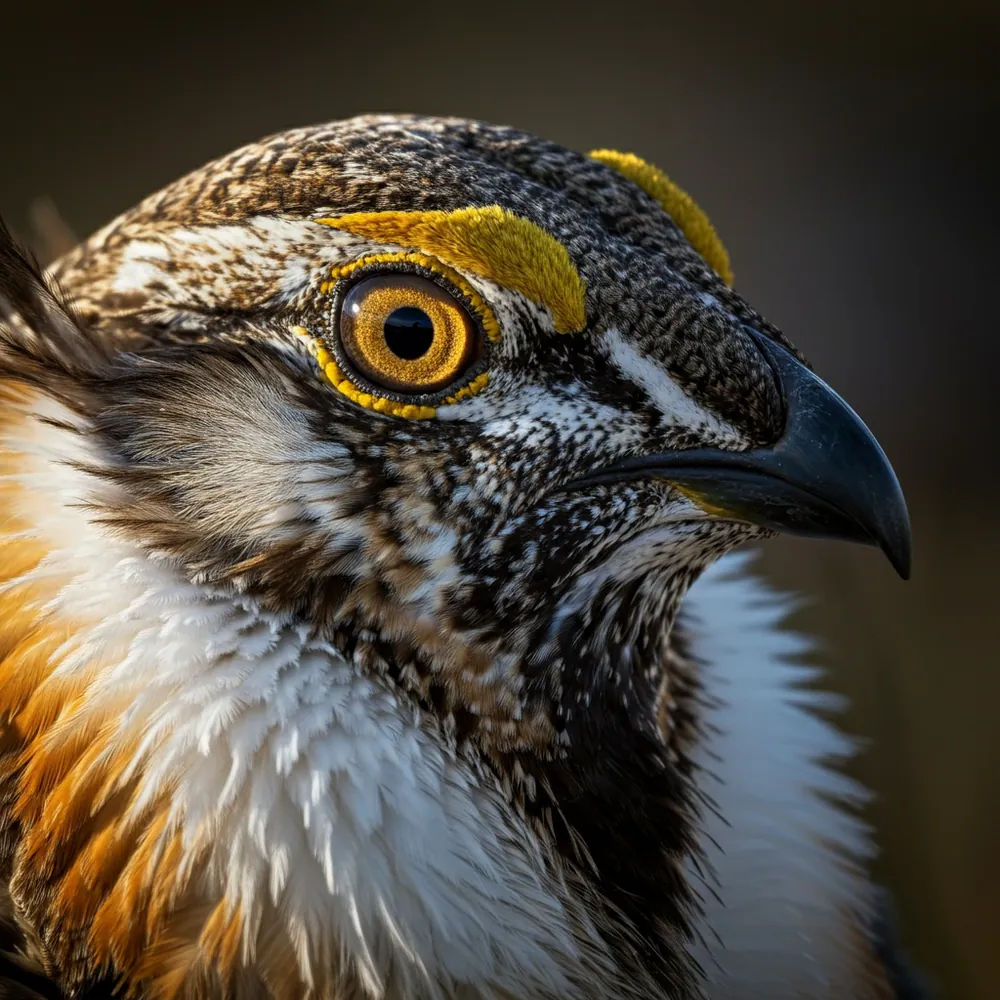
Get ready to meet one of North America's most amazing birds, the Greater Sage-Grouse! Imagine a bird about the size of a chicken, but with super cool camouflage. Its feathers are a mix of browns, blacks, and whites, making it practically invisible among the sagebrush plants where it lives. But wait until you see the boys! Male sage-grouse are super fancy, with a bold black belly, spiky tail feathers that fan out like a star, and two incredible yellow-green balloons on their chest. These aren't just for show – they're part of their secret superpower!
And what a superpower it is! Every spring, these male grouse put on one of the wildest dance parties you've ever seen. They gather at special spots called 'leks' (say 'leks') at sunrise. With chests puffed out and those amazing tail feathers fanned high, they strut, spin, and inflate their yellow-green chest balloons like magic! As they do, they make funny 'popping' and 'whooshing' sounds. It's all to impress the female grouse, who are watching carefully to pick the best dancer to be the dad of their chicks. It's a truly spectacular show!
But the Greater Sage-Grouse is more than just a fancy dancer; it's a super important hero of its home! These birds are called 'sagebrush obligates' because they *must* have sagebrush to survive – they eat it, hide in it, and even build their nests under it. This means if the sage-grouse are healthy and happy, then the whole sagebrush world, with all its other amazing animals like tiny pygmy rabbits and graceful mule deer, is healthy too. So, by protecting these magnificent birds, we're actually helping to save an entire incredible habitat for everyone!
Where the greater sage-grouse still lives — United States, Canada
The Greater Sage-Grouse needs big, healthy sagebrush lands to find food, build nests, and hide from predators. But people are building houses, roads, and farms, or digging for oil, which breaks up and shrinks their important sagebrush homes.
Being done about itScientists and ranchers are working together to protect and restore large areas of sagebrush, sometimes by planting new sagebrush or making sure livestock don't eat too much. They are also trying to find smart ways for people and sage-grouse to share the land safely.
Climate change
Climate change is making the weather wilder, bringing hotter summers and less snow in winter, which makes it harder for sage-grouse to find the right food and water. It also causes more wildfires that can quickly burn away their sagebrush homes.
Being done about itScientists are studying how climate change affects these birds and figuring out how to make their habitats stronger against droughts and big fires. We can all help by using less energy and making choices that are better for our planet.
Many dedicated people are on a mission to save these magnificent birds by protecting their vast sagebrush homes from danger and working with landowners to make sure the grouse have safe places to live and raise their chicks.
Also known asCentrocercus urophasianus
GroupAnimal
DietHerbivore (primarily folivorous)
SizeMales: 2.5-3.5 kg (5.5-7.7 lbs), Females: 1.0-1.8 kg (2.2-4.0 lbs)