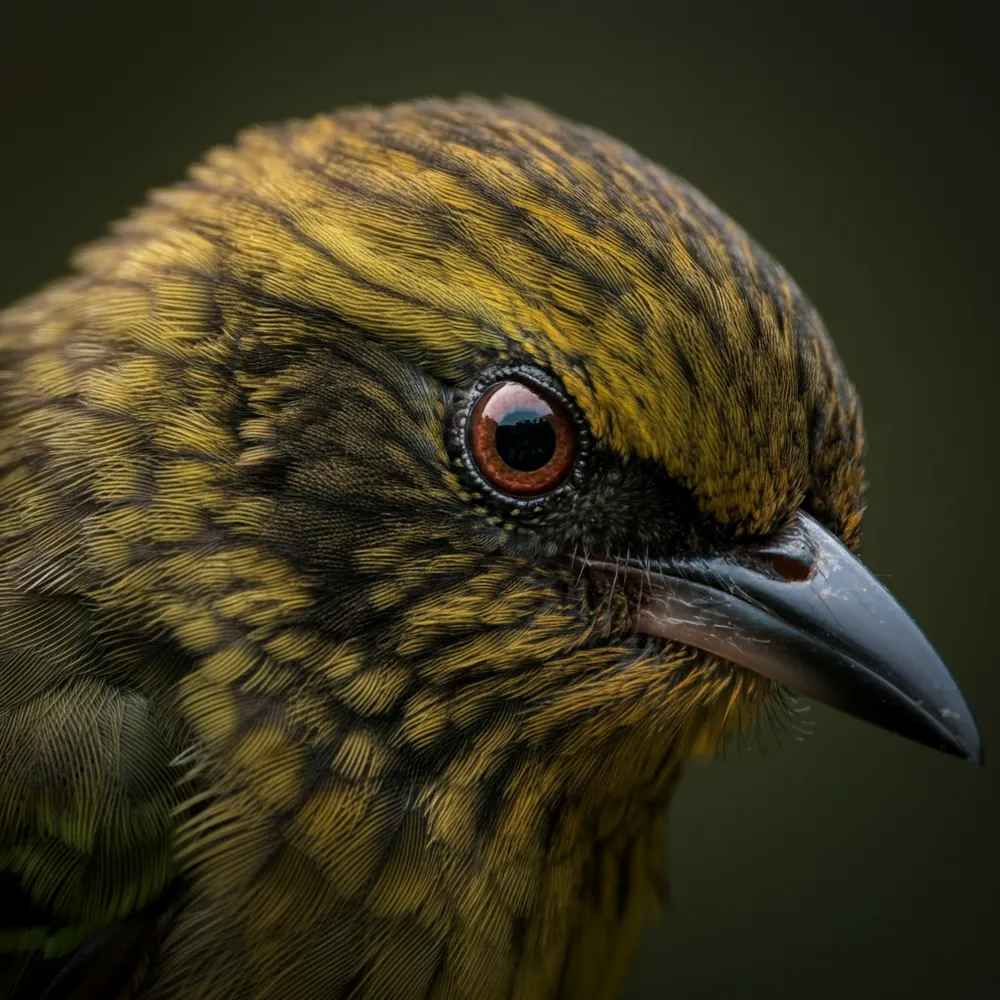
Hey explorers! Get ready to meet one of the Amazon rainforest's most amazing (and tiniest!) secrets. Imagine a bird so small, it's barely bigger than your thumb, yet it's a super-sleek master of disguise! This is the Caqueta Seedeater, and it's like a real-life shadow-ninja. Its feathers are a cool, dark grey, helping it blend perfectly into the leafy jungle. Can you spot it? Probably not, because it's so good at hiding!
This super shy bird lives deep, deep inside the humid Amazon rainforest in a special place called the Caquetá region of Colombia. It spends its days hopping quietly among the plants, using its tiny, pointed beak to find delicious seeds and small bugs. But here's what makes it extra special: the Caqueta Seedeater is one of the RAREST birds on Earth! There are fewer than 50 grown-up ones left, which is almost like finding a real-life unicorn!
Even though it's tiny, this little seedeater is a HUGE deal for the rainforest. By eating and spreading seeds, it helps new plants grow, keeping the jungle healthy and strong. Protecting this amazing little bird means we're also helping to save its incredible home, filled with thousands of other wonderful creatures. So next time you think about the Amazon, remember the Caqueta Seedeater – a small bird with a giant message about how important it is to take care of our planet!
Where the caqueta seedeater still lives — Colombia
The Caqueta Seedeater lives in special grassy areas and shrublands, often near rivers. When these important places are cut down to make room for farms, buildings, or roads, these tiny birds lose their homes and have nowhere to find food or raise their babies.
Being done about itScientists and conservationists are working hard to protect the remaining grassy areas where these birds live. They are also teaching people how to farm in ways that don't destroy the birds' homes, so both people and seedeaters can thrive.
But don't worry, superhero scientists and nature groups are on a super important mission to save them! They are working with local people to protect their forest homes, plant new trees, and make sure these special birds have safe places to live and raise their families.