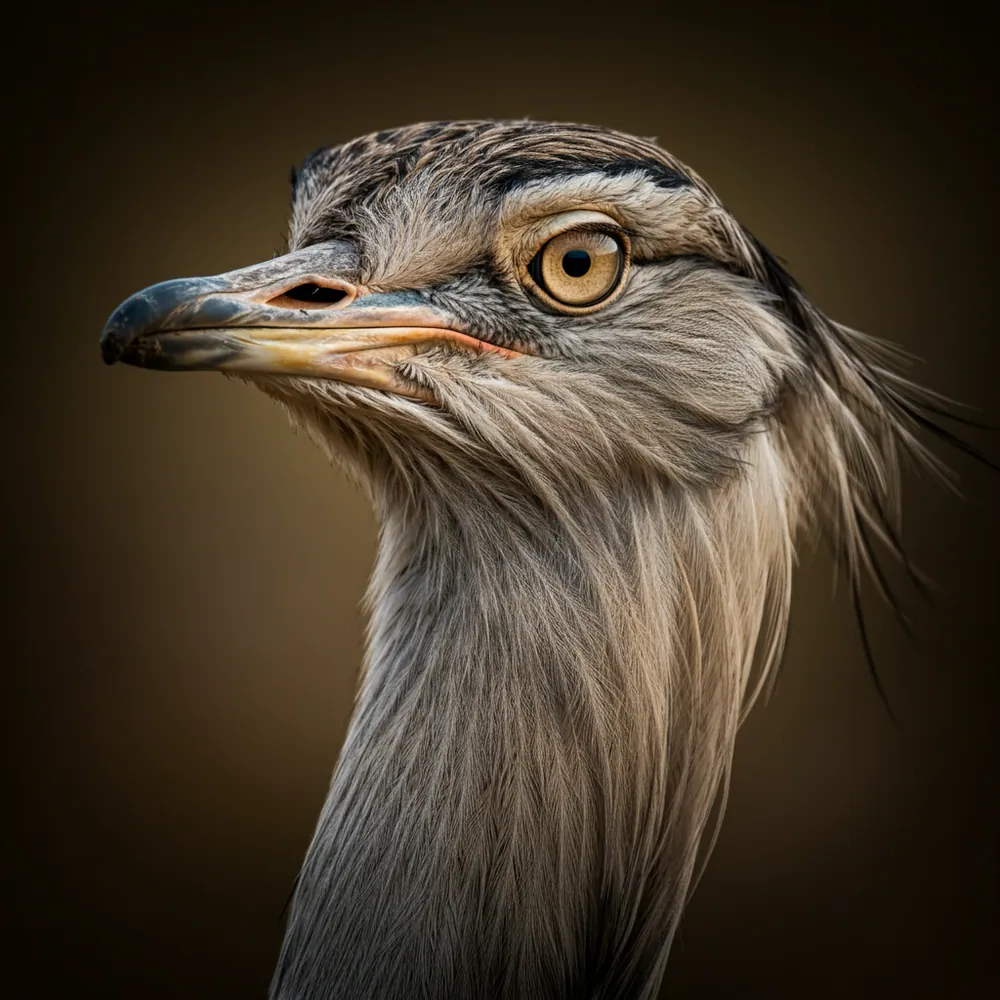
Get ready to meet a true feathered marvel from the heart of India – the magnificent Great Indian Bustard! Imagine a bird so grand, it looks like a feathery airplane with super long legs, gracefully striding across vast grasslands. This incredible creature is one of the heaviest birds in the entire world that can still soar through the sky! With its impressive size and horizontal body, it's like a living dinosaur, a powerful and elegant resident of the sunny plains. (Its fancy scientific name is Ardeotis nigriceps – try saying that five times fast!)
But here's what makes this giant even more special: it's super, super rare, like finding a hidden treasure! There are only a tiny handful of these amazing birds left in the wild, making every single Great Indian Bustard incredibly precious. They're protected by law in India, and people are working hard to keep their homes safe and sound. Isn't it wondrous to think that such a unique and ancient-looking bird still roams our planet? Let's learn all about this amazing, high-flying hero!
Where the great indian bustard still lives — India, Pakistan
The Great Indian Bustard loves wide-open grasslands, but these special homes are shrinking. People are turning these grasslands into farms, building sites, or placing power lines, leaving less space for the bustards to live and find food.
Being done about itScientists and park rangers are working hard to protect the remaining grasslands and create safe zones called sanctuaries just for the bustards. They are also teaching people how important these unique birds and their homes are.
Poaching / Illegal hunting
Sadly, some people illegally hunt Great Indian Bustards, even though it's against the law and these birds are very rare. This makes it even harder for the few remaining bustards to survive and have their babies.
Being done about itForest rangers and police are working hard to catch poachers and stop illegal hunting. They also teach local communities why it's so important to protect these precious birds, making sure everyone knows they should not be harmed.
But don't worry, lots of dedicated people are working hard on an important mission to save them! Scientists are carefully raising baby bustards in special safe places and protecting their natural homes, like building a super-secure fort for these amazing birds.