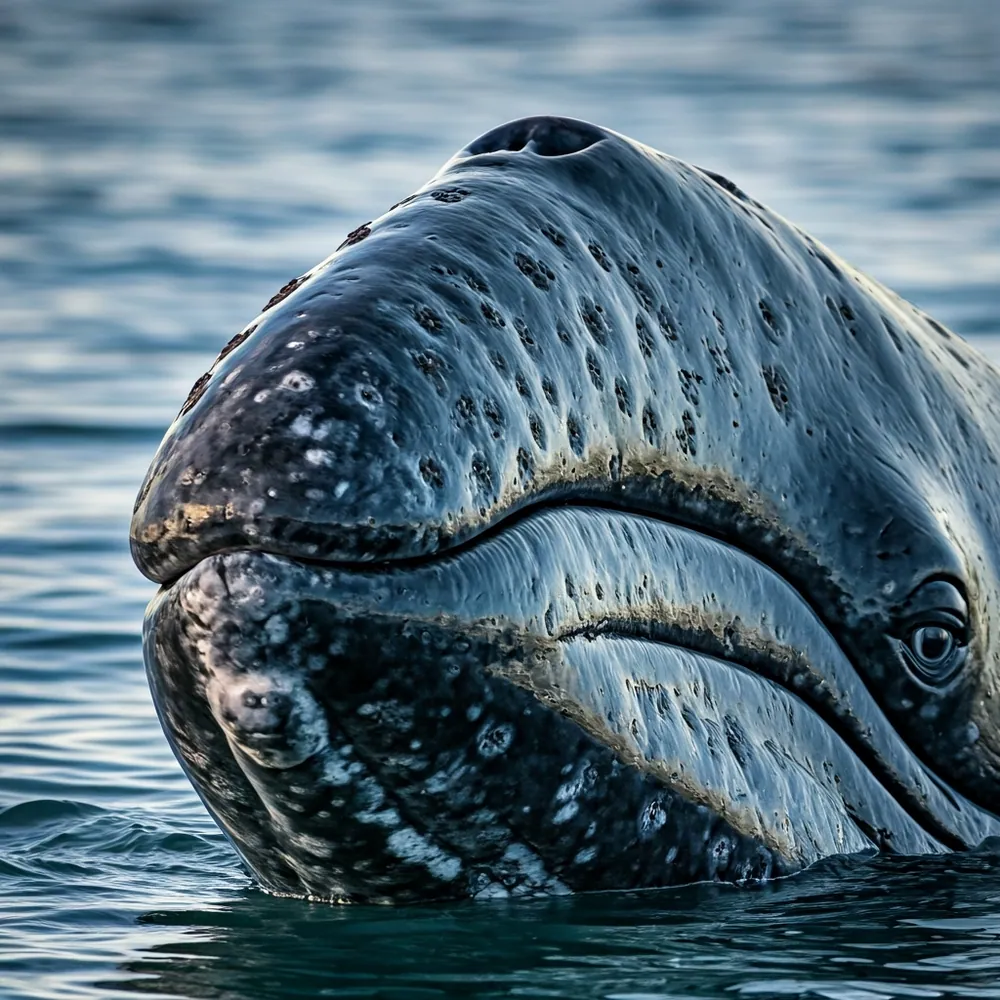
Get ready to meet one of the ocean's most incredible superstars: the Gray Whale! Imagine a creature as long as a school bus, covered in cool gray patches and white splatters that make it look like a giant, moving work of art. These gentle giants can weigh as much as *seven* elephants and live for a super long time – some even celebrating their 70th birthday or more! That's older than your grandparents!
But what makes them *really* special? Gray Whales are the ultimate adventurers! Every year, they go on one of the longest trips of any mammal on Earth, swimming thousands and thousands of miles from their warm breeding grounds to their chilly feeding spots. Long, long ago, some people even called them 'devil fish' because they were fierce fighters when threatened. But don't worry, these amazing whales are actually peaceful filter-feeders, slurping up tiny critters from the ocean floor. They're the only whale of their kind, making them truly unique and a magnificent sight to behold!
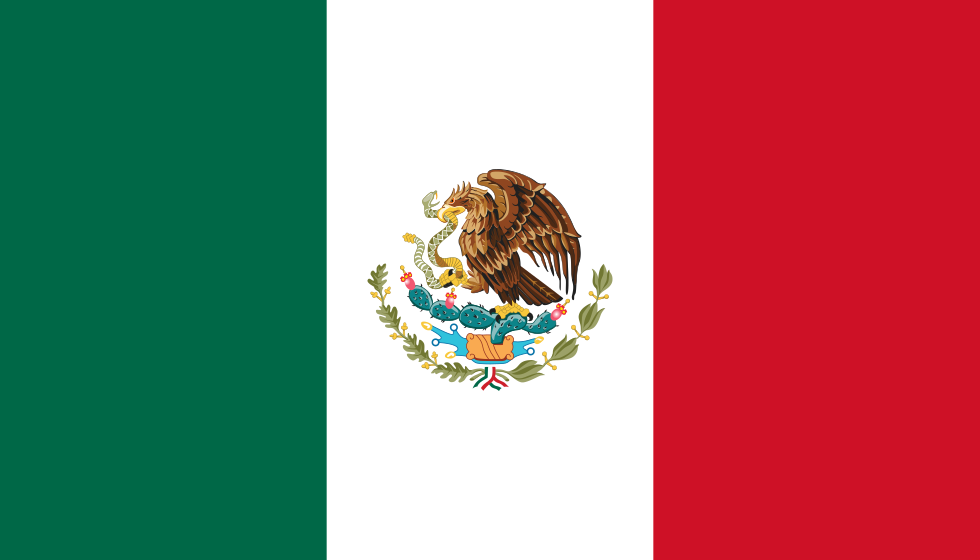
Where the gray whale still lives — USA, Russia, Mexico
Climate change is making the ocean warmer, especially in the Arctic where gray whales go to find their favorite tiny foods. This warming makes it harder for their food to grow, so whales might not get enough to eat and can become skinny and weak.
Being done about itScientists are studying how the warming ocean affects gray whales and their food, while people all over the world are trying to use less energy and create less pollution to help keep the ocean healthy for everyone.
Bycatch / Overfishing
Gray whales can accidentally get tangled in fishing nets and ropes that fishermen use to catch other sea creatures. When they get tangled, it can be very hard for them to swim, eat, or even reach the surface to breathe, which can be very dangerous.
Being done about itFishermen are learning to use special gear that helps whales avoid getting tangled, and amazing rescue teams are trained to carefully free whales that do get caught. You can help by choosing seafood caught in ways that don't harm marine animals.
Even though gray whales are doing well, ocean heroes work hard to protect their watery homes by cleaning up plastic trash and making sure ships know where whales are swimming, so these magnificent travelers can keep migrating safely for generations to come!
Also known asEschrichtius robustus
GroupAnimal
DietCarnivore (primarily benthic crustaceans, amphipods, and other small invertebrates)
Size15, 000 to 35, 000 kg (33, 000 to 77, 000 lbs)