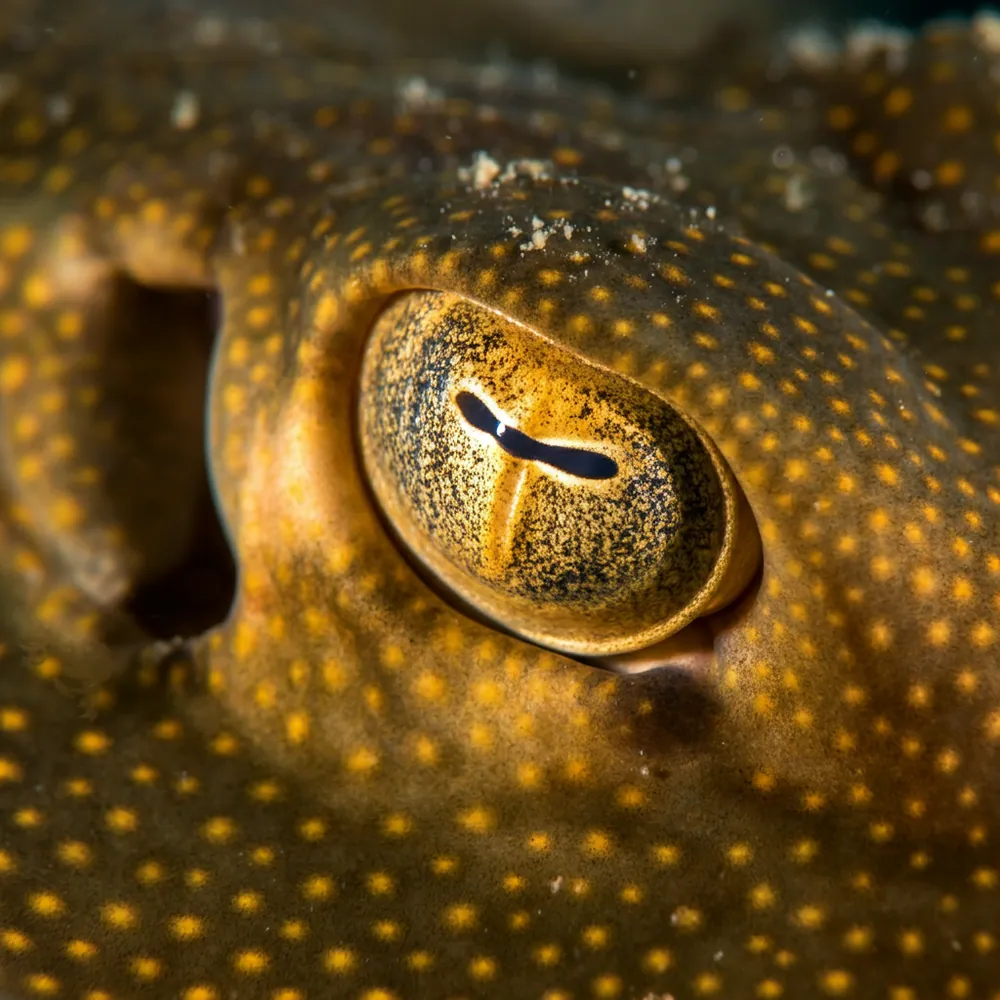
Imagine a secret agent of the sea, so flat and round it looks like a delicious pancake hiding on the ocean floor! Meet the Smalleye Round Ray, a true master of disguise! With its super-flat body and sandy-brown skin, it can disappear against the seabed like magic. Look closely, and you'll spot its two tiny, beady eyes peeking up, always on the lookout, along with tiny breathing holes right behind them. And don't forget its slender tail, which sometimes has a little spine – a gentle reminder that even the chillest creatures have ways to protect themselves!
But this ray isn't just a master of hide-and-seek; it's also an incredible underwater detective! With its broad, wing-like fins, it doesn't just swim, it *flies* across the sandy bottom, stirring up little clouds of dust as it goes. And here's its super-special power: the Smalleye Round Ray has a built-in 'metal detector' called ampullae of Lorenzini! These amazing sensors help it find hidden snacks, like yummy crabs and shrimp, by detecting their tiny electrical signals buried deep in the sand. Talk about a treasure hunter!
This incredible ray isn't just cool to watch; it's also a super important helper for its ocean home! As it 'flies' around and digs for food, it helps to aerate the sand, like a gardener turning soil, which keeps the seafloor healthy for everyone else. So, next time you think about ocean heroes, remember the Smalleye Round Ray – a pancake-shaped super-sleuth who helps keep the underwater world sparkling and full of life!
Smalleye Round Rays love to live on the sandy or muddy seafloor near the coast, but sometimes their homes get destroyed when people build things or pollute the water. This makes it hard for them to find food and safe places to rest.
Being done about itScientists and ocean helpers are working to protect these important coastal areas and clean up the ocean so the rays can have safe, clean homes again.
Bycatch / Overfishing
Smalleye Round Rays can accidentally get caught in fishing nets that are meant for other fish, which is called 'bycatch.' This means too many rays are caught, even if they aren't the target.
Being done about itFishermen are learning to use special nets that help rays escape, and ocean leaders are setting rules to make sure not too many rays are caught by accident.
People called 'ocean heroes' are working hard to protect the Smalleye Round Ray's special sandy homes on the seabed. They are also teaching fishermen how to fish more carefully so these vulnerable rays don't accidentally get caught, helping them grow their families safely.