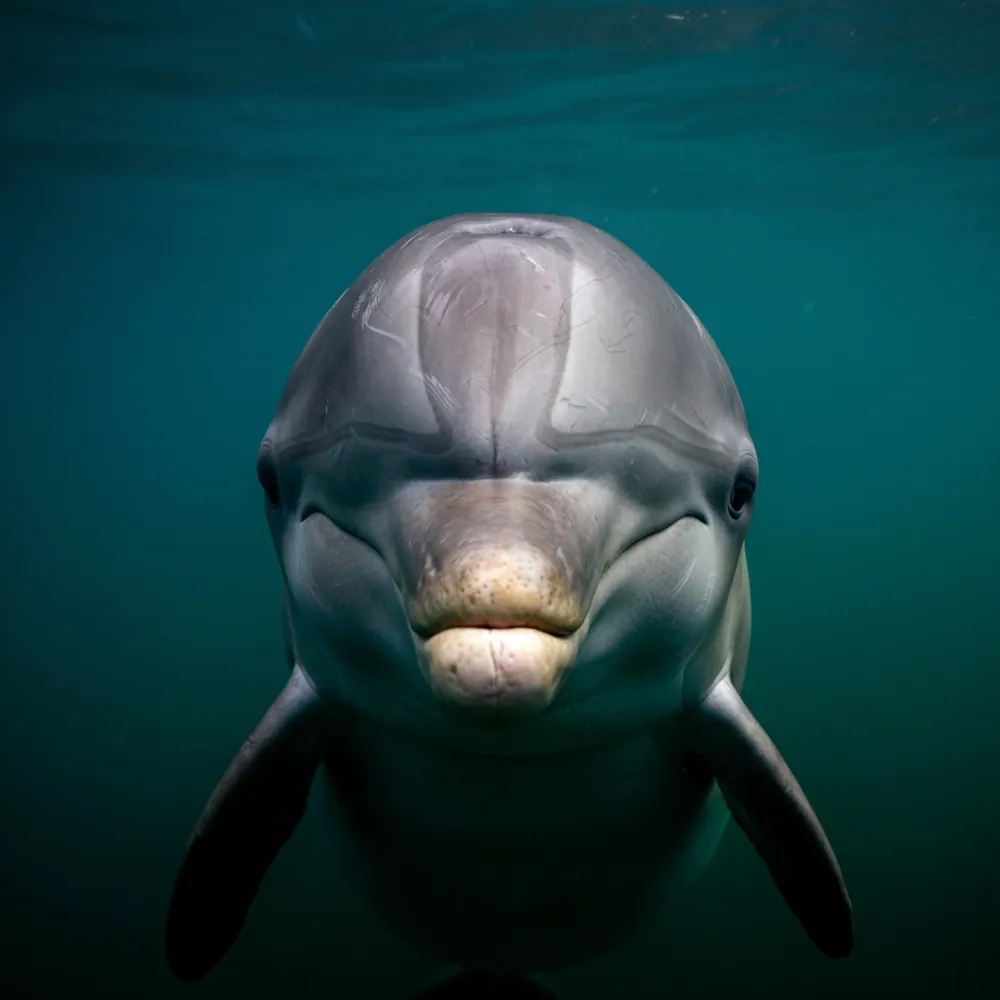
Hey adventurers! Get ready to meet one of the coolest creatures swimming in the big, muddy rivers of India: the Ganges River Dolphin, also affectionately known as the "Susu"! Can you guess why? It's because of the special "susu-susu" sound it makes when it breathes. This amazing dolphin is super unique because, unlike its ocean cousins, it lives in freshwater rivers, and get this – it's practically blind! Its tiny eyes don't work much in the murky water, but don't worry, it has an awesome secret weapon: a super-long, pointy nose, perfect for snatching up yummy snacks.
So, how does a blind dolphin find its way and catch dinner in a super murky river? With an incredible superpower called *echolocation*! Imagine having your own built-in sonar system. The Susu sends out high-pitched clicks, and then listens carefully for the echoes bouncing back. This helps it paint a picture of its world, showing where obstacles are and, most importantly, where tasty fish, shrimp, and even little turtles are hiding! It's like having super hearing that helps it "see" without eyes, making it a master hunter.
But the Susu is more than just a clever hunter; it's a true river hero! Scientists call it an "indicator species," which means if the Susu is healthy and happy, then the whole river is healthy and happy too! These ancient dolphins are like natural guardians, telling us if the water is clean enough for everyone – including us! Sadly, these magnificent creatures are in danger, so protecting the Susu means protecting the very heart of these rivers and all the life within them. Isn't that an amazing job for a dolphin?
How many are left?
Have a guess first — how many do you think are still alive?
about 1,200
each dot ≈ 10 individuals
Imagine if all the kids in your school, and maybe just one more, were the only Ganges River Dolphins left in the whole wide world! Sadly, there are only about 1,200 to 1,800 of these amazing dolphins still swimming, which means they are super rare and need our help to survive.
It is longer than a grown-up is tall.
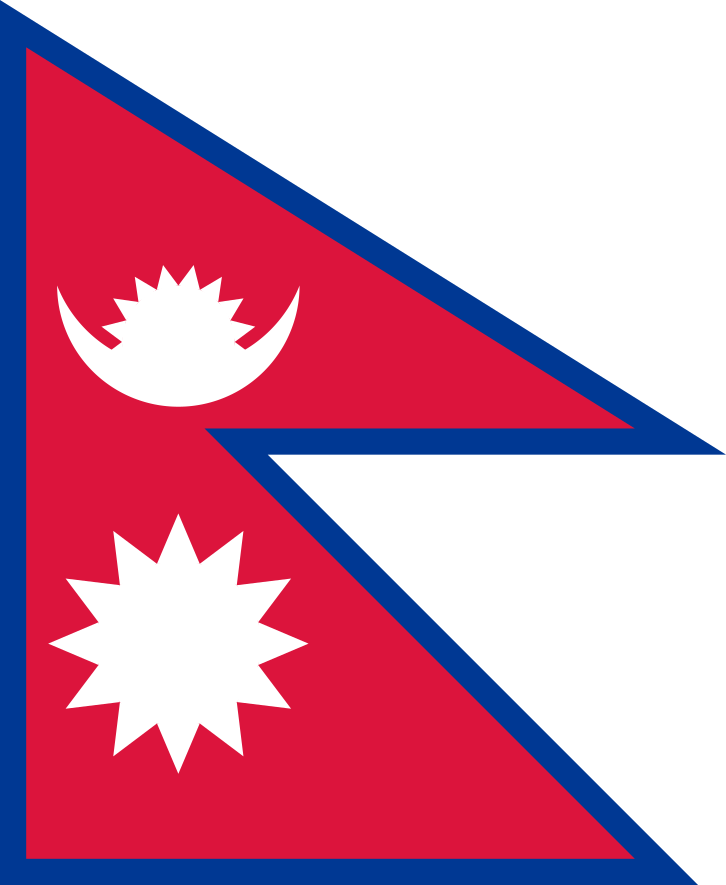
Where the ganges river dolphin still lives — India, Bangladesh, Nepal
The Ganges River dolphins live in water that often has lots of trash, plastic, and yucky chemicals from cities and farms. This pollution makes them sick, hurts their skin, and makes it hard for them to breathe and find yummy fish to eat.
Being done about itPeople are working hard to clean up the rivers by picking up trash and teaching everyone not to throw garbage into the water. Scientists are also helping to find ways to make the water cleaner and safer for these special dolphins.
Habitat loss
Big dams and barriers built across the rivers block the dolphins from swimming freely to find food or their families, making their homes smaller and harder to live in. When water is taken for farms or cities, there's less water left for the dolphins to swim and play in.
Being done about itGovernments are setting up special protected areas where dolphins can live safely, and engineers are looking for ways to build dams that let dolphins pass through. They are also working to make sure enough water stays in the river for the dolphins.
Bycatch / Overfishing
These dolphins can accidentally get tangled in fishing nets meant for fish, which is super dangerous because they need to come to the surface to breathe air. If they get stuck, they can't swim up and might drown. Also, too much fishing means there are fewer fish for the dolphins to eat.
Being done about itFishermen are learning to use special nets that dolphins can see and avoid, or they're being taught how to quickly release dolphins if they get caught. Scientists are also studying how to fish without harming the dolphins or taking all their food.
Brave scientists and conservation heroes are on a super important mission to save these dolphins! They are setting up special protected areas in the rivers, like the Vikramshila Gangetic Dolphin Sanctuary, and working with local communities to keep the water clean and teach safe fishing practices so the dolphins can swim free and healthy.
Also known asPlatanista gangetica
GroupAnimal
HabitatFreshwater river
DietFish and crustaceans.
PredatorsSharks and large crocodiles, but dams and pollution are the main threats.