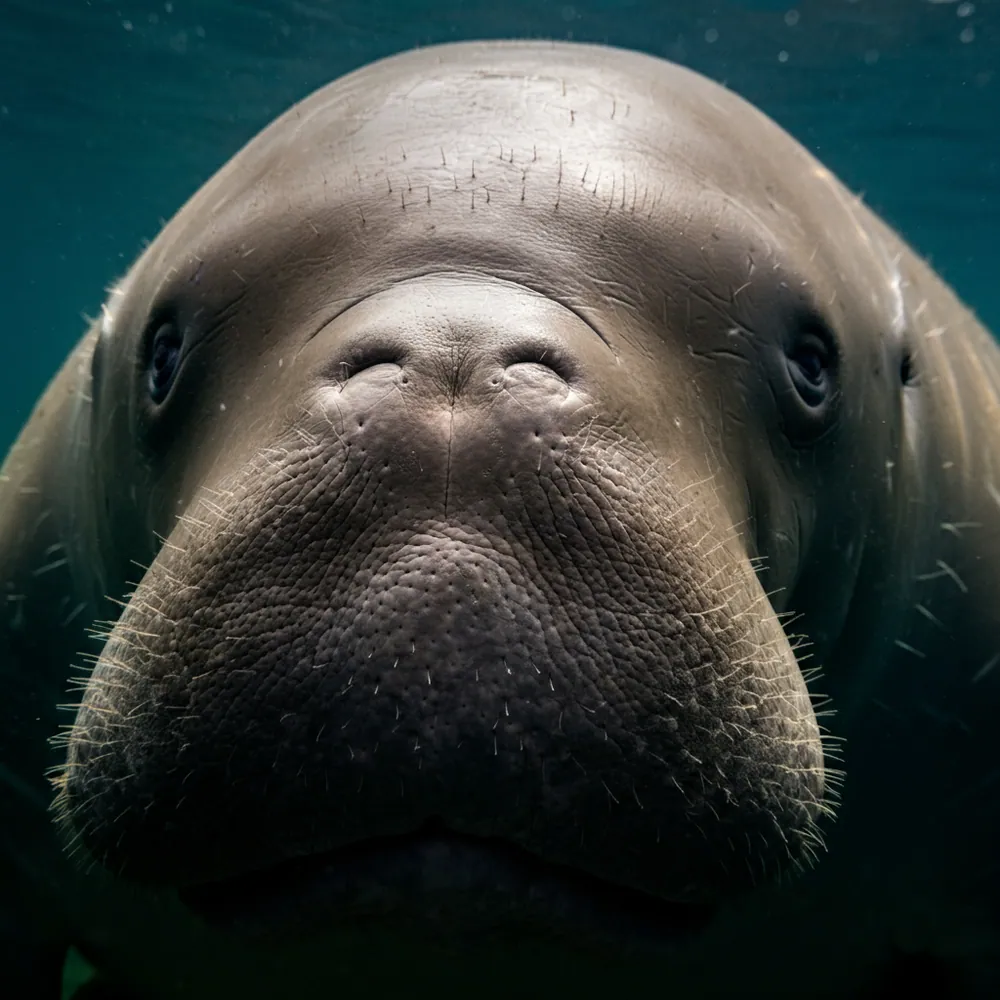
Hey ocean explorers! Get ready to meet one of the most wonderfully weird and gentle giants of the sea: the Dugong! Imagine a creature so calm and peaceful, it's often called a "sea cow." But don't let that name fool you – this underwater marvel has a super cool, flat tail just like a dolphin, which helps it glide through the water with amazing grace. With its thick, leathery grey skin, tiny eyes, and a special bristly snout that points downwards, it looks like it's always ready for a tasty snack! These gentle giants can grow super big, sometimes longer than a car and as heavy as a small car too!
What's on the menu for our Dugong friend? Seagrass, and lots of it! These amazing animals are like the ocean's best gardeners, munching their way through vast underwater meadows. They use their strong snouts and paddle-like front flippers to "mow" down the seagrass, earning them another cool nickname: "marine lawnmowers"! This isn't just a snack for them; it's super important for the whole ocean. By keeping the seagrass trimmed, they help it grow back even healthier and more delicious for other sea creatures, from tiny fish to speedy sea turtles. They literally help keep the underwater world tidy and thriving, making them true superstars of the sea!
Where the dugong still lives — Australia, Indonesia, Philippines
Dugongs love to munch on yummy seagrass, which grows in shallow ocean meadows. But pollution and building along the coast are destroying these important seagrass beds, leaving dugongs with less food and no home.
Being done about itScientists and conservationists are working hard to protect seagrass meadows and clean up our oceans. They are also creating special safe zones where dugongs can live and eat without being disturbed.
Poaching / Illegal hunting
Sadly, some people still illegally hunt dugongs for their meat, oil, or other body parts. This is very dangerous for these gentle giants and makes it harder for them to survive.
Being done about itPark rangers and police are working hard to stop illegal hunting and catch poachers. They also teach local communities why it's important to protect dugongs.
Bycatch / Overfishing
Dugongs sometimes get accidentally caught in large fishing nets meant for other sea creatures. When this happens, they can't swim up to breathe air and can get very hurt or even drown.
Being done about itFishermen are learning to use special nets that dugongs can escape from, and they are also being taught to release any dugongs they accidentally catch. Scientists are also inventing new ways to make fishing safer for all marine animals.
Brave scientists and ocean heroes are on an important mission to help dugongs by creating special protected ocean areas where boats have to be extra careful, and by working hard to keep their yummy seagrass homes healthy and clean. These efforts help ensure these gentle giants can swim safely and find plenty of food for their big appetites!