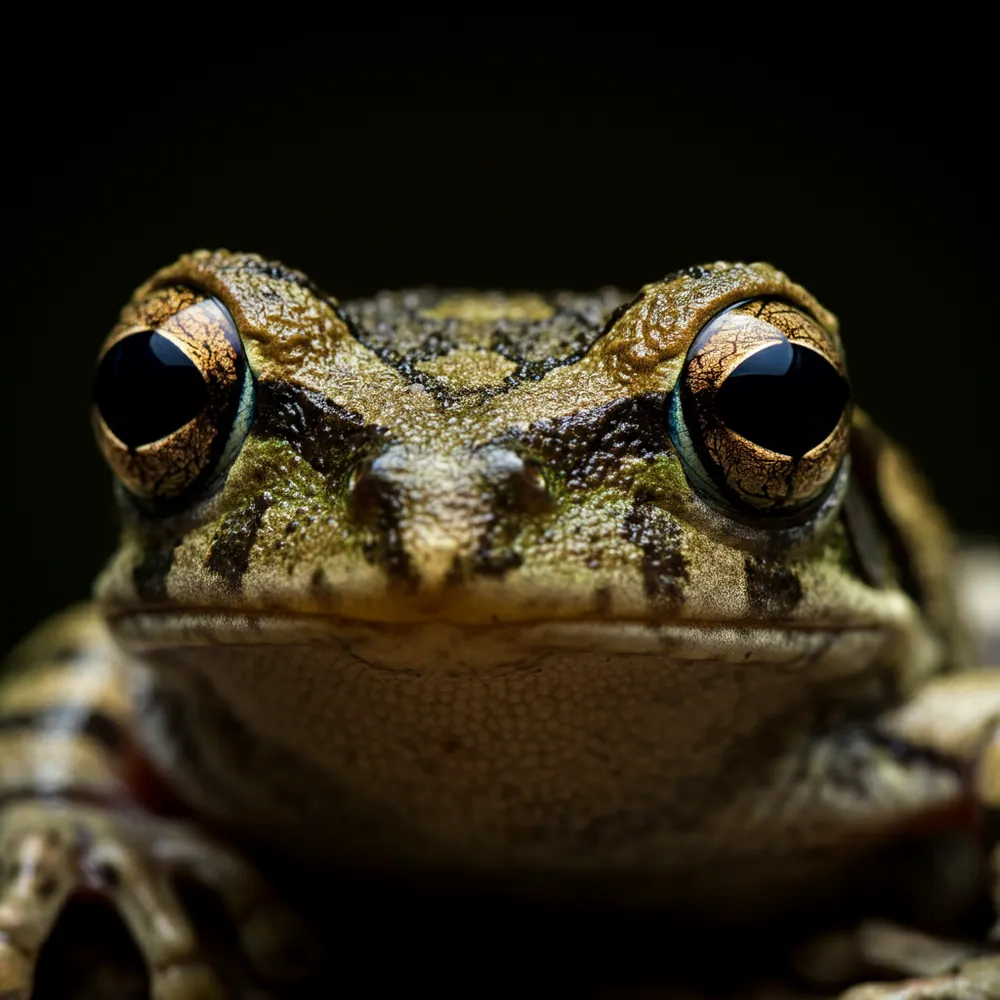
Psst! Hey, future wildlife adventurers! Are you ready to meet one of nature's most mysterious and marvelous creatures? Get ready to give a big wave (or a quiet whisper, because they're super shy!) to the incredible Dusky Gopher Frog! This little amphibian superstar is like a secret agent of the southern United States, keeping to itself in hidden corners of the forest.
Don't let its name fool you – this frog is anything but dusty! It's a master of disguise, with dark brown or black skin covered in cool, bumpy warts that help it blend perfectly into its cozy homes. Imagine a tiny, three-inch-long ninja, about the size of a small candy bar, hopping through the warm coastal forests and squishy, splashy marshes. It's a small frog with a big personality!
But here's what makes the Dusky Gopher Frog *extra* special and truly amazing: it's critically endangered! That means there aren't many of these unique frogs left in the wild, making every single one a precious treasure. They're like living, breathing ancient secrets, hopping through history and reminding us how important it is to protect every creature, big or small. Isn't that just the coolest thing ever?
Where the dusky gopher frog still lives — United States
Imagine your house and playground suddenly disappearing! That's what happens to dusky gopher frogs when their homes, like forests and wet areas, are destroyed for buildings or farms.
Being done about itLots of grown-ups are working hard to protect the special places where these frogs live, like buying land to keep it safe and helping to grow back healthy forests and ponds.
Disease
Sometimes, dusky gopher frogs get sick from a tiny, invisible germ called a fungus, which can make them very ill and even cause them to die.
Being done about itScientists are studying this sickness to find ways to stop it, and people who work with the frogs are extra careful to keep their hands and tools super clean so they don't spread any germs.
Superheroes of science are on a mission to save these frogs! They're busy 'head-starting' baby frogs in safe places until they're big enough to go back to their wild homes, and also working hard to fix up and protect the special wetland habitats these frogs need to survive.