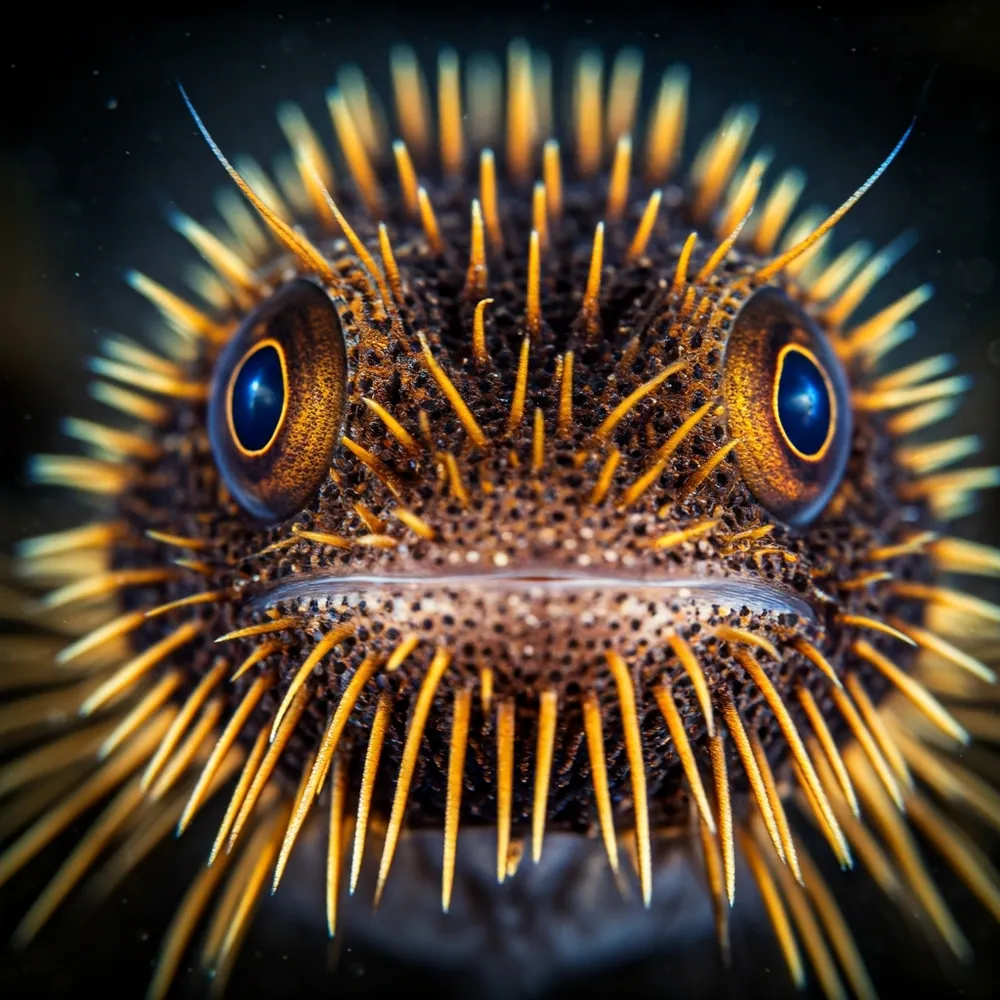
Get ready to meet one of the ocean's coolest superheroes – the Bottlenose Wedgefish! Imagine a creature that's part shark, part ray, and totally awesome. It has a super sleek body like a shark, but a flat head like a ray! And guess what gives it its name? A long, pointy nose that looks just like the neck of a bottle! This amazing fish can grow longer than a car, up to 9 feet, and its grayish-brown skin helps it disappear on the seafloor. It's like a living fossil, swimming in our oceans for millions of years!
This underwater master of disguise loves to hang out on sandy or muddy bottoms near coral reefs. It's super patient, often staying perfectly still for ages, blending right in with the seabed – can you even spot it? But when it's hungry, watch out! It uses its special shovel-like nose to dig and sniff out yummy treats hidden in the sand, like crabs, shrimp, and even clams. It's like having a built-in treasure detector for dinner!
But here's why the Bottlenose Wedgefish is extra special: it helps keep the ocean healthy by eating lots of bottom-dwelling critters. It's like a garden helper for the sea! Sadly, these incredible animals are in big trouble and need our help. They're critically endangered, which means there aren't many left. Protecting them means protecting the amazing underwater world we all love. Isn't that something worth cheering for?
Where the bottlenose wedgefish still lives — Australia
The Bottlenose Wedgefish lives in warm, shallow ocean waters near coral reefs and sandy seabeds. These special homes are getting destroyed by pollution and coastal building, leaving the wedgefish with nowhere safe to live.
Being done about itScientists and ocean helpers are working to protect these important ocean places by creating special marine parks and cleaning up pollution. This helps give the wedgefish safe and healthy homes to live in again.
Bycatch / Overfishing
Bottlenose Wedgefishes are often caught by accident in big fishing nets meant for other sea creatures, which is called 'bycatch.' Also, too many of them are sometimes caught on purpose, making it harder for their populations to grow.
Being done about itPeople are inventing smarter fishing nets that let wedgefish escape safely, and governments are creating rules to limit how much fishing can happen. These efforts help make sure fewer wedgefish are caught by mistake and more can swim freely.
Brave scientists and conservation heroes are on a super important mission to save these amazing fish! They're working to create safe ocean zones where fishing is limited, and they're also teaching people how to fish in ways that don't accidentally catch these rare wedgefish.
Also known asRhynchobatus australiae
GroupAnimal
DietCarnivore (primarily benthic invertebrates and small fish)