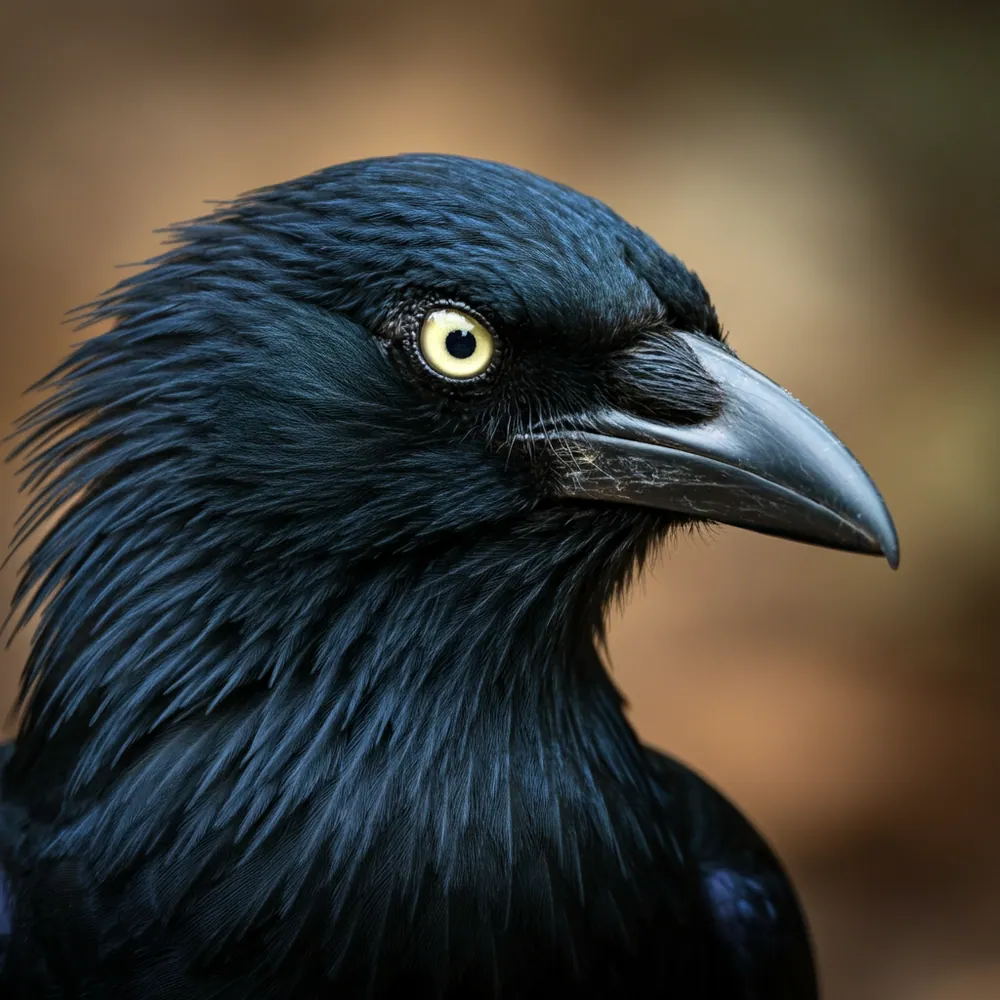
Hey adventurers! Get ready to meet one of Cuba's coolest feathered friends: the Cuban Palm Crow! Imagine a bird dressed in the most stylish, shiny black suit you've ever seen. Its feathers aren't just black, though – they shimmer with secret sparkles of blue and purple when the Caribbean sun hits them, making it look like a living, breathing gemstone! And those dark, twinkling eyes? They're super smart, always observing, always figuring things out, proving this isn't just any ordinary bird.
This clever crow loves hanging out in Cuba's sunny palm forests, often with its family and friends, chattering away with all sorts of amazing sounds, from deep croaks to cheerful chirps. While it enjoys a tasty snack of bugs or fruit, its absolute superpower is cracking open the toughest nuts from giant palm trees! With its super strong, pointed beak, it's like a master locksmith, getting to the yummy treats inside those rock-hard shells. Talk about a strong beak!
But here's what makes the Cuban Palm Crow truly, truly special: it's like a super-gardener for its island home! By munching on those palm fruits and dropping or hiding the seeds, these amazing birds help plant brand new palm trees all over Cuba. Without them, the beautiful palm forests wouldn't be nearly as big or healthy! So, next time you see a crow, remember its Cuban cousin, the incredible Palm Crow – a smart, shiny, and super important helper for nature!
Imagine someone cutting down your house! That's what's happening to the Cuban Palm Crow, as people are cutting down the forests and palm trees where these special crows live, build their nests, and find their food.
Being done about itBut don't worry, people are working hard to help! Scientists and park rangers are protecting the forests where these crows live and even planting new trees to give them more safe homes for the future.
People are working super hard to save these clever crows by protecting their special forest homes from being cut down, and brave scientists are on a mission to find out more about where they live so they can be better protected.